Is this the right way?

Late one August evening in a small provincial town, a woman steps out her front door. In her hand, she holds a slim leather briefcase, probably containing a laptop. When she steps down from the small landing in front of the door, a mild breeze fills the air, gently tousling her long blond tresses. She tries to pull her hair back behind her ears without any luck. From the back pocket of her jeans she pulls out a bandeau and ties those unruly locks into a simple ponytail. Now, with no hair interrupting her vision, she looks first to the right and then to the left before turning around to lock the door behind her. After checking twice that the door really is locked, she rotates to face the street for the second time. 

This time she looks to the left first. Actually, at this point, her whole body shifts as she evaluates the possibility of going in that direction. 

Is this the right way? 

Read the rest of the essay in Terse Journal.

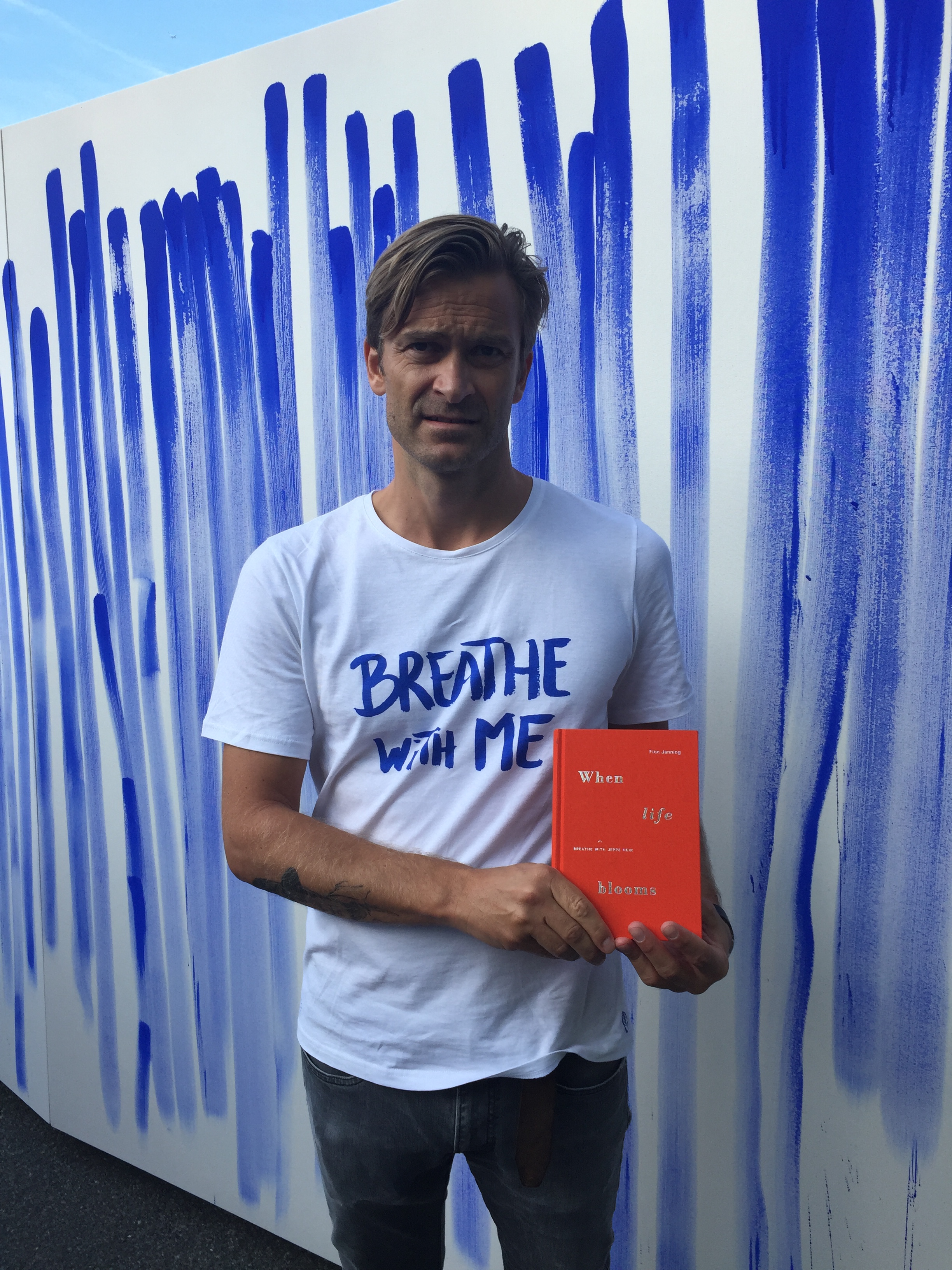
Breathe with Me

This is the culmination of one individual’s therapeutical breath work during burnout and how it became a collective line of breaths in New York.

The writer

The artist

Kig væk

Jo flere informationer, desto sværere bliver det at tage fornuftige beslutninger.

I Weekendavisens sektion Ideer (»Kultur i acceleration«, #27, 5. juli) refereres der til interessante studier foretaget af blandt andet DTU, der handler om, hvordan vi i dagens forjagede kultur har sværere ved at fastholde vores opmærksomhed. Vores nærværende tilstedeværelse bliver mere flygtig og zappende. Hele tiden er vi på jagt efter fristelser og belønninger.

En fælles præmis for studierne, der omtales, er, at opmærksomhed betragtes som en ressource. Dette stemmer glimrende overens med tankerne bag begrebet opmærksomhedsøkonomi, idet økonomi handler om allokeringen af knappe ressourcer. I dag er den knappe ressource vores opmærksomhed. Opmærksomhed er dog ikke kun en ressource, men også en erfaringsskabende kapacitet. Det kan sammenlignes lidt med det at skrive eller at male, som på den ene side er teknikker og en ressource, som kan læres, men som på den anden side også er kapacitet, der kan trænes. Nogle mennesker kan skrive i hånden i meget lang tid, fordi de øver sig dagligt, mens det for andre er en begrænset ressource.

Sagt anderledes: Opmærksomhed er en muskel, der kan trænes. Spørgsmålet er, hvorfor det er værd at træne den?

Den amerikanske filosof William James talte om vigtigheden af opmærksomhed som evnen til frivilligt at bringe et flakkende sind tilbage, hvilket han så som fundamentet for udviklingen af ens dømmekraft, karakter og vilje. Han skrev et sted, »at den uddannelse, som kan forbedre denne kapacitet, ville være en uddannelse par excellence«. En anden amerikaner, Jon Kabat-Zinn der forsker i mindfulness, som netop er en måde at træne opmærksomheden på, har beskrevet opmærksomheden som tosidig eller dobbeltrettet. Den rækker både ud og ind. Det vil sige, at jeg både er opmærksom på det, som sker, samtidig med at jeg også er opmærksom på kvaliteten af min egen opmærksomhed.

Det er især kvaliteten af ens opmærksomhed, der forbindes med erfaringen, mens den udadrettede opmærksomhed ofte ses som en ressource. Tænk blot på folkeskolelæreren, der fortæller sine studerende, at de skal være opmærksomme. På hvad og hvordan? Sådanne spørgsmål forvandler opmærksomhed til et moralsk anliggende.

Den engelske filosof Iris Murdoch forbandt opmærksomhed med kærlighed og mente af samme grund, at opmærksomhed var essentiel for at udvikle vores moralske dømmekraft. I en af hendes bøger talte hun – meget rammende i kontrast til i dag – om »unselfing«, og ikke selfies. Hendes idé var, at for at kunne deltage opmærksomt i livet må vi skubbe vores eget ego til side. Kun på den måde kan vi for alvor erfare det, som sker, og derved tage bedre del i de moralske beslutninger – til glæde for alle.

Murdoch var i høj grad inspireret af en anden filosof, nemlig den franske Simone Weil, der beskrev opmærksomhed som en neutral og direkte kontakt med virkeligheden. Det vil sige, at opmærksomheden som erfaring er uden filter. Den dømmer ikke på forhånd.

Normalt, når vi erfarer livet, sker det gennem et mere eller mindre instrumentelt eller moralsk filter, hvor vi er opmærksomme på noget bestemt, enten for at bekræfte vores antagelser eller fordi vi tror, at det lige netop er dét, som vi mangler. Vi er ifølge Murdoch egoistiske.

Det, som Weil og Murdoch opfordrede os til, var at overkomme denne instrumentelle tankegang for derved at mærke og blive mærket af livet. Det, som studierne fra DTU viser, er – lader det til – at vi i sjældnere grad mærkes af livet, men i stedet mærker os selv, idet vi hele tiden lader vores opmærksomhed flakke derhen, hvor den bekræfter eller underholder os bedst muligt.

Spørgsmålet er derfor, om en forjaget kultur derved, gradvist, gør vores verden mindre og mindre. Og, om vi derved bliver dårligere til at udvikle vores dømmekraft og vilje.

Bragt i Weekendavisen, #29, 19. juli 2019.

Mindfulness og skolen

I medierne kan man til tider læse, at folkeskolens elever er stressede, angste og urolige. Nogle foreslår mindfulness som en løsning på problemet, mens andre mener, at mindfulness ikke er andet end et plaster på en syg præstationskultur.

Jeg er enig i, at præstationskulturen er syg, men uenig i, hvorvidt mindfulness blot er et plaster. Faktisk mener jeg, at mindfulness sagtens kan bidrage til udfoldelsen og vedligeholdelsen af pædagogik baseret på en kærlig tilgang til læring i stedet for absurde præstationsidealer.

Kigger vi nærmere på kritikken af mindfulness, er den ofte ganske paradoksal. Enten er mindfulness for religiøst, eller også er den for lidt i kontakt med den smukke buddhistiske livsfilosofi.

Så hvad er mindfulness i grunden?

Læs resten af kronikken i Information

When life blooms

I’m pleased to announce that my new book, When life blooms – Breathe with Jeppe Hein will be released November 28th.

The publisher writes about the book:

“Danish artist Jeppe Hein soared to the top of the international art scene before the age of 35. His works were showcased at the world’s finest exhibitions and sold for sky-high prices. Then suddenly his body said stop. In 2009 Hein went down with stress.

In this book philosopher Finn Janning follows Jeppe Hein’s development from the tome immediately after his diagnosis with burn out and onward – a period where Hein underwent psychoanalysis and developed and interest in yoga, breathing exercises and spirituality.

Janning shows how spirituality has become more present in Hein’s works, and in the book, he develops an existential philosophy in continuation of the artists spirituality and art.”

I may add:

Although I was commissioned to write this book, I aimed at turning it into a philosophical biography that describes the life of the artist Jeppe Hein. In doing so, I’ve tried to exemplify Gilles Deleuze’s idea that “life is not personal,” that is to say, each life is a case study.

I choose this approach as a way of addressing the narcissism of the artist without making the narrative confronting, or in anyway judgmental.

Instead, I illustrate how Jeppe is formed by the major cultural trends during the last 40 years, such as the growing accelerating and spirituality and social entrepreneurship. He is an artist of his time.

It’s a book that tests and nuances the popularity of today’s spirituality through a philosophical, primarily existential lens.

ENJOY


Når livet blomstrer

Den 28. november udkommer min nye bog, Når livet blomstrer – Breathe with Jeppe Hein.

Selvom der er tale om en bestillingsopgave har jeg forsøgt, at skrive bogen i forlængelse af den franske filosofs Gilles Deleuzes ide om, at “livet ikke er personligt.” Snarere er livet et casestudie, der kan rumme varierende grader af eksemplariske fortællinger.

Denne tilgang valgte jeg af flere grunde.

For det første, som en kærlig måde at konfrontere Jeppe Heins narcissisme på, uden at dømme denne. For det andet, tænkte jeg, at det kunne være sjovt, at skrive en slags biografi præget af tidens tendenser – fra 70erne og frem til i dag. For det tredje, for at vise hvordan hans kunst i høj grad er formet af tiden, fx den øgede konkurrencementalitet og teknologiske acceleration, der for mange, inklusive Jeppe Hein, fører til stress og angst. Efterfølgende finder mange, inklusive Jeppe Hein, mening i den fremvoksende spiritualitet.

Så, bogen er både eksemplarisk og en mytedræber. Den er et stykke liv på papir!

Forlaget skriver bl.a.:

“I 2009 sidder Jeppe Hein i en flyver i 10.000 meters højde, da han får et angstanfald og ikke kan trække vejret. Efter et år med over 15 udstillinger og utallige rejser siger hans krop simpelthen stop.

”Jeg måtte lære at trække vejret igen,” fortæller Jeppe Hein i bogen.

Forfatter og filosof Finn Janning har været ven med Jeppe Hein, siden de var helt unge. I bogen følger han på nærmeste hold Jeppe Heins menneskelige og spirituelle udvikling efter hans burn out og viser, hvordan den er uløseligt knyttet sammen med hans kunst.

Undervejs i beretningen om Jeppe Heins spirituelle og kunstneriske rejse giver Finn Jannings indsigtsfulde analyser en baggrund for at forstå, hvad der er på spil. Han kommer rundt om filosoffer som Aristoteles og Kierkegaard, den spirituelle tyske lærer Eckhart Tolle, forfatterne Albert Camus og Peter Høeg og mange flere, og dermed bliver bogen en slags filosofisk monografi, som læseren kan bruge til selv at overveje nogle af livets store spørgsmål.

Janning udvikler i bogen en eksistensfilosofi i forlængelse af kunstnerens spiritualitet og værker.”

God fornøjelse …

Når livet blomstrer

The philosophy of Byung-Chul Han

The French philosopher Gilles Deleuze once said: “There is no need to fear or hope, but only to look for new weapons.”

‘Weapons’ may give us the wrong associations, but what he refers to are concepts that, like a brick, can be used to destroy what is hindering the growth of our lives, and at the same time, help us build or create something sustainable.

The Korean philosopher Byung-Chul Han’s work can be seen a toolbox aimed at helping us understand our contemporary society, while also presenting us with concrete ideas, thoughts or ‘weapons’ that might help us overcome or resist our own weak desires and vanities.

Read the rest of my portrait of Byung-Chul Han that I wrote for The Mindful Word 

My review of The expulsion of the other

My review of In the Swarm

My review of Saving beauty

A small feature on Han, can be read here.

How Should I Live?

Before I try to give a decent answer, I would like to emphasize that I’m glad the question is personal. It refers to me, not you, or someone else. I don’t like moralizing, that is, telling other people how they should live, but I do like the element of self-knowledge and care that this question addresses.

Thus, “How should I live?” should live a joyous life.

Life, of course, is full of both joy and sadness, suffering and pleasure. Some of these are related to individual limitations, e.g. intellectual abilities. Others are related to social or political circumstances, e.g. financial.

Still, a useful guide is to live in a way that enhances a life’s joyous moments regardless of the circumstances.

How do I do that? From the French philosopher Gilles Deleuze, I’ve learned that we always have the thoughts and feelings that we deserve. At first this can seem brutally arrogant, but what he aims at is that our mental state depends on how we relate to or approach our experiences. The challenge that we all share, regardless of setback or misfortunes, is how we become worthy of what is happening. This is not acceptance as a kind of resignation; rather, it’s an approach to life that confronts obstacles or setbacks by trying to create a new form of life that minimizes the effects of what is hindering ourselves from living freely.

Therefore, I should live as a compassionate fighter, that is, become a person that fights by exploring what a life may become. What is possible? I fight hate, discrimination, domination, violence, etc. because it kills life. And by involving myself in this fight — although I have to acknowledge my intellectual limitations – I feel better. Actually, I feel alive. And to live a joyous life is to have an intimate affair with life, to experiment, and dance with it.

I remember the Chilean writer Roberto Bolaño once said that children typically are full of joy, and then he wondered why it’s so, before answering, that they are alive.

It sounds like a tautology: a joyous life is synonymous with how I should live because joy emerges through appreciation of being alive, which I accomplish by destroying  everything that seem to hinder life from flourishing, just as I create room for things that flourish. Nothing comes for free, except death.

Joy and happiness require hard work.

Learn to philosophize

Today, we live in a society organized mainly by capitalism. Not only is making money an objective that guides many people’s lives, but so are prestige, status, and social identity. Even when corporations claim that “people come first,” they refer to their employees’ skills and experiences as “human capital” or “cultural capital.”

Everything we do is a currency that can be counted. This problem can be seen through two concepts: power and freedom.

Today, the power that controls us (i.e. status, prestige, identity) appears invisible unless we pay very careful attention. But—and this is the problem—we rarely pay attention because that which works as an invisible or imperceptible power is also what seduces us not to pay attention.

The consequence is that we are not free. Freedom can be seen as both a problem and a possibility. It is becoming, emphasizing that we become by combining courage to stand against dominating ideals and norms with the imagination that things could be different. Thus, freedom is more than my individual liberty to do whatever I feel like doing because that neglects how everything is interconnected. Freedom is social; it’s about succeeding in creating a sustainable future—together.

Most philosophers – and this is probably no surprise – suggest that thinking is the best remedy against today’s maladies. But in order to think philosophically (i.e. reflect, contemplate, analyze) we must be capable of loving, that is, relating to others and the world with care.

Socrates is the example. He philosophized for free. And he showed that philosophy is social. Perhaps for that reason is it difficult to philosophize today when we have become too narcissistic. “The narcissistic-depressive subject only hears its own echo… Social media like Twitter and Facebook aggravate this development, they are narcissistic media,” wrote Korean philosopher Byung-Chul Han In The Swarm.

The question, therefore, is: how do we learn to pay attention?

Philosophy and mindfulness in the schools

The answer is to bring philosophy and mindfulness to schools at all levels, although my errand here is at business schools. Business is, of course, part of the current problem as well as it can become a crucial part of the solution.

Mindfulness is easy to implement as a non-religious meditation practice which helps cultivate and strengthen our capacity to pay attention. With this in mind, future leaders can with greater success make sustainable and responsible decisions that are not grounded in their own egos, or the ego of the board members. The point is to cultivate an awareness that will gradually make it desirable to make decisions on behalf of others – if for no other reason, then because we are all connected.

The combination of philosophy and mindfulness, I believe, is one the strongest assets against today’s rigid achievement society that makes many of us suffer in a way that very few people realize that they themselves are the perpetrators of their own misery. It’s also a strong tool against the current idea that transparency per se is good, although it undermines the most elementary of human relations: trust.

Still, before future leaders can act in a sustainable way, they must be aware of what is actually going on. And it is here that business schools can be part of creating a better future for all, because instead of speaking about attention and concentration, we can develop it. And once future leaders are aware, they will also question some of the models used in business.

The blogpost was originally post at Esencialblog at Toulouse Business School – Barcelona.

Compassion – Toward an Ethics of Mindfulness

This work is guided by two hypotheses with one overall objective of establishing an ethics of mindfulness . The first hypothesis is the concept of moral motivator or in- tentional moral. Both Western philosophy and mindfulness operate with an intention influenced by their moral beliefs. The second hypothesis is the relationship between moral reasoning and wisdom. That is, our reasoning is affected by our moral belief . To combine those two theses, I introduce the concept compassion from mindfulness and the ethics based on the French philosopher Gilles Deleuze. Hereby, I suggest that by practicing mindfulness, one can develop his or her capacity for compassion, but also – this practice – is a «way of life» that can help protect the planet: an ethical practice.

Read the entire paper here: Compassion – Toward an Ethics of Mindfulness.

“Compassion – Toward an Ethics of Mindfulness” is published in the journal Mindfulness & Compassion, vol. 3, issue 1.

Blog at WordPress.com.

Up ↑