When Others Must Confirm My Ego

In the book The Years, the French writer Annie Ernaux describes a subtle but decisive shift that took shape in the 1990s. Political struggle, once centered on collective responsibility and shared well-being, gradually gave way to a culture of individual rights—rights increasingly framed in terms of consumption and personal recognition. What mattered less was how we lived together, and more how we were seen. As Ernaux puts it, life became oriented toward the demand that “others must confirm this ego”—an ego easily offended.

This shift did not happen overnight. Like most cultural transformations, it emerged through accumulation rather than rupture. But its consequences are profound. A culture that prioritizes recognition over relation slowly redirects attention from the world to the self. Attention no longer flows outward—toward others, toward shared reality—but loops back inward, seeking affirmation.

Read the rest in Psychology Today.

Hjertets visdom

“Det var begyndelsen. Ikke dramatisk. Ikke mirakuløst, men som når en lås klikker op indefra.” Efter en mislykket hjerteoperation, måneder med depression og en første hvisken af bønnen “Hjælp mig”, begyndte en ny bevægelse at tage form, fortæller forfatter og filosof Finn Janning. Bevægelsen åbnede døren til en glemt tradition, hvor heling begynder med at give slip frem for at præstere.

I marts 2023 skulle jeg have repareret en utæt hjerteklap. En rutineoperation, sagde hjertelægen. Rutine eller ej, noget gik galt. Mit hjerte i stå. Tre-fire timer blev til ti. Da Vinci, navnet på robotten, der foretog operationen, måtte ind igen.

Da jeg vågnede, vågnede jeg et andet sted: i noget, der bedst kan beskrives som paradisets have. Jeg hørte sang. Lys. En dans, der ikke var min, men som jeg på mærkelig vis deltog i. Den dans varede dog ikke længe.

læs resten af essayet i POV International

Finding Purpose: Hvordan passion former succes

“Wisdom is knowing I am nothing.
Love is knowing I am everything.
Between the two my life moves.”
— Nisargadatta Maharaj

Finding Purpose – hvordan passion og mentale færdigheder former succes

Sidste udkald for denne workshop, der finder sted lørdag den 22. december!

Finding Purpose – Hvordan passion og mentale færdigheder former performance og velvære

En to-timers workshop, der undersøger, hvad der sker, når præstation ikke kun handler om resultater, men om mening, nærvær og indre motivation. Med afsæt i sportspsykologi, opmærksomhed og erfaring fra eliteidræt arbejder vi med mentale færdigheder, der styrker både performance og menneskelig velvære.

I workshoppen arbejder vi med:

• Hvordan passion og formål stabiliserer performance
• Hvorfor stress ofte er fravær af nærvær
• Hvordan mentale færdigheder kan trænes uden hårdhed
• Hvordan vi præsterer bedst, når vi handler i overensstemmelse med det, der betyder noget

Workshoppen kombinerer:
– filosofi
– psykologi (ACT og mindfulness)
– korte refleksionsøvelser
– guidet meditation og bøn

Alt præsenteret i et sprog, der kan mærkes og bruges i hverdagen.


Praktisk
🗓 Lørdag d. 20. december
⏰ 10.00–12.00
💰 Pris: 195 kr.

Tilmelding & betaling

Tilmelding sker ved betaling af det fulde beløb til:

La Caixa – Finn Janning
IBAN: ES45 2100 0887 5701 0062 1746
BIC/SWIFT: CAIXESBBXXX

Du modtager bekræftelse og praktisk information efter betaling.

Hvem kan deltage?

Workshoppen er åbent for alle.

Underviser

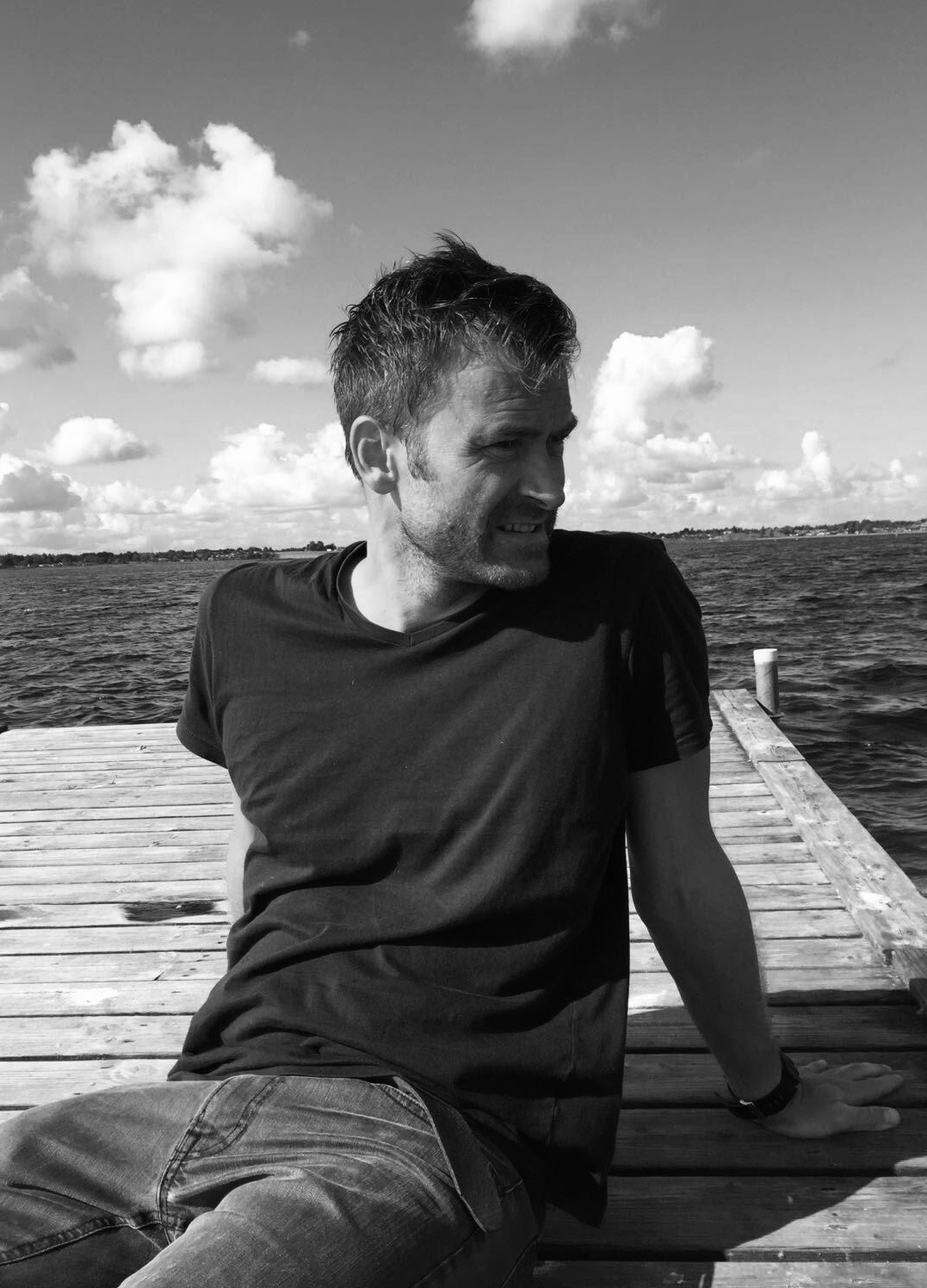
Finn Janning er filosof (PhD) og mindfulnesslærer (Master, Zaragoza Universitet) med mange års erfaring i kontemplativ praksis. Hans arbejde forener vestlig filosofi, buddhistisk meditation og kristen hjertebøn — tre traditioner, der på hver deres måde åbner veje til klarhed, mod og indre frihed.

The Wisdom of Leadership and the Courage to Be Vulnerable

We live in a culture of performance: business, sports, and education all expect leaders to be strong, certain, strategic, and always in control. Yet the paradox of high performance is this: striving to be invulnerable can make us fragile.

Neuroscience and sports psychology (for example, acceptance and commitment therapy) show that anxiety, perfectionism, and fear of mistakes shrink cognitive flexibility and creativity. The more we obsess over results, the more our attention collapses into the future. This focus makes us less present with what is happening now. As mental performance coach Graham Betchart puts it: “Stress is the absence of presence.”

This is not a new idea. Long before modern psychology, philosopher Simone Weil described attention as the most radical form of presence. She argued that attention is not controlling the world, but consenting to it. True attention, she wrote, requires self-emptying: standing unprotected in front of reality, without illusion or defense. Vulnerability is the precondition for wisdom.

Read the rest in Psychology Today.

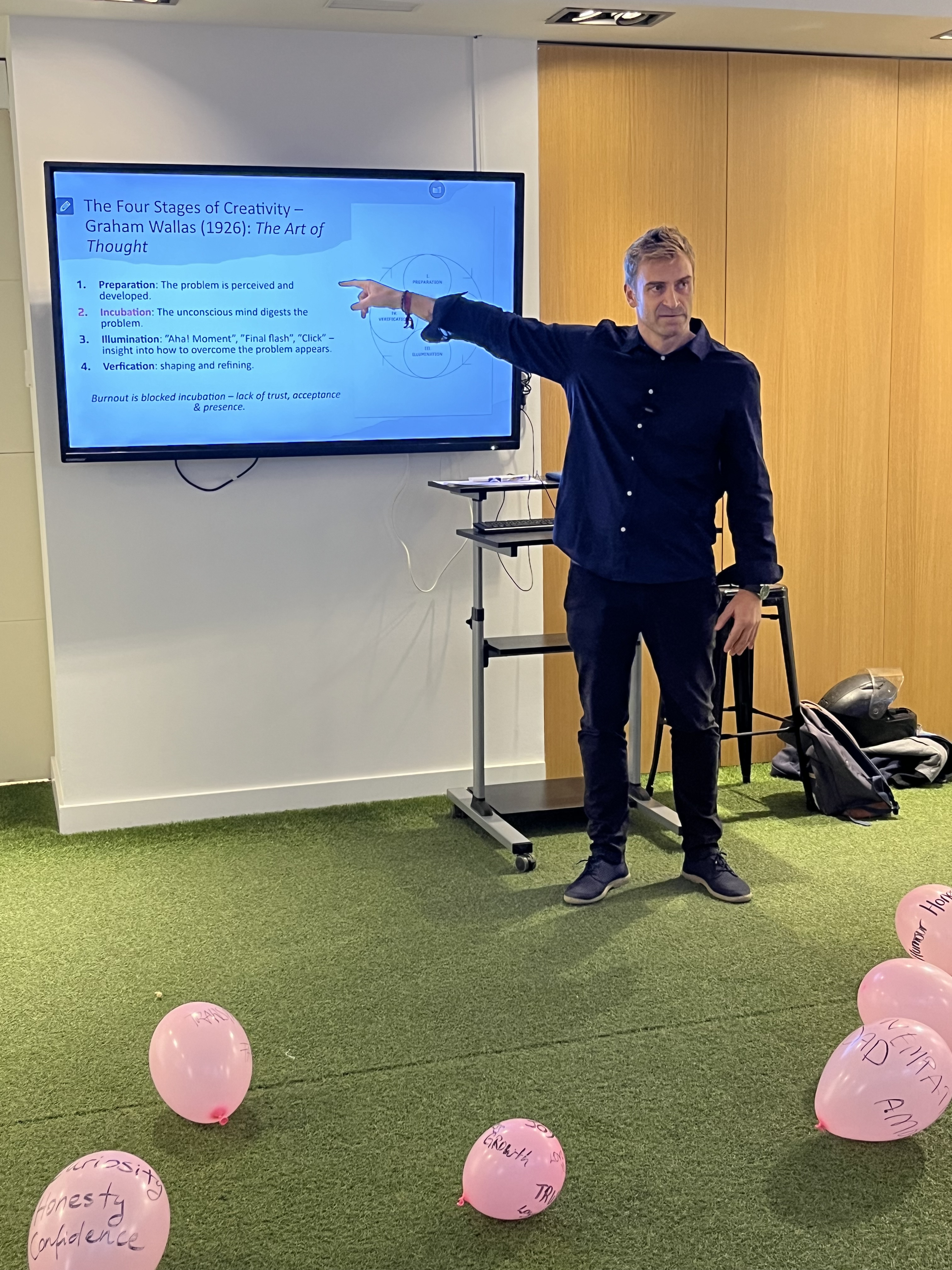
Overcome Stress: Workshop for Creative Minds

This workshop reveals strategies to overcome stress and burnout, with a focus on overcoming creative blocks. 

Through brief playful, reflective and meditative exercises, participants gain simple yet effective tools to restore openness, focus, creativity, and overall well-being. 

The session is ideal for creative individuals, such as artists, designers, architects, writers, and entrepreneurs, who seek to reconnect with passion and joy in a supportive environment. Everyone is welcome.

When: Friday, October 24, from 4:00 – 5:00 pm
Where: Geneva Business School, Barcelona Campus, Carrer de Rivadeneyra 4, Ciutat Vella, 08002 Barcelona

I’m delighted to contribute to Healing Arts Barcelona 2025 with this workshop, generously hosted by Geneva Business School.

All are welcome.

Tak, Jørgen: Den gavmilde digter

Jørgen Leth er død.

Han var ærlig, hvilket gjorde ham fri.

Han blev min indgang til kunsten, som bragte mig glæde – og taknemmelighed.

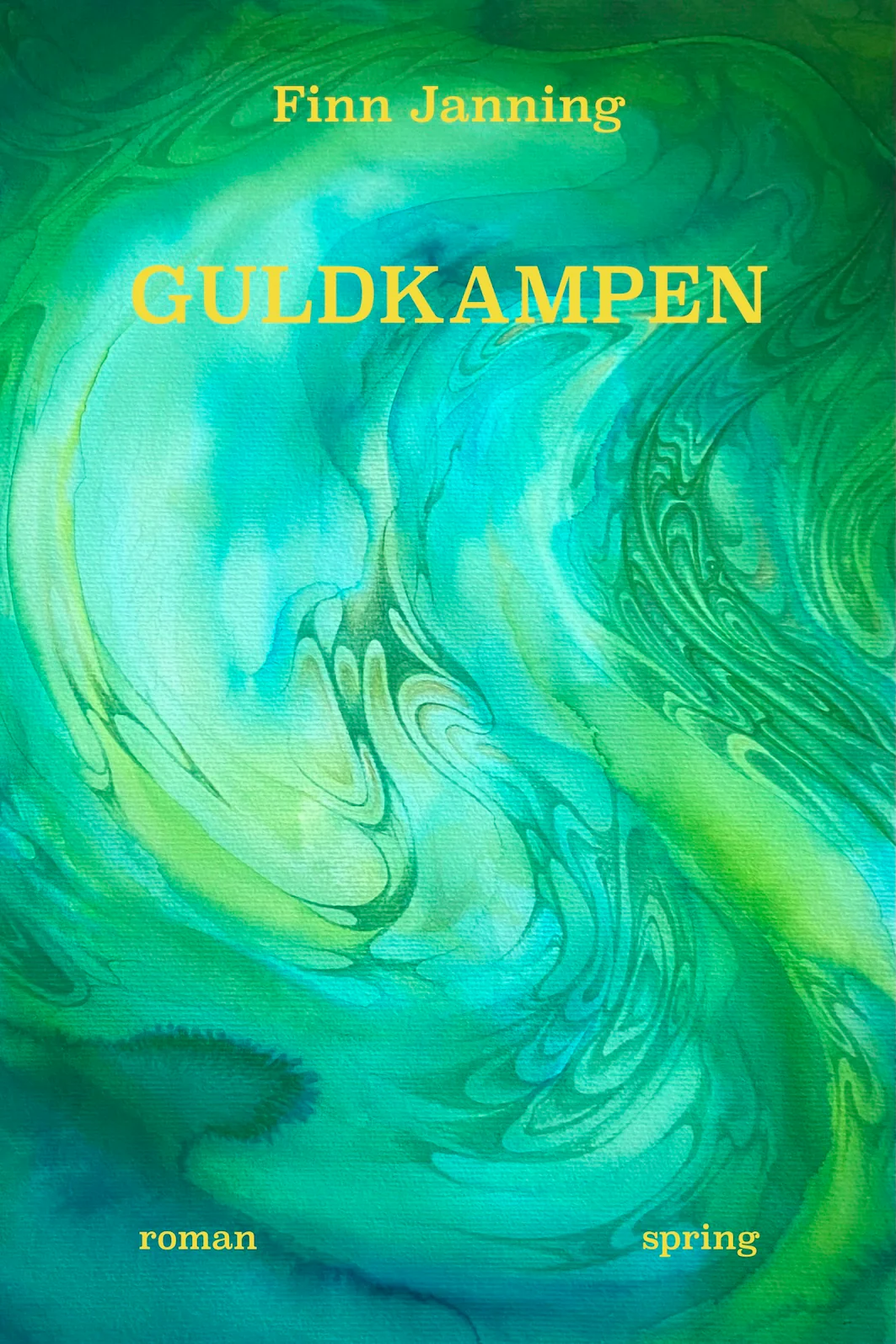
Engang skrev jeg en bog om ham: Den gavmilde digter. Kort tid efter mødte jeg ham i Kastrup Lufthavn.

Han var glad for bogen, fortalte han: “Jeg er glad for bogen.”

Den viser en anden, overset side af mig,” sagde han.

Jeg kan ikke huske, hvilke andre sider han nævnte, men det etiske og gavmilde tiltalte ham. “Tak,” sagde han.

Det er nu mig, der takker. Tak, Jørgen.

Why spiritual strength requires wisdom

In uncertain times, people often talk about the need for “spiritual strength.” 

But what does this actually entail for our mental health and well-being?

The main argument here is that spiritual strength is fundamentally about cultivating wisdom. From a psychological perspective, spirituality, isn’t about dogma or belief; it is about developing the kind of wisdom necessary to face suffering without denial, accept uncertainty without despair, and discover meaning beyond the ego. Modern cognitive scientists, such as John Vervaeke, describe wisdom in two dimensions: moral (what serves the greater good, the long view) and cognitive (navigating complexity, managing strong emotions, and distinguishing the essential from the trivial). This framework is helpful but does not fully capture the essence of the main argument: that true wisdom involves more than rationality—it encompasses mysterious and unsettling dimensions as well.

Giorgio Colli called wisdom “brutal” because it exceeds our grasp. Plato listed four types of divine madness—prophetic, mystical, poetic, erotic—that open us to something greater. Well-being comes not from control alone but from surrender, risk, and letting life surprise us.

Read the rest in Psychology Today.

Liberating Conversations

Today’s human life is marked by confusion, loneliness, and neglect of deeper meaning, leading to anxiety, depression, stress, and other familiar psychological struggles.

Therefore—if you…

  • feel lost,
  • suffer from anxiety or restlessness,
  • have existential questions or doubts you cannot find answers to,
  • are caught in an addiction and don’t understand what lies beneath it,
  • struggle with insomnia, fear, or experience a certain chaos in your life,
  • carry a diffuse sense of guilt,
  • live in a home with frequent conflicts, 
  • don’t quite know what is happening with you, but feel trapped in dissatisfaction or anger,
  • uncertain about your role or identity, for example, regarding gender or the demands of modern life,
  • feel sad, unmotivated, or emotionally burdened.

In short: if you feel the need to understand or free yourself from something that prevents you from living a life worth living—with a reasonable degree of authenticity and freedom—I am convinced that I can help you. Not as yet another therapist, but as a philosopher with a focus on practical wisdom.

Often, a few liberating conversations are enough. Each 50-minute session is designed to provide clear insights, practical guidance, and a renewed perspective tailored to your unique concerns. The cost is 100 euros per session. I offer online sessions only, which makes it simple and flexible to create a present and safe space—wherever you may be.

If you are ready to take a step toward greater clarity and fulfillment, reach out today. Together, we can schedule your first session and begin your journey toward the life you deserve.

Go back

Your message has been sent

Warning
Warning
Warning
Warning.

Blog at WordPress.com.

Up ↑