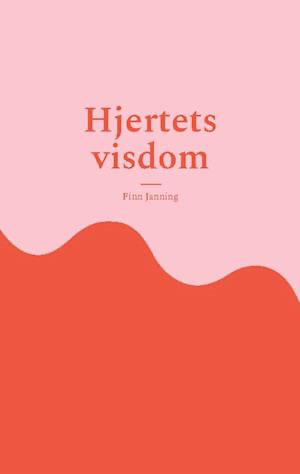
Hjertets visdom – At finde hjem i en polariseret tid

Hjertets visdom – Om at give slip på forestillingen om et fast selv!

Hvem er du, når de identiteter, du har bygget dit liv på, ikke længere føles sande?

Hjertets visdom er en bog om opmærksomhed, frihed og kærlighed. Med inspiration fra filosofi, psykologi og kontemplativ praksis udforsker den, hvordan vi kan bevæge os fra en opdelende og binær forståelse af verden til en mere åben, forbundet og nærværende måde at leve på.

Inspireret af Nietzsche, Simone Weil, Iris Murdoch, mindfulness og centering prayer (hjertebøn) viser bogen, hvordan vi kan give slip på forestillingen om et fast kerneselv – og opdage en dybere frihed i mødet med os selv, andre og verden.

En bog for dig, der ønsker at blive fri til at elske.

Den kan købes her eller bestilles på dit lokale bibliotek.

Featured post

Who Taught You to Want What You Want?

Deleuze, desire, and the psychology of capitalism.

The French philosopher Gilles Deleuze (1925–1995) was one of the 20th century’s most influential philosophers. His philosophy can be described as a nonjudgmental, affirmative approach that aims to become worthy of what happens.

In Difference and Repetition, Deleuze sees the task of philosophy as “a liberation of thought from those images which imprison it.” 

One thing that can imprison and control thought and life is capitalism.

Together with the psychiatrist Félix Guattari, Deleuze published Anti-Oedipus (2000) and A Thousand Plateaus (1987)—both books share the same subtitle: Capitalism and Schizophrenia. In this sense, the title already points toward the problem and the solution: How do social and economic systems organize our desires, and how might desire escape those forms of organization?

Read the rest in Psychology Today.

HOW DO WE BECOME A SELF?

An eight-week literary and philosophical writing seminar

What if there is no “true self” waiting to be discovered?

What if becoming a self is something we do — through relationships, choices, stories, failures, desires, and the ways we learn to see ourselves?

BEAUVOIR · WINNICOTT · MERTON · BOLAÑO · STONER

27 OCTOBER – 15 DECEMBER 2026
Tuesdays · 16:00–18:00 CET
Live online via Zoom · Max. 10 participants

€350

Read more here

Living Authentically

Living authentically was central to existentialism long before it became diluted by modern self-help culture. Today, authentically is often framed as a solo journey—something achieved merely by turning inward, analyzing our feelings, and uncovering a hidden “core self.” But this hyper-focus on introspection often leads to an accidental trap: endless self-absorption disguised as self-discovery.

Philosopher Charles Guignon directly challenges this isolationist view. In On Being Authentic (2004), he writes, “When the ideal of authenticity is understood in its concrete social reality, it becomes clear that being authentic is not simply a matter of focusing on oneself, but also of considering how one’s engagement contributes to the common good of the public world of which one is a part.”

Guignon does not reject the desire to live authentically; rather, he redefines it so that it is not reduced to pure introspection or self-optimization. For authenticity to become real, we must step outside our own heads and engage responsibly with the world around us. 

The authentic person is therefore not merely true to their own feelings but also seeks to contribute to something greater than themselves. At this point—something greater than oneself—an interesting connection to the existentialist Søren Kierkegaard emerges. 

For Kierkegaard, too, human beings must move beyond the self-absorption that traps the self in despair. But where Guignon describes this larger context as the democratic and social community, Kierkegaard describes it as God.

Read the rest in Psychology Today.

Når fascistiske monstre bliver menneskelige

Roberto Bolaños Nazilitteratur i Amerika, der er en samling selvstændige fortællinger over opdigtede, fascistiske forfattere i Nord- og Sydamerika, dømmer aldrig dem, hvis historie han beretter, skriver Finn Janning. I stedet udstiller han den tragik, der får nogle mennesker til desperat at søge en stærk arm.

Fortællingerne udfordrer læseren, fordi vi ved, at vi læser om nationalistiske, homofobiske og racistiske skikkelser, som ikke desto mindre påkalder sig vores empati.

Læs anmeldelsen af Nazilitteratur i Amerika her.

Roberto Bolaño gjorde livet til litteratur

Roberto Bolaño hører til blandt de mest indflydelsesrige spansksprogede forfattere i nyere tid. Hans liv og forfatterskab er uløseligt forbundet, men ikke så litteraturen blot afspejler virkeligheden.

Tværtimod viser historien om Bolaño, hvordan et levet liv kan omskrives, forvrænges og blive til litteratur, skriver filosof og ph.d. Finn Janning.

Læs anmeldelsen her

For mere om Roberto Bolaño her og her

Er kontemplation blevet et privilegium?

Den anden dag lå Byung-Chul Hans nye bog Vita Contemplativa i min postkasse. Forlaget havde sendt den uden betingelser. Måske fordi jeg gennem årene har skrevet om flere af den tysk-koreanske filosofs bøger og længe har fulgt hans forfatterskab.

Jeg begyndte straks at læse. Og ganske hurtigt opstod en mærkelig dobbelthed. På den ene side er Han …

Du kan læse resten af kroniken i Politiken her.

Læs min bog om kontemplative praksisser her

Resurrection the Heart

“When I look at the small scars below my ribcage, I see more than reminders of pain. I see a doorway—a portal between death and renewal, between self and no-self.

The surgery saved my body. The dark night that followed saved my soul.”

From my new essay “Resurrecting the Heart“, published in Empyrean Literary Magazine

Opmærksomhedens filosofi

Et kursus der handler om, hvordan vi kan etablere et kærligere forhold med verden og hinanden.

På grund af positiv respons har Folkeuniversitet valgt, at udbyde det endnu engang.

Det finder sted lørdag den 6. juni.

Læs mere om kurset her og bogen, der støtter op om undervisningen her.

Philosophy begins with care

Are you living a life worth living? How do you know? What would it mean to be free from the expectations, illusions, and desires that quietly shape your sense of self?

Philosophy rarely begins with answers. It starts with a disturbance—a sense that something in life does not quite fit. Through reflection, attention, and ethical practice, philosophy helps us learn to live more authentically. It teaches us to notice life—and, in that noticing, to allow it to change—so the questions themselves light the path forward.

Philosophy begins with care. In the Symposium, Plato presents the philosopher as a “friend of wisdom.” To be a friend—or a lover—is to recognize that thinking is inseparable from caring; we rarely think deeply about what we do not cherish. When thinking and caring intertwine, philosophy ceases to be a cold academic exercise and becomes a way of being in the world—a love affair with life.

The ancient Greeks understood this. The word therapeia means healing or attending and suggests a radical idea: Philosophy heals because it cares.

Read the rest in Psychology Today

Blog at WordPress.com.

Up ↑