To ride is to meditate

This year, I left Barcelona looking for alternative ways of getting closer to experiencing life as a cowboy. Or perhaps it was just to experience truly being alive, more connected with life. By this, I mean being consciously aware of what takes place while it takes place—here and now, without constant ramifications about this or that, hither and thither.

Read the rest of the essay here.

Becoming a Seer: Thoughts on Deleuze, Mindfulness, and Feminism

My essay “Becoming a Seer: Thoughts of Deleuze, Mindfulness, and Feminism” is out now in Journal of Philosophy of Life, Vol. 7, No. 2, 2017.

Abstract: This essay circles around two ideas. First, I try to answer the ethical question “What is the right thing to do?” through the application of the French philosopher Gilles Deleuze’s affirmative philosophy. Second, I relate Deleuze’s philosophy to mindfulness. I do not wish to suggest that they are identical. They are not. Yet, mixing mindfulness with Deleuze leads to a philosophy of mindfulness. That is a philosophy that makes us less blind to our experiences, but also ethically responsible for what actually happens. Hereby, I move mindfulness from the sphere of psychology into philosophy, or from being primarily a practice of turning inward to one of turning outward, but also make Deleuze’s ethic more operational. The latter I will – briefly – illustrate by touching on elements of feminism.

Read it all here.

Panpsychism

“Panpsychism is as old as philosophy itself,” write editors Godehard Brüntrup and Ludwig Jaskolla in their introduction to the anthology Panpsychism: Contemporary Perspectives. The editors present panpsychism as an alternative to analytic philosophy of the mind. Perhaps for this reason, all the essays in this anthology tend to be rather analytical.

The word “panpsychicism” is—like many words describing Western philosophical concepts—Greek in origin. “Pan” means “throughout” or “everywhere,” whereas “psyche” means soul, consciousness, or mind. Therefore, the term “panpsychism” refers to the idea that consciousness is everywhere, or that “mental being is a fundamental and ubiquitous feature of the universe.”

Panpsychism includes commentary by 17 authors within 16 essays placed within four subjects: the logical place of panpsychism, the varieties of panpsychic ontologies, panpsychicism and the combination problem (i.e., “How can microphenomenal properties combine to yield macrophenomenal properties?”), and panpsychism and its alternatives. All these essays elaborate on and argue for the thesis that mind, or consciousness, is part of the world; that is, that it exists throughout the universe.

The anthology can be read as a reflection on the current state of this discipline. It’s not an introduction for newcomers; rather, it is aimed at readers with a good knowledge of philosophy and its terminology—from graduate students to philosophy researchers. Or, more precisely, it is a collection of essays that often debate with one another, which can make it a dense reading experience. The tones of the essays swing between humility (most of them) and pretention. For example, David J. Chalmers, who has two excellent essays in this volume, writes, “…I will present an argument for panpsychicism. Like most philosophical arguments, this argument is not entirely conclusive, but I think it gives reason to take the view seriously. Speaking for myself, I am by no means confident that panpsychicism is true, but I am also not confident that it is not true.” Brüntrup simply states, “I am not claiming that a version of panpsychism is true. But I am claiming that it might be.” On the other hand, Strawson writes, “I’ll state the four propositions first in German because I like the way they sound in German … I’m not going to argue for them, but I’ll provide a few glosses.”

In addition to providing an overview of panpsychism, this book provides excellent examples of how to argue logically. It is an interesting field; just imagine this thesis being debated by serious philosophers half a century ago. For anyone remotely interested in consciousness, experience, and subjectivity, this book is required reading.

I will give the reader a few summarizing examples without introducing too much of the complex conceptual framework. Many essays touch upon the concept of “radical emergence,” which states that consciousness emerges out of nothing. Here, proponents of panpsychism make a strong case against this assumption, basically saying that it is scientifically weak to propose that something emerges from nothing. Nihil fit ex nihilo, nothing comes from nothing; this is a thesis that was apparently first presented by Parmenides. The French philosopher Michel Serres has also written about the Roman poet Lucretius, who in De Rerum Natura wrote, “Nothing can be made from nothing – once we see that’s so / Already we are on the way to what we want to know.”

However, the problem with radical emergence is that it does not integrate consciousness in nature. “Many say that experience (consciousness) is a mystery. But what is mysterious?,” asks Strawson. He then clarifies that for him, it is mysterious to suggest that consciousness appears by adding unconscious particles together. Therefore, the logical conclusion is that these particles must have consciousness to begin with. Still, there are disagreements surrounding the idea that everything—from rocks to the Eiffel tower to goats—is conscious.

Another example comes from examining the development of consciousness in a way similar to the examination of the evolutionary development of the human body. Just think of the classic image depicting the evolution from ape to man/woman. The point is that over many years, evolution has worked with the material of the body, gradually developing features such as specialized fingers, including the human thumb, which allows modern humans to text each other. Did something similar happen with consciousness? Was it always there, only to be further and further developed?

A third example is a classical problem that the panpsychists debate: the dualism between the mental and the physical, or to put it even more simply, the mind-body problem. What is the relationship between our bodies and our minds, experiences, and thoughts? If panpsychicism is the best alternative to Cartesian dualism, then this metaphysical approach—that mind is everywhere—eliminates all hierarchies, including the hierarchies between humans and animals and the hierarchies in between humans, whether we speak of gender or race. If even rocks have minds, then perhaps we should show greater care for nature. For far too long, hierarchies—often based on nothing more than ignorance—have justified oppression. Again, think of how women, African-Americans, and homosexuals have suffered.

Panpsychicism has gained a lot of momentum in the last decade, mainly because neuroscience, psychology, biology, philosophy, and physics have failed to solve the riddle of consciousness. I also assume that it has gained popularity due to growing interest in Eastern philosophy, including mindfulness and Buddhism, in which everything is thought to be connected, and consciousness is seen as a sixth sense that allows us to experience this interconnectivity. Thus, to simply restate the argument, panpsychists do not believe that consciousness is created in the brain; instead, as the definition says, they argue that consciousness is everywhere. By “everywhere,” many of the theorists mean that consciousness is present in everything, from the tinniest particle (i.e., micro-consciousness) to human beings and animals (macro-consciousness).

As the editors correctly say, this anthology “focuses on the philosophical—strictly speaking metaphysical—arguments that have evolved from panpsychicism.” It is the foundations of panpsychism that are debated within this anthology.

Let me end with a quote from The Problems of Philosophy by Bertrand Russell, who writes, “Philosophy, though unable to tell us with certainty what is the true answer to the doubts which it raises, is able to suggest many possibilities which enlarge our thoughts and free them from the tyranny of custom. Thus, while diminishing our feeling or certainty as to what things are, it greatly increases our knowledge as to what they may be; it removes the somewhat arrogant dogmatism of those who never traveled into the region of liberating doubt, and it keeps alive our sense of wonder by showing familiar things in an unfamiliar aspect.”

While reading this anthology, I came to think of Russell’s comment about enlarging our thoughts and keeping our senses alive. I think this anthology succeeds in doing exactly that.

Review published in Metapsychology, Jun 29th 2017 (Volume 21, Issue 26).

Jørgen Leth

Sommeren virkede næsten uendelig. Dengang, hvor jeg spillede fodbold ude i haven, mens Jørgen Leth talte sig varm i en skurvogn et sted i Frankrig. Indimellem løb jeg ind i stuen og så på alle cykelrytterne, der svedte. Ofte blev jeg hængende sammen med min far i sofaen, mens jeg lyttede til Leth.

I dag fylder han 80 år. Tillykke.

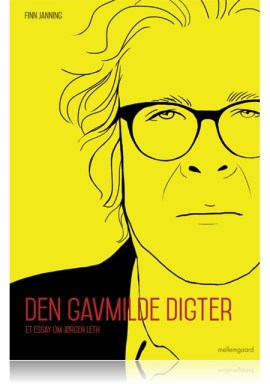
I 2014 udgav jeg bogen Den gavmilde digter – Et essay om Jørgen Leth (se mere her). Kort tid efter var der en venlig læser, som formidlede en kontakt til Leth, hvorefter Leth sendte mig en mail, senere en bog, og så videre. Det er nu ikke dette, jeg vil fortælle om.

Forrige sommer mødte jeg Leth i lufthavnen i Barcelona. På det tidspunkt havde jeg netop fået tilsendt min roman Hvem myrdede Gilles Deleuze?, som jeg derfor havde med mig i bagagen. Efter lidt overvejelse – og et kærligt pres fra min kone – præsenterede jeg mig for Leth og gav ham bogen. Udover en kort korrespondance, havde jeg aldrig set ham i øjnene.

Da vi landede i København, havde han læst det meste af bogen. (Den er kun 80-90 sider lang). ”Den er godt skrevet. Jeg læser kun hvis jeg er fanget, og den fangede mig.”

Jeg fulgte ham hen til bagagebåndet, hvor jeg nævnte Tour de France. Og her skete det! Forløsningen. Ordet alene – “Tour de France” – fik hans øjne til at lyse op. Fuld af kærlighed og livsvarme. Det var – og er – denne begejstring, som er så unik for ham. Han dømmer ikke, men tillader sig at blive tiltalt af livet, hvorefter han så gavmildt rækker lidt videre. Jeg tror, at det smil, de øjne som lyste, var grunden til at jeg skrev bogen. Livsglæden.

Inden vi skiltes, sagde han: ”Jeg er glad for din bog. Den viser en anden side af mig, som de andre (i.e. Lars Movin og Dan Ringgaard) ikke havde blik for. Den eksistentielle. Tak for det.”

Leth er indbegrebet af de uendelig somre. Der, hvor du ser andre hænge ind over deres cykelstyr, som du også hænger indover dit; der, hvor du rejser rundt i Frankrig, ser cykelløb, læser romaner og digte, skriver noter; der, hvor du indimellem er i tvivl om det, som skete, virkelig skete. Der, hvor hele den literære verden åbnede sig for dig.

Det er mig, der siger tak Jørgen.

9788793204201

Indifference to Power

A few weeks ago, I read an interview with Noam Chomsky, who claimed that neoliberalism is destroying democracy. He said something similar when I heard him in Barcelona just weeks before the US election that would bring Trump into power. Although always educational, Chomsky tends to be full of despair. Or, in other words, he is far better (and very good indeed) at analyzing than suggesting how to overcome neoliberalism.

Therefore, it was with great interest that I came upon the new book Postanarchism by Saul Newman, who is a professor of political theory at Goldsmith, University of London. It turned out to be a stimulating acquaintance.

Newman doesn’t counsel pessimism or despair; rather, he explores “the contours of a new kind of political terrain, one that is opened up by the nihilism of the contemporary condition.” We are witness, he says, of a new paradigm “that takes the form of an autonomous insurrection.”

Autonomous insurrection could have been the title of the book as well; what the book offers is not another theory of revolution, but rather how to stand up against power. That is, the rejection of the institutionalized forms of leadership as well as all the norms and ideals of neoliberalism that control our lives.

The book is mainly structured around Foucault, but debated illuminatingly with Benjamin, Sorel, Le Boétie, and Stirner—the latter I have never seen used so convincingly. In fact, the book is a strong case for an ethical and political transformation based on a singular will to embrace life.

The German philosopher Max Stirner helps Newman articulate why and how we may distance ourselves from power; from Sorel and Benjamin, he emphasizes how an ontological anarchism is “pure means without end,” and last from La Boétie, he suggests that “we are always and already free.”

The anarchistic ontology that underlies Newman’s project is related to the idea of thinking and action free from any predetermined end. If there are any predetermined ends, we are not really free. Anarchism, therefore, “is a form of politics and ethics which takes the value of human freedom and self-government—inextricably linked to equality—as central …” It is also here where Newman presents his strongest argument against neoliberalism, which is non-power.

Postanarchism, he says, “can be understood as starting from the non-acceptability of power …” Power affects all aspects of our lives—our bodies and minds. “The totalizing nature of the neoliberal regime lies in the fact that we are governed in the name of our own freedom.” We exploit ourselves through our own obedience to the controlling power structures, which only requires our “voluntary servitude.” It is also here—to overcome this problem, that we live as if we wished for our own destruction—that Newman introduces Stirner, who claims that we live in a haunted world, one of abstractions, or “spooks,” or “fixed ideas,” such as “human essence, morality, rational truth, society, freedom—which are claimed to be universally understood and to which we must aspire.” Yet, Stirner shows that there is no essential or unchangeable truth. The challenge, however, is not to follow along with neoliberalism’s favoring of individuals while it nurtures egoism, but to cultivate ourselves as autonomous beings. To take care of ourselves is to affirm ourselves, not some transcendental concepts that takes us away from life.

Stirner succeeds in pleading for such care without falling into selfishness because his idea of the self is a “creative nothing,” a constant flux of becoming.

Thus, the insurrection is a struggle for the autonomous life. Instead of liberating people from power, they should constitute their own freedom, Newman writes. Or constitute their “ownness,” their autonomy.

Newman follows Stirner and uses the concept of “ownness” instead of freedom, mainly because freedom is so problematic today. Ownness refers to self-ownership or mastery. Stirner is quoted for saying: “I am free from what I am rid of, owner of what I have in my power or what I control.”

Indifference to power, as presented in this book, is non-violent. Newman does not advocate for violence, but joy. “[T]he insurrection is a movement of joy, conviviality and the happiness experienced in being together with others.”

Perhaps for this reason, it is a joyous book—one that doesn’t leave the reader in despair, but full of strength to act in more beneficial and existential ways. It’s a book that cares about life. So, instead of launching an assault on power, one should affirm oneself. According to Newman’s reading of Stirner and La Boétie “power does not exist.” I believe he is right.

“To say that power is an illusion is not of course to say that is does not have real effects; rather, it is to deny power’s power over us,” the author clarifies. Rather the point is that power systems are always fragile and—just look at modern governments—and yet, they only become powerful through our free acceptance of them.

“We become free,” Newman writes, “only when we act as though we are already free.”

I highly recommend this book. It is clearly written, well-argued, and very convincing in its diagnosis of contemporary capitalism. But also—and perhaps more importantly—I recommend it because it shows us that another world is possible.


Coaching som problem

Med afsæt i den filosofi, som er forbundet med filosoffen Gilles Deleuze og psykiateren Félix Guattaris fælles forfatterskab, vil jeg rejse to spørgsmål i dette essay. Det første spørgsmål er: Hvad skal vi forstå ved et problem? I forlængelse heraf spørger jeg: Hvilket problem er coaching løsningen på? Disse to spørgsmål fører videre til mit egentlige ærinde, nemlig at belyse nogle problematiske sider af coaching og herunder vise, hvor coaching reelt fungerer.

Læs: Coaching som problem.

Essayet er oprindeligt publiceret i bogen Coaching i nyt perspektiv redigeret af K. Gørtz og T. Gaihede, Hans Reitzels Forlag, 2014.

Se endvidere:

Coaching – et moderne pyramidespil

Coaching – et symptom på angst

Kunsten at arbejde

Philosopher or Meditator?

“The artist is a seer, a becomer,” wrote the philosopher Gilles Deleuze and the psychiatrist Félix Guattari in their 1996 book, What Is Philosophy.

I thought of this quote the other day, when a student of mine asked me, “What are you: a meditator or a philosopher?”

I’m not sure whether there is—or has to be—a difference, I told her, “I’m a philosopher who meditates. I guess like a carpenter, schoolteacher or football player sometimes does that, too.”

“So to philosophize is, in a way, to meditate,” she said.

“Yes.”

… read the rest of the essay here


De cyklende munke

”Cykelryttere er mennesker, der bruger meget tid alene,” skriver Daniel Dencik i bogen Sportshjerte. Det samme kan man sige om mennesker, der bruger meget tid på at meditere. Det skriver Jes Bertelsen om i bogen Dejlig er jorden.

De to bøger er begge letlæselige og vedkommende essays. Det ene handler om en forfatters passion for cykelsporten; den anden en forfatters passion for at redde jorden. Jeg deler begge passioner.

I forrige weekend var jeg et smut i Danmark, hvor jeg købte de to bøger, som jeg derefter læste næsten simultant. Og her slog det mig, at cykelsporten er mere mystisk og spirituel, end Bertelsen, som ellers er en meget erfaren meditationslære ved Vækstcentret, der ligger et sted i Jylland.

Ok, jorden er dejlig, men den er under et kraftigt eksistentielt pres. Der er behov for en bæredygtig udvikling, der forudsætter en spirituel transformation af os selv og vores organisationer, skriver FN i en rapport, som Bertelsen citerer. Problemerne med hensyn til forurening, grådighed og egoisme er velkendte, mere uvist er, hvad vi kan gøre, samt hvordan vi kan gøre det.

Den amerikanske forfatter Terry Tempest Williams har engang sagt, at det ikke er de stærkeste, der overlever. Snarere er det de meste medfølende. Bertelsen vil sandsynligvis være enig, selvom hans nøglebegreb er empati. ”Men empati for andre end de nærmeste vokser ikke ud som hår og skæg,” skriver han. Empati må trænes. Ligesom ingen rytter nogensinde har vundet Tour de France ved hjælp af præstationsfremmende stoffer alene. De træner. Hver dag. (Og ja, Armstrong og Riis vandt – se mere her, hvis du er i tvivl.)

En måde at træne empati på kan ske ved at kultivere fem sider af menneskets nærvær og bevidsthed. Bertelsen tager udgangspunkt i en femkant, som han har udviklet. Femkanten refererer til fem naturlige færdigheder: Åndedrættet, kroppen, hjertet, kreativiteten og bevidstheden.

Herefter inviterer den mediterende jyde med til træning af disse fem kompetencer, der handler om at udvide horisonten for bevidst nærvær. Det hele fremmer evnen til at tænke over det at tænke. Meditation er en slags meta-tænkning. Eller en ”evne til at være vidne til det, man føler eller oplever.” En ”vidnefunktion,” som det så smukt nævnes.

Nogle af de samme ting kan styrkes ved at betragte cykelsporten. ”Ingen anden sportsgren opviser så ærlige menneskeportrætter,” står der. En af Denciks styrker er, at han giver plads til rytterne, idet han lader dem være vidner, fx siger Jacob Fuglsang et sted: ”Der behøver ikke ske noget andet hele tiden. Det er vildt nok at sidde her og drikke en tår kaffe fra den kop. Hvis den da eksisterer.”

Fuglsang fremstår som noget så unik, som mindful atlet.

Rasmus Quaade siger om den berygtede enkeltstart, at der ikke er plads til nogen tanker, mens man træder i pedalerne. Ingenting – ikke forstået som noget dybt, men som noget frigørende. ”At køre mig selv ud er for mig det ultimative, det er kernen i, hvem jeg er. Det er så svært at beskrive, hvad der sker i hovedet på en enkeltstart. Fordi der sker nemlig ikke noget. Men du har samtidig nogle vilde oplevelser. Især af smerte. Det er ligesom at meditere …” siger Quaade.

Selv filosoferer Dencik, så jeg var helt i tvivl om jeg sad med Bertelsens bog, når han siger: ”At vi vil udforske vores inderste, men samtidig blive høje af noget andet og større. Det er sandt, at underkastelsen kan være formet som en kærlighedserklæring til verden.”

Bertelsen taler flere gange om at arbejde kontemplativ med at fremme en global empati, fx ved at iagttage billedet af vores planet, eller forholde sig til, hvad der sker andre steder i verden af lidelser, eller give bevidst afkald på al det gøgl, som vi ikke har brug for. Meditation og cykelløb handler om gradvist at erfare, hvordan alt er forbundet. Eksempelvis kan ingen se det hele af et cykelløb. ”Indimellem må man bare nyde, at man går glip af noget,” skriver Dencik. Transmissionen af et løb begynder typisk, når der allerede er kørt mange kilometer. Ligesom ingen bliver bevidste før de allerede er godt i gang med livet.

Cykelryttere er nutidens munke. De lever asketisk, som enkelte meditative udøver også gør. Begge – hvis vi tager bøgernes ord for gode vare – gør det ikke for deres eget egos skyld. Det er ”ikke fordi jeg vil i historiebøgerne,” siger Fuglsang, ”men fordi det er et eventyr.” Det er derfor rytterne træner – hele tiden. Det er derfor nogen mediterer. Meditation er heller ikke at nå en destination, men – jeg ved det lyder som en kliche – en eventyrlige rejse i sindet.

Bertelsen siger endvidere, at det ”er en stor illusion at tro, at det er nok at almengøre idealistiske og fornuftige principper. Det skal implementeres. Og der skal en viljeshandling til, for man skal øve sig i empati.”

At blive vidne til det, der sker i en og omkring en. Det kræver, at vi udvider vidden for vores vågenhed, skriver Bertelsen, såvel som vores evne til at fokusere. Til tider kræver det individuelt arbejde at gøre noget gavnlig for fællesskabet. Eller som Dencik skriver med Rousseau i baghjulet: ”Ensomhed eksisterer ikke kollektivt, snarere kan der opstå en følelse af samhørighed i ensomheden, som langt kan overstige ethvert fællesskabs bånd.”

Bøgerne er oplagte partnere i sofaen, måske mens Jørgen Leth gavmildt fortæller os, hvordan et cykelløb rummer mere end op- og nedture. Det afgørende sker altid i mellemrummet, mellem startlinjen og slutlinjen, mellem fødsel og død.

Blog at WordPress.com.

Up ↑