Move to Mars

In The Practice of the Wild, the poet Gary Snyder writes, ”The world is our conscious, and it surrounds us. There are more things in mind, in imagination, than ‘you’ can keep track of – thoughts, memories, images, angers, delights, rise unbidden.”

We are formed by the world. It resembles the mystery of our minds. Still, the world is suffering: Water shortage. Climate chaos. Mass poverty. Mass migration. Terrorism. Financial greed. And so forth.

What to do? In the same essay, Snyder stresses, ”An ethical life is one that is mindful.” Becoming mindful is the challenge.

Of course, we all know it. The world — our planet — needs our care to survive. Yet, it seems as if the planet is wrapped more in sweet and symbolic words than actual concrete actions. Saving the planet has become a moralistic quest. We have forgotten, “the shared ground of our common biological being,” as Snyder writes, that is to say; you have more in common with a lion than what differentiates you from it.

Saving the planet is our responsibility, some say. Some even wants to save it, because they feel guilty. They are concerned about the fear of suffering from future guilt, as when our kids or our friends kids confront us, “Why didn’t you do anything?” However, guilt, fear, and responsibility … I am not sure that it works. At least it doesn’t seem like it’s working. Instead, I suggest that we save the planet out of love.

It’s that simple. We need the planet because we love the sun, the rain, and the wind. We need the planet because we love how we are connected with every being that breathes. We need the planet because we live here; our memories, love stories and miseries are embedded here. We don’t love the planet because we need it for something as vague as career, status or prestige.

Out of love. That’s the best intention for everything. Out of love we plant small seeds, then we nurture them, take care of them, and we do so because deep down we know that survival of the fittest doesn’t rule the world (only capitalism works that way). On the contrary, in life it’s compassion, care, and love that rules. It’s because I care that some life will go on living.

Do you care?

An ethical life is mindful, well, a mindful life is one that tries to live here and now in our bodies. Here and now is also how Gilles Deleuze and Félix Guattari defined utopia in What Is Philosophy?, ”Utopia does not split off from infinite movement: etymologica1ly it stands for absolute deterritorialization but always at the critical point at which it is connected with the present relative milieu, and espe­cially with the forces stifled by this milieu, Erewhon, the word used by Samuel Butler, refers not only to no-where but also to now-here.”

Utopia. Nowhere is always now and here. We don’t need more contemplation, not even higher ideals or moral categories. Rather we need to connect with the present. Becoming more mindful. Mindfulness of the body, for example, can be practiced by watching the breath when goes in and out, listening to the sounds, noticing the smells in the air, becoming aware of what we put in our mouth. Awareness is the key, not judgment. Mind and body are indistinguishable like Alberto Contador and his bike.

To love is not an intellectual project. Don’t your lips shiver when you kiss your lover? Do you love your kids out of responsibility? Out of guilt? No, because that’s not love. You love them because you love them.

Don’t you love the place where you live? If not … move to Mars.

For more on mindful philosophy, I have published the essay “Philosophy of Everyday Life” in the Journal of Philosophy of Life.

Doing Business with Deleuze?

I just published the essay “Doing Business with Deleuze?” in Kritike.
Abstract: This essay has two parts. The first part gives a brief overview of the foundation of economics. The second part contains a broader outline of the way in which philosopher Gilles Deleuze thinks of ethics. In the second part, I also explore the potential connections between Deleuze’s thoughts and economics. Especially, I focus on the concepts of “human capital,” “empowerment,” and more fruitful, the concept of “power-with” as proposed by organizational theorist, Mary Parker Follett. By doing so, I try to minimize the gap between economics and ethics as presented here. Finally, I determine whether it is possible to do business with Deleuze.
Read the full essay here.

Kierkegaard’s Quest: How Not to Stop Seducing

I just published the paper “Kierkegaard’s Quest: How Not to Stop Seducing” in Philosophy of Management.

Abstract

Change has traditionally been perceived as something to be avoided in favor of stability. This can be witnessed in both individual and organizational approaches to change. In this paper, change as a process of becoming is analyzed. The author relates change to seduction to introduce new perspectives to the concept. The principal idea is that the process of change is a seductive experience. This assumption highlights the positive aspects of becoming, growing, and changing. In doing so, reference is made to the philosophy of Gilles Deleuze, as well as the humanistic psychology of Carl Rogers, to analyze seduction, as presented in The Seducer’s Diary by the philosopher Søren Kierkegaard. The qualification of this claim is based on this reading. Finally, a conclusion is offered through brief comments on the relationship between seduction, personal growth, and self-actualization.

Read the entire paper here: Kierkegaard’s Quest- How Not to Stop Seducing

Preface to …

From my book, The Happiness of Burnout:

PREFACE

A proper philosophical question is: Which life is worth living? The question invites a plurality of answers from different perspectives. This plurality leads toward an affirmative practice that asks: How might one live a flourishing and happy life without any transcendent guidance?

This book deals with these questions. It tells the case story of the Danish artist Jeppe Hein’s (JH) burnout.

The material for this book is based on more than 100 hours of interviews with JH. Most interviews were unstructured. In addition, I interviewed his family and some of his closest friends. Interviews with the latter were more structured in order to check for accuracy; however, I also left a part of these interviews open to see whether I could obtain new knowledge or perspectives on the process.

During the process of writing this book, some memories changed. This is normal. Memories are not static, but something that we recreate or reedit in light of present events and new knowledge. This emphasizes that a life is never organized in a static fashion. It’s constantly being organized. A life is changing.

Thus, it can be tempting to see burnout as something that marks everything as either being before or after, at least for compositional reasons. Still, the relationship between the cause and effect is not something solid. Sometimes an effect can cause new causes to emerge. This stresses that ethic is a compositional capacity that uses narrative elements in order to tell, retell, or invent a room where various experiences can be expressed.

While I tell the story of JH, I will constantly mix it with other thoughts and ideas related to burnout. For example, I will present burnout as illustrated in Graham Greene’s novel A Burnt-Out Case. I will relate the story of JH to Greene’s thoughts. Also, I will add perspective by conversing with theories and thoughts from both psychology and philosophy—most notably the philosophy of Gilles Deleuze. Finally, I will relate JH’s story to his art.

The purpose of this is to create a broad site where certain experiences can fold, unfold, and refold in order to share thoughts related to how one might overcome the various setbacks that all lives encounter.

Finally, I might add that this book doesn’t aim to outline one roadmap to accomplish a life worth living. Basically, it does not believe that there is one truth regarding a happy life (or that any unchangeable certainties exist), nor that one path will be suitable for all. Rather, it offers different perspectives, addresses various challenges, and poses questions and ideas that some might find inspirational in his or her quest toward living a happier and flourishing life.

You can read more here.

Camus

The French writer, Albert Camus was ‘a moralist who insisted that while the world is absurd and allows for no hope, we are not condemned to despair.’

Like this, the historian Robert Zaretsky presents Camus in the book, A Life Worth Living — with the subtitle, Albert Camus and the Quest for Meaning. Camus was a moralist, but not a moralizer. He did not judge from a higher or more lucrative position, but tried to grasp what took place. He tried to create meaning where none was given.

Zaretsky organizes his portrait of Camus around five key-concepts: Absurdity, Silence, Measure, Fidelity and Revolt. The concepts are strongly related; that is to say that certain points in Camus’ thinking are repeated, but never in a tiring way. On the contrary, Zaretsky develops an intimate portrait of Camus showing how it most likely was for him to be in this world. Camus is placed both in his historical context — whether it is the struggles between Algeria and France, or between Sartre and Camus — and in conversation with contemporary thinkers.

What do we learn about Camus?

Like Nietzsche, Camus detested any kind of resentment. He knew that being faithful was not a virtue in itself. Instead, one only ought to be faithful towards a life served in happiness. Happiness, therefore, seems to be the main thread in Camus’ struggle. Not as something shallow, but as an existential guide that could help him balance his thoughts. This is an interesting reading.

Happiness is, of course, a difficult task for Camus. First of all, the world is absurd. It is without any meaning. One must invent meaning, just as one must ‘create happiness in order to protect against the universe of unhappiness.’ At times one can only do so by being silent. As Camus says, ‘we do not write in order to say things, but in order not to say them.’

Camus was a pragmatic. He did not idealize life or describe it through theoretical abstractions. He wished to witness life as an experience — no matter how painful or beautiful it appeared. This practical approach caused him several problems, going from his battles with Sartre and Merleau-Ponty, especially their idealized Marxism, to the confrontation with an Algerian student who, the day before Camus received the Nobel Prize in literature, criticized Camus for his silence over Algeria. At one point, Camus famously said: ‘People are now planting bombs in the tramways of Algiers. My mother might be on one of those tramways. If that is justice, then I prefer my mother.’

Zaretsky portrays Camus as a real human being, albeit a bit more gifted than most of us. His most impressive achievement is, I think, that he succeeds in describing Camus’ quest for meaning as if it was a psychological case-study. Recent studies in psychology show that a one-sided quest for happiness can result in the opposite. Instead, having a purpose or being able to produce meaning is more important to make a life flourish. ‘Today,’ Camus said in an interview, ‘happiness has become an eccentric activity. The proof is that we tend to hide from others when we practice it.’ Sixty years later, happiness seems to be something quite ordinary, vague even, that the majority of people like to expose. And yet, whether eccentric or ordinary, a deep felt happiness — then as now — is something that requires ‘attention and effort.’ There is no quick fix for achieving a life worth living.

For Camus, suffering is part of thinking. It is related with one’s active involvement in life. Paying attention. Trying to make sense. One might realize that violence is ‘unjustifiable,’ because of one’s compassion and empathy. As a consequence, one acts. ‘Rebellion, Camus declares, is born of the spectacle of irrationality.’ Like the ancient Greeks, Camus based his thoughts on the idea of limits, Zaretsky says. Nothing should be carried to extremes. Nothing should be denied beforehand. The quest for meaning never stops.

I believe that Zaretsky’s book  is not only interesting for readers of Camus, laymen as well as scholars (i.e. scholars from various disciplines, e.g., literature, philosophy, history and psychology), but also for anyone who would like to change the state of things. It can serve as a toolbox for future moralist! Changing the world requires more than a glittering or candied ideal. In fact, it requires a courageous and honest sensuality that allows one to be touched by life and death as something real — an experience.

Camus questioned life from within this life, the only life there is. No appeal is possible. Still, if we trust Zaretsky, Camus lived a life worth living because of his ongoing quest for meaning, a quest that brought him moments of happiness. ‘For Camus, true nobility lies in lucid acceptance of the world, its beauties and its limits, its joys and its demands, its inhabitants and our common lot,’ Zaretsky concludes beautifully. Absurdity might ‘ambush us on a street corner or a sun-blasted beach. But so, too, do beauty and the happiness that attends it.’ All it requires is attention and effort.

This book is worth reading.

Naturen er ikke noget derude

For naturen er livet simpelt. Den er hinsides moralismen god versus ond. Den værner om livets mangfoldige forbindelser. Det hele hænger sammen, fordi der ikke er noget liv i sig selv; der er ikke andet liv end det, som er i færd med at blive: træet der vokser. Selv træet der er dødende er blivende.

Denne, sikkert, alt for naturlige indsigt erfarede jeg på en pilgrimsvandring i Norge i foråret 2014.

Sammen med min gode ven, kunstneren Jeppe Hein, var jeg fløjet fra Barcelona til Oslo. Fra Oslo tog vi toget til Dombås, der ligger cirka fire timer nord fra Oslo. Det var herfra vi skulle begynde vores pilgrimsvandring mod Nidarosdomkirken i Trondheim. I alt skulle vi vandre knap 270 kilometer.

Læs mere på pilgrimsvandring.dk

Which dish of noodles is your life worth?

Depression is a narcissistic sickness – Byung-Chul Han, Agonie des Eros

“We no longer live in a disciplinary society controlled by prohibitions or commands, but rather in an achievement-orientated society that is allegedly free,” says philosopher Byung-Chul Han in the documentary film Müdigkeitsgesellschaft–Byung-Chul Han in Seoul/Berlin. He continues, “Yes, we presume ourselves to be free, but in reality we voluntarily and passionately exploit ourselves until we collapse.”

German video artist Isabella Greeser directed this poetic documentary film about Han. The first part reflects upon the film Der Himmel über Berlin, directed by Wim Wenders and written by Peter Handke, perhaps because it’s Byung-Chul Han’s favorite film. Müdigkeitsgesellschaft–Byung-Chul Han in Seoul/Berlin had its world premiere on February 9 at the Centre de Cultura Contemporània de Barcelona (CCCB). A few hundred people attended the show.

Byung-Chul Han is popular not only in Germany, but also in Spain, where five of his books have been lated into Spanish. Han’s thesis is that today’s neoliberalism has made politics psychological, or mental. The logic of neoliberalism has invaded our minds. This is sad, since our mind is all we have. It’s our ability to be present in our life, to think, and to love that is threatened by this invasion. We shrink mentally. More and more is said and done in the same, almost hypnotic and uncritical fashion. All that is strange, secret, or negative—in other words, all that passes through our thoughts—disappears, due to the ongoing repetition of sameness. It seems like all aspects of life suffer from the idea of “best practice,” so popular in business organizations. We lack a critical yet creative approach to overcome this confinement.

In the documentary film, we follow Byung-Chul Han as he wanders the streets of Berlin. He talks about his passion for antiquarian shops, and at least here, time seems to endure. As he passes by the tomb of philosopher Georg W. F. Hegel, he says that he is “the most important philosopher for me.” One quickly realizes that Byung-Chul Han is in no hurry, although he publishes with the speed of Usain Bolt. Still, he doesn’t seem too motivated by performance as such. On the contrary, he stops. He sits down. He reads. He closes his eyes. He pauses. All of these are forms of resistance towards today’s positivity. Luckily, he is not part of what elsewhere he has called “the terror of positivity.”

byung-chul-han--644x362

Philosophy is an intervening time, he notes in Müdigkeitsgesellschaft (Eng. Fatigue Society). Philosophy can be understood as the time of “non-doing,” “a peace time,” as he calls it, in reference to Peter Handke. The concept of “non-doing” also resembles elements of mindfulness in that it stresses that we don’t need to be doing things constantly. Non-doing allows things to unfold at their own pace.

Halfway through the film, Byung-Chul Han flies to Seoul, in South Korea. He was born there in 1959. In this part of the world, the relevance of the philosopher’s thesis and analysis becomes even more evident. People are exhausted. They sleep on the metro, on the busses, behind the cash register. It seems tragicomic. Those who are not sleeping live through the gleaming light of the ever-present cellphones. Do the cellphones work as pacemakers?

In Transparenzgesellschaft (Eng. The Transparency Society), Han notes that we are forced or coerced into participating in ongoing positive communication: declaring, “I like,” over and over, again and again. However, we don’t have to like everything. Social media forces people to communicate more. No pause. Perhaps because updates and news drop down quickly, one needs to keep adding new communications in order to remain visible. A non-visible person is like a non-existent person. It is exhausting.

This reminds me of French philosopher Gilles Deleuze, who once said that “art is not communicative, art is not reflexive. Art, science, philosophy are neither contemplative, neither reflexive, nor communicative. They are creative, that’s all.” However, in order to be creative, one needs to stop, allow oneself to be formed or touched by what is happening as it happens, without judging it according to some predefined ideal. Actually, I think that Han’s philosophy, like most forms of Buddhist meditation, tries to free us from the conventional illusion of having a self. Furthermore, unlike his German collegians at the Frankfurter School, Han is not normative in his critique, but immanent. This makes his approach more creative. Most of his critique is realized as practice. To stay with the vocabulary of Deleuze, then he points out liberating lines of flight that can change our relation to the world, for example, that it is ok not to do anything.

Byung-Chul Han claims in Agonie des Eros (Eng. The Agony of Eros) that we (far too many of us, at least) have become narcissistic. I find it difficult not to agree with him. Like Narcissus, more and more people fall into the water and drown. Or life vanishes while people are Googling their own name. Or they jump off a bridge. South Corea is on the top of the list of countries with the highest suicide rate. In the film Han passes by a bridge in Seoul that is a popular site for suicides. Apparently, no one attempts to understand the depression that leads many to commit suicide. Rather, the sadness is covered up with quotes from poems alongside colorful pictures of delicious noodle dishes. Which dish of noodles is your life worth?

Neoliberal capitalism has gone mad. Freedom has turned itself into a voluntary constraint on performance or achievement. Capitalism is like a train without brakes. We are exhausted; perhaps we need to embrace a tired society where it is okay to do nothing for a while. The Danish philosopher Søren Kierkegaard once wrote to his fiancé Regine Olsen that freedom is the element of love. If we follow Han, then today we are not free. Instead of love and compassion, we have stress, burnout, and depression. I guess it is time to take a break. Pause. Close your eyes. Breathe.

Byung-Chul Han’s voice is both original and needed, and not just in Spanish and German. The documentary is a harmonic introduction to some of his thoughts and also provides some biographical information. Though it doesn’t add anything new regarding his ideas, it can serve as a supplement for those who still can’t find the time to sit down and read one of his short but stimulating books.

For more about Buying-Chul Han, please, see here.

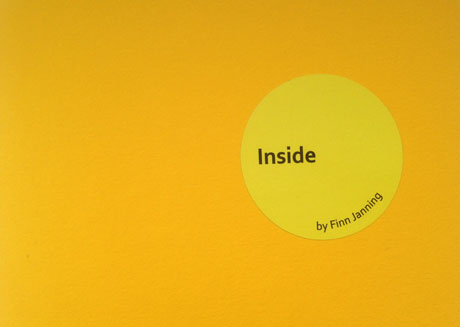
Inside

I just released the essay Inside with illustrations by Jeppe Hein.

InsideThe essay is a contribution to Hein’s exhibition, All We Need Is Inside at 303 Gallery, New York, US.

Enjoy.

Vægtning af følelser er en betingelse for fornuft

Det skal handle lidt om etik, regler, værdier og en lille smule om profit. Hvordan hænger disse begreber sammen, hvis de overhovedet gør?

Den amerikanske filosof Robert Brandom skriver i Making it Explicit, at normer – her forstået som eksplicitte regler – forudsætter, at normer er implicit til stede i praksis.

Han mener, at hvis en regel specificerer, hvordan noget gøres korrekt, må den regel kunne anvendes i enhver lignende omstændighed. Hvis ikke, er reglen ikke værdifuld. Det betyder, at værdier er konsekvente og konsistente.

Ligeledes er anvendelsen af en regel i en bestemt omstændighed i sig selv, noget som kan gøres korrekt eller ukorrekt. En eller anden kan misforstå omstændighederne.

I praksis betyder det, at enhver regel kun fungerer under særlige omstændigheder. Hvad der nu er særligt ved de fleste omstændigheder er, at de sjældent er generiske. Det, der er rigtigt og forkert i dag, kan vise sig at være anderledes engang i fremtiden. Enhver værdi udfoldes i kraft af en grundig opmærksomhed på det, som sker.

Lad os afprøve Brandoms påstand. Læs videre i Modkraft.

Forståelse og kærlighed er ikke to ting

”Filosoffens opgave er at analysere udsagn, ikke at graduere dem; han er en lære, ikke en prædikant. Hans mål er at øge forståelse og tolerance, og erkendelsen af at disse to er rejsefæller.” – Ray Billington

Filosofi beskæftiger sig bl.a. med, hvordan vi opfatter verden, det vil sige hvorledes vi undersøger, udforsker og erfarer den. Filosofi kan gøre os opmærksom på andre værdier, såvel som andre måder at tænke og føle på, der kan fremme vores forståelse og tolerance. At forstå er tæt forbundet med medfølelse, idet det kan være svært ikke at føle noget, hvis man rent faktisk forstår. Filosofisk forståelse er beslægtet med den opvågning, som buddhister praktiserer gennem meditation. ”Forståelse og kærlighed er ikke to ting, men bare en,” skriver munken Thich Nhat Hanh.

For at advokere for en reform i et samfund eller en bestemt kultur (fx en businesskultur) er det vigtigt, at appellere til allerede eksisterende normer, som er udbredte. Visse forståelse. Det nytter ikke at referere til universelle etiske normer, fordi ingen normer eksisterer uden praksis. Alle samfund og kulturer ændrer sig, bl.a. fordi normerne for hvad der er rigtigt og forkert, ændrer sig. Vi tager løbende ved at lære af vores erfaringer, idet forståelse netop bringer indsigt, hvorved der åbnes for nye relationer. Eller: de fleste tager ved lære. Har beslutningstagere eksempelvis indblik og forståelse for, hvorfor en bestemt praksis anvendes, er det muligt at appellere til andre normer (eller opfinde nogle), som tjener samme værdifulde formål, men uden at krænke, hvad de pågældende finder acceptabelt eller ej.

Moral repræsenterer det sæt af fundamentale basisværdier, der dikterer ordentlig opførsel inden for et bestemt samfund eller kultur. En stor del af de moralske værdier deles på tværs af tider, kultur og samfund. Eksempelvis har de fleste samfund altid forholdt sig negativt til overlagt mord, eller utroskab med venners koner (selv moraliserende rockere deler denne fundamentale værdi). Andre handlinger kan det være lidt sværere at vurdere. Kan nogle former for drab retfærdiggøres? Hvornår er en gave udtryk for taknemmelighed og ikke bestikkelse? Er det ok, at pace og straffe sine børn, som led i deres opdragelse?

Det afhænger af konteksten. Af vores viden og erfaringer. Vores evne til at forstå. Personligt vil jeg svare nej til det første spørgsmål.

Etik er et spørgsmål om frihed. Forskellige moralske værdier kan til tider fremme vores frihed, mens de til tider kan hæmme denne. Grundideen er, at vi ikke fødes fri, men gradvist bliver det. (Det ved enhver, der har holdt et hjælpeløst barn i sine arme). Ønsker man at yde modstand mod en kulturs fundamentale værdier, kræver det udover en respekt, tolerance og forståelse for disse værdier, også en accept af at normer begrundes ved hjælp af fornuften (ikke geværet). Dette er ikke kun en klassisk filosofisk pointe som Sokrates eksempelvis praktiserede, da han drak den gift, samfundet – ganske uretfærdigt – havde dømt ham til at drikke. Han accepterede samfundets normer; sandsynligvis, fordi han vidste at blandt hans studerende var en ekstrem vis mand, Platon, som ville være i stand til nuancere vores forståelse af begrebet retfærdighed. Ja, måske vidste han, at Platon ville udødeligøre Sokrates (drømmen om udødelighed er velkendt i filosofien). Noget lignende skete, da Nelson Mandela – inden han blev præsident – trådte frem på offentligt fjernsyn og talte direkte til sine landsmænd. Han fortalte dem, at vejen mod frihed ikke går gennem vold, men gennem demokratiske tiltag. På den måde refererede Mandela ikke kun til nogle idealer, som han delte med den Sydafrikanske befolkning (fx behovet for retfærdighed og lighed), han fortalte også noget om, hvad der var korrekt og ukorrekt praksis i den givende situation.

Etik er svært, ikke kun fordi vores fornuft kommer i klemme. Det samme gør vores følelser. Etik er aldrig uden passion. Udfordringen er ikke desto mindre, at vurdere alle de valgmuligheder som man både kan argumentere sagligt og føle lidenskabeligt for. Den bedst mulige beslutning er den, som er frigørende, idet noget mindre relevant holdes tilbage. Der er tale om en afklaret beslutning, hvor man ikke lader sig forføre af tanker og ideer som reelt trækker en ned i impotensen. En sådan beslutning medfører til tider, at nye stier skal trædes til. etik kræver mod. Modet viser sig som en skabende praksis i nuet.

Et eksempel er det forsonings- og sandhedsprojekt som Sydafrika gennemgik i årene efter Apartheids ophør, hvor grusomme historier blev fortalt og delt. Her kunne alle mærke smerten, her og nu, mens et andet menneske fortalte om sine rædsler. For at forstå det uforståelige, må man nødvendigvis vågne op. For at kunne tilgive og komme videre i livet sammen, må man acceptere, det som sker (og skete).

Etik er et livslangt eksperiment. Forståelse og kærlighed. At elske uden forståelse, er ikke kærlighed, men ideologisk naivitet som sjældent er særligt bæredygtigt. Det er bl.a. derfor filosoffen ikke missionerer.

Blog at WordPress.com.

Up ↑