We’re All Accountable

… From my essay on sexism, morality, identity politics, and compassion:

“I remember Rebecca Solnit saying something about men being the problem—not all men, but men. And she’s almost right. Because men, as philosopher Simone de Beauvoir said about women, aren’t born men; they become men. Weinstein didn’t come into this world as a sick misogynist. He, like all those like him, was formed by the culture in which he was brought up.

Luckily, I think, I spent a lot of time with my mother and my sister. Yet, many small boys spend time with their mothers, and less time with their fathers … or, at least, they used to. Does this mean that even women—some mothers—are favouring their sons? Encouraging them to see themselves as better than girls? Telling their daughters to passively obey?”

Read the entire essay here.

Philosophical Counseling

Some years ago, I was teaching a course in Philosophical Counseling. To my surprise, all that the students wanted to know was “What is the right thing to do?” Having that knowledge, they assumed, would make life easier. “Perhaps,” I said, “but not better or more interesting.”

Their request is part of the obsessive achievement eagerness of today’s society to perform well according to fixed ideals. It creates dullness when it comes to mental exercises. The unfortunate norm is the faster the better. I told them that philosophy is about developing problems, not delivering solutions. It’s a slow practice. It’s for life. My answer made them fidget with impatience. To philosophize, I emphasized, is to dwell on the fundamental questions, and these questions are developed in problems, just as the problems are enveloped in fundamental questions.

Yet, my students insisted: “So, what is the right question?”

I told them that this particular question was related to the problem embedded in the question. For example, how do you draw a clear distinction between right and wrong?

The ones who weren’t paying attention looked up from their screens.

In sports, where the rules are given, I said, it is rather obvious to tell whether a player is “doing it wrong.” Similarly, in business, where profit seems to guide every decision, knowing what is right and wrong may be easier. Life, however, is neither a game nor a business, although there is a tendency to classify people into winners and loser as if life were that simple. Such labeling is part of today’s achievement society. Everyone’s performance is measured according to an ideal–and ideal that is often related to the staus, prestige, power, and, of course, money that is associated with being a winner.

They went silent, so I went on. Of course, there are things in life that are rather obvious. For instance, no one needs philosophy to tell you that it is wrong to kill, discriminate against, or repress other people. Instead, philosophy begins when we start to questioning the obvious. Could I live another life? What is also possible? How may I also live?

A part of philosophy is to accept that some problems remain without solution; some questions can’t be answered once and for all.

Such a question is Which life is worth living?

Of course, one of my students then asked me: “Which life is worth living?”

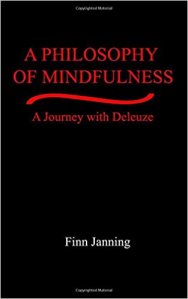
This is how A Philosophy of Mindfulness – A Journey with Deleuze begins.

31DYvhXpQ0L._SX311_BO1,204,203,200_

Gratitude

I’m somewhere high among white clouds between Copenhagen and Barcelona, on my way back home to the latter. Suspended at this altitude, I’m struck by a sentimental notion.

A short time ago, I said goodbye to my parents in front of the airport. They stood quietly, waving, while I disappeared into the building. I recall this picture. It’s a picture filled with affection. Gratitude. I’m grateful. They know this. My actions speak volumes, to be sure, even though I do nothing.

Perhaps this is why I discern, no, actually, I recognize and feel a stifling doubt: How can I be sure that they know? Have I thanked them? Then, I think: thanked them for what? At this point, I rise to my feet and retrieve my computer from my rucksack in the luggage compartment overhead.

My parents are older than me. That’s the usual way of things, but they’re older in a way revealing that there are bigger divides between some generations than others. They were among the Baby Boomers born in the ’40s.

I probably belong in the mathematically unknown generation known as X, which is also linked to Y. Somewhere in between. I’m too young for Douglas Coupland and far too old for Miley Cyrus. Somewhere between ‘just too late’ and ‘a little too early’ is how I’ve always perceived myself.

Read the rest of the essay here

Right here, right now

“Know thyself” is one of Greek philosophy’s best know aphorisms. This aphorism, or saying as Aristotle called it, was inscribed in the forecourt of the Temple of Apollo at Delphi. Greek philosophy tried to turn people inward in a friendly confrontation with themselves and their approach to the life around them.

“Know thyself” was not the only aphorism in ancient Greece. Another well-known example is “Take care of yourself”.

The two aphorisms are tied. The better care you can take of yourself, the better you will know yourself. And the reverse. Philosophic practice consists of both. You cannot get to know yourself better without self-care. One way to show self-care is to know yourself better, for example, by acknowledging your limitations and mistakes.

The two aphorisms underscore that philosophy is a practical investigation of life. An investigation into what it means to live. Seen in this tradition, philosophy is both ethical and spiritual, because in order to gain self-awareness, the individual must necessarily take his or her experiences seriously. Philosophy becomes an ongoing testing of one’s opportunities and conditions for existence. Life becomes a great laboratory. And it is here that philosophy’s third aphorism or pillar comes into play, as a balance between “Know thyself” and “Take care of yourself”.

The third aphorism is “Know your place”.

Knowing your place is to know your own history as well as the history that surrounds you: for example, when you were born, where, in which body, with which colour, which gender. To know your place is one way of making the ideal of knowing yourself and taking care of yourself relative, as it always happens in a specific context. Life is always lived here and now. A here and now that winds back and forth in time, yet underscores that what happens is happening here and now.

It is through your presence in the now that you can take care of yourself, test or experiment with life as a lasting attempt to become better at living, meaning knowing yourself. It is never too late, as every self-examination begins here and now.

The moral is therefore just as simple as it is difficult to practice: If you are not paying attention to where you are, if you are never present, it is difficult to care for yourself and impossible to get to know yourself better.

This journey never ends, as you and I and everyone else changes all the time. That is why certain questions never go out of style:

Who are you? What kind of life do you want to live? Are you here?

***

In connection with the launch of a new Danish ecological clothing label, I was invited to write three semi-philosophical reflections: I am Right Here, Right Now is the second.

A Smile for You

It is said that a smile knows no boundaries, that it is universal.

A smile can cross continents and time. It can overcome ugly ideologies, whether they are tied to race, religion, age or sexual observance.

A smile is more mobile than the internet. It connects. It is life’s messenger.

A smile can be decoded at a very early age. Children know whether what they are doing causes concern or earns approval – just by looking at their parents or other adults.

A smile is a language that connects, touches and penetrates because it confirms life. No less than life.

A smile is a smile is a smile. It can be said that simply. It can’t be misunderstood. Naturally, false smiles exist. But such smiles are not really smiles, but rather false smiles. They are assumed, like the Joker’s smile in the Batman comics and films – pasted on. A false smile can seem frightening, because it pokes fun at life. No one knows that better than best-selling suspense author Stephen King, who in his book IT has a clown represent man’s deepest fear. The false smile lacks respect.

A smile is something happy, as well as something serious. It is a love missile that does not seek, but gives, shares. A smile is generous.

A smile comes when it comes, as we say. And indeed it does. But it is possible to cultivate a more smiling approach to life, as when the Vietnamese monk Thich Nhat Hanh encourages his readers to wake up with a smile on their lips. It is life you are smiling at, from and with. You have awakened, not died in your sleep. You can always smile, because things could be worse. You could be dead. A smile is what always makes us turn towards life, even when we feel that life has turned its back on us. A smile wills life.

A smile is disarming. You can go through most of a day without speaking to other people but still treat others with respect and kindness, if only you smile.

A smile is more than an upward curve on your lips. The smiling sun in children’s drawings always has a mouth turned upward. But even if your mouth were to be sewn shut, you could still smile with your eyes. In fact, you can smile with your entire face. Your entire body. You can have a smiling approach to life. Not a frivolous or unserious approach, but one that is life affirming. The French philosopher Michel Serres has said that people who age unattractively do so because they so rarely smile. Even your wrinkles can smile. Yes, even your frame can smile.

A smile always emphasizes three things: I have lived, I am living, and I want to live.
That is why you smile.


***

In connection with the launch of a new Danish ecological clothing label called Change yourself, I wrote three semi-philosophical reflections: A Smile for You is the first.

A Fragile Life

The main argument in Todd May’s book, A Fragile Life: Accepting Our Vulnerability, is that most of us would be unwilling to choose an invulnerable life even if we were given the opportunity. Of course, we all understand that in reality, it is impossible to live a life where we avoid all sources of pain. In his book, the author proposes that we should accept our vulnerability and acknowledge that the suffering is part of life. The question is: How do we develop that acceptance within ourselves?

It is doubtful whether May is correct in his assumptions regarding what most people might choose or might not choose. When supporting his supposition, he references Buddhism, stoicism, and the thoughts of Tolle Eckard, an extremely popular spiritualist currently. Many people might find the opportunity to live an invulnerable life, one in serenity or full awareness, an attractive option. However, this possibility seems highly unrealistic for the majority of us if we take the philosophical perspective seriously. Still, regardless of the truth regarding this particular claim, May’s book can be a useful companion for people who want to reflect on their lives. It is full of examples and is written for a broad audience.

The book starts by setting the scene regarding the inevitable vulnerability inherent in our lives. It then moves on to discuss to what extent having a project is required to provide meaning for our lives. He suggests that, “understanding how we can suffer requires that we first understand how we live.” May loosely follows the ideas of Bernard Williams with his suggestion of a meaningful project since it is embedded in a net of social practices such as rules and norms. By living our lives according to a meaningful project, we encounter some of the first potential problems. He writes that ,  “many of the ways we are vulnerable to sufferings” comes from the various things affects us negatively, that is, hinder “our ability to engage with our projects.”

The two opening chapters of the book provide excellent examples of the problems that result from vulnerability as compared to invulnerability. Next, May introduces various philosophies that claim to provide us with a model of how to live without suffering: Buddhism, Taoism, Stoicism, Eckard, and Epicurean. He describes how psychological and physical pain are connected for example. Then, he mentions that one of the challenges when it comes to suffering is whether or not we are capable of accepting the situations we cannot control. This section begins to sound like a book for consulting managers, but it does present an easily understood summary of these various philosophical schools of thought.

One of the guiding ideas links the introduction and his conclusion is how our past has led us to who we currently are and where we are in our lives today. The question is whether we should affirm our past or just simply accept it. May favors the latter approach. He uses the example of the Holocaust to illustrate his point. This is not an event we would want to affirm. Instead, he suggests that we accept that it happened neither affirming nor refusing it. Similarly, we should try to accept our past without necessarily assigning it a positive or negative value.

May’s book focuses on the fundamental question of how to live a life worth living with or without suffering. The answer that May provide us hinges on acceptance. We should learn to acknowledge our suffering. Acceptance, he writes, “does not render us immune to our suffering. It does not take us beyond our fragility. But neither does it leave us bereft. To accept the contingency of things and the quiet sadness that may go along with it is not to lie prostrate before the world. Rather, it is to embrace a perspective that can, with luck, help us find a path.”

The book deals with an interesting existential issue. Even though he uses personal stories as well as the experiences of others, the book never truly had an effect on me. It lacked the power of classical existentialist work, which really cut into my flesh. Perhaps, May’s conclusions were too banal. While I do feel that the invulnerable philosophies presented were relevant, the argument could have easily worked even without their reference. The distinction between a life with or without suffering is already clear enough. I would rather that he strengthened the argument regarding why it might be “attractive” for our lives to include suffering. For example, he could explore how we might develop creativity and artistic expression in an attempt to overcome our miserable lives.

Still, the book would be useful for newcomers to philosophy in my opinion. Also, readers who like a more conversational style would enjoy this book. The conclusions are not dramatic, but they might generate a new interest in the reader for further study of the existential philosophies that May summarizes in passing.

First published in Metapsychology, Vol. 21, Issue 21.

Mindfulness for begyndere

Mindfulness drejer sig om at leve ved fuld bevidsthed. Bevidstheden er ikke kun noget kognitiv, men i lige så høj grad noget kropsligt. Med den franske filosof Merleau-Pontys begreb ”la chair” (kødet) kan man sige, at erfaringen –  det at leve – sætter sig i både sindet og kødet på en.

Bevidstheden er en passagen mod større og større grad af opmærksomhed. For at skærpe ens opmærksomhed og nærvær opererer mindfulness med to vinger: 1) koncentration (samatha meditation) og 2) observation (vipassana meditation).

Koncentrationen svarer til at stikke en pind i jorden, hvor du sætter en elastik omkring. Indenfor elastikkens rækkevidde kan du observere koncentreret, det vil sige uden at blive forstyrret eller lade dig distrahere. Du kan læse koncentreret, selvom bilerne larmer udenfor. Men kan du også læse koncentreret i en bus fuld af skolebørn? På camp nou, mens Barcelona taber til Real Madrid? Gradvist kan elastikkens elasticitet udvides. Erfaringen af  nye øjeblikke, kan hjælpe en med bedre at kende ens egne begrænsninger. I realiteten kan ens rummelighed eller elasticitet udvides så meget, at hele ens liv leves i en koncentreret observation: mindfulness.

Mindfulness handler om at blive fortrolig med det ufortrolige, bekvem med det ubekvemme, idet man formår at etablere en indre stilhed, hvorved man uforstyrret kan observere, det som sker, uden at dømme. Af samme grund kan man også handle mere hensigtsmæssigt i stedet for blot at reagere.

For den franske filosof Gilles Deleuze handler etik om ikke at være uværdig til at bære eller rumme det, som sker. Det, som livet møder en med. Etikken bliver en livsform, mere end et regelsæt. Hvordan udvider man løbende sin kapacitet til at blive påvirket uden pludselig at lukke af, fordi man ikke rumme mere? Hvordan gøres ens elastik mere elastisk?

I sin korteste form er mindfulness meditation (jf. opmærksomhed og observation), men meditation alene fører nødvendigvis ikke til en mere etisk og vis levevis, selvom dette er intentionen. Der findes flere forskellige former for meditation, der alle har til formål at transformere eller kultivere sindet. Den amerikanske meditationslære Joseph Goldstein, skriver: ”Hvis du vil forstå dit sind, sæt dig ned og observer det.”

Kunsten er at leve opmærksom og nærværende. Hele tiden. Meditation er på den måde kun laboratorieundersøgelser. Personligt ønsker jeg ikke at leve hele mit liv med min røv placeret på en pude, mens jeg med krydsende ben observerer mit sind. Snarere vil jeg gøre hele livet til et stort laboratorium, hvilket filosoffer altid har gjort.

Mange praktiserer i dag mindfulness for at minimere flere af livets store og små utilfredsheder. Det kan være det stressende pres, der udspringer af især samfundets neoliberale præstationskrav. Der er dog også mange, der stresser sig selv på grund af deres tilgang til livet. De vil ikke gå glip af noget. Af samme grund er der mange, der praktiserer mindfulness for at kunne forholde sig anderledes til verden, fx med en større grad af venlighed og generøsitet.

Ifølge Buddhismen, hvorfra mindfulness stammer, er ethvert liv lidelsesfuldt, men disse lidelser kan undgås (eller minimeres) ifølge Buddha, såfremt en person formår at leve koncentreret (mindfulness), etisk og vist. Denne trebenede skammel behøver selvsagt samtlige ben, hvis ikke det hele skal vælte omkuld. Eksempelvis vil en øget forståelse eller visdom lede til en mere ansvarlig, etisk eller moden levevis, som igen kan skærpes ved at man løbende udvikler og udvider sit refleksions- og erfaringsrum. Eller omvendt. Der er ingen rangering. En øget selvindsigt medfører, at selvbedraget gradvist minimeres. Det betyder, at de erfaringer og erkendelser som opstår, når du observerer sindet har betydning for din måde at leve og tænke på – såfremt man tør acceptere disse.

* * *

Når du mediterer, vågner du op. Det er i hvert fald ideen med meditation, selvom nogen sikkert falder i søvn eller drømmer. Meditation er reelt blot at sætte sig ned, rette ryggen, trække vejret og give slip på ens tanker. Ikke at tænke intet, som det så mytisk påstås af nogle, men at give slip på alle de tanker og følelser, der strømmer gennem en. Uden at dømme de tanker, som passerer.

Meditation handler ikke om navlepilleri. Snarere om at løsrive sig fra den del af verden, hvor titler, prestige, status og magt florerer. At gøre sig mindre forbundet eller afhængig af disse sociale identiteter. Der er tre ting, som er vigtige i forbindelse med meditation eller mindfulness. 1) Det handler ikke om dig, så drop dit ego, 2) Alle levende organismer er en del af den samme verden, gensidigt forbundet, og 3) Medfølelse er afgørende for alt liv.

At anvende mindfulness som en form for ego-trip, har derfor intet med mindfulness at gøre. Det er blot et ego-trip i forklædning.

Det er ikke svært at mediterer, men måske at ville det. Vi trods alt i en verden, hvor det er meget nemt at lade sig distrahere eller underholde. Hele verden synes at være til stede i vores lommer, hvis det altså er der, vi har mobilen. Meditation kan dog hjælpe en med at prioritere.

Hvad er det, som du vil bruge din tid på?

At meditere er en tålmodig og krævende praksis, men også givende. Gradvist har jeg selv erfaret at meditation kan muliggøre længere erkendelser af ren og skær sammenhørighed med livet. En erkendelse af at alt er forbundet.

* * *

Meditation er en slags ikke-gøren, hvilket ikke er det samme som en passiv accept. Snarere et forsøg på aktivt at gøre sig værdig til at erfare, det som sker. Ved fuld bevidsthed. Det minder om Gandhis begreb om ikkevold, som jo heller ikke er et passivt, men derimod en aktiv strategi om ikke at gøre vold. Den tysk-koreanske filosof Byung-Chul Han har i flere værker plæderet for en ikke-gøren, som et sagligt alternativt til den undertrykkelse, som vi selv skaber i vores iver efter at præstere.

Det hele er for så vidt ganske banalt.

Meditation kan fremme en større taknemmelighed, fordi den kan træne vores opmærksomhed på det, som forekommer, mens det forekommer. Denne ide om at selve aktiviteten – nu og her – er værdifuld, findes hos både de stoiske filosoffer og Aristoteles.

* * *

Mindfulness, som flere kalder for hjertet af Buddhismen, er en oversættelse ordet ”sati”, der er skrevet på det ældste buddhistiske sprog Pali. ”Sati” refererer til hukommelse såvel som opmærksomhed. Hvad er det, som man vælger at huske? Som man ikke vil glemme?  Er denne sindsstemning kompetent eller inkompetent? Er denne sindsstemning værd at kultivere eller bedre at opgive?

Mindfulness refererer også til hjertet, ikke kun som en muskel (eller en lidt søgt poetisk metafor), men som en følelsesmæssig intuition, der kan trænes som var det en muskel. Ideen er nu ikke at vi skal følge vores hjerte, som i en romantisk popsang, men træne hjertet ved hjælp af disciplin. Jeg er nok ikke den eneste, der har erfaret at mit ”hjerte” vil noget, som reelt ikke er givende for mig. Men hjertet er et vigtigt organ – selv i disse tider, hvor alt reduceres til hjernen.

Recordar er det spanske ord for at huske og mindes noget; et ord som oprindeligt betyder at noget ”vender tilbage og passerer hjertet.” Ideen er, at ens erindringer passerer hjertet, hvorved man kan prøve at forholde sig anderledes til de ting, som kan ændres, og ikke bekymre sig om de ting, som ikke ændres. Det handler om at rydde op, så man kun gemmer de givende minder eller de minder, som man kan acceptere uden vedvarende frustrationer. Der er ingen grund til at slås med fortiden. Der er ingen grund til at gemme på alt det, som ikke står ens hjerte nært.

Det er altså muligt at etablere en mere givende relation til sin egen fortid. Det vil sige ikke længere gøre sig til offer af ens skæbne, men betragte ens skæbne – uanset hvad – som noget man selv har valgt.

De stoiske filosoffer og Nietzsche, talte om det frigørende i at positionere sig i denne ene verden. Der findes ikke andre. I stedet for at klandre guder eller underkaste sig transcendente idealer, kunne du selv prøve at skabe en flugtvej ud af meningsløsheden.

Selvom mindfulness er et bevidst, opmærksomt og ikkedømmende nærvær i hvert øjeblik, skal man passe på med ikke at gøre nuet til noget helligt. Ethvert nu rummer altid noget fortidigt, som ikke er blevet fuldt ud aktualiseret, ligesom det rummer noget fremtidigt, som endnu er i færd med at blive udfoldet.

Når mindfulness taler om nuet, er det primært af pædagogiske hensyn, for at vi ikke skal dvæle unødigt ved fortiden eller bekymre os om fremtiden. Men nuet som sådan eksisterer ikke, da det jo hele tiden forandrer sig. Sagt anderledes, hunde synes altid at være tilstede i nuet, logrende med halen, på jagt efter et klap eller en kiks, men de er ikke bevidste eller opmærksomme, mens de logrer på halen. Ellers ville de ikke kunne æde sig selv ihjel.

* * *

Så, kan mindfulness alene redde verden? Nej. Ingen eller intet kan redde noget som helst alene. Ændringer kræver et fælles engagement.

Verden bliver nødvendigvis ikke bedre, fordi en eller anden mediterer. Men meditation kan skærpe den enkeltes opmærksomhed på de sociale og politiske strukturer, som hæmmer forskellige former for liv, fx det nuværende præstationssamfunds rigide idealer. Ligesom meditation kan skærpe den enkeltes opmærksomhed på sproget, fx hvordan visse ord implicit undertrykker køn, racer eller seksuelle tilbøjeligheder. Mindfulness kan  endvidere fremme et mere opmærksomt forhold til ens eget forhold til verden. Af samme grund kan mindfulness være dét skub, som nogle mangler for at vågne op, og involvere sig i skabelsen af en mere venlig og bæredygtig verden. Sammen.

To Love Slowly

In Either/Or: A Fragment of life, the Danish philosopher Søren Kierkegaard wrote, “Of all ridiculous things the most ridiculous seems to me, to be busy.” In this talk, I will argue why I agree with Kierkegaard but will also—perhaps more importantly—illustrate why it is so difficult to not live ridiculously. Lastly, I will show a way out by (slowly) cultivating a will to love.

This is a recording of my talk entitled “To Love Slowly“, which I presented at the Doing Deceleration Symposium at Notthingham Contemporary, July 2017.

To ride is to meditate

This year, I left Barcelona looking for alternative ways of getting closer to experiencing life as a cowboy. Or perhaps it was just to experience truly being alive, more connected with life. By this, I mean being consciously aware of what takes place while it takes place—here and now, without constant ramifications about this or that, hither and thither.

Read the rest of the essay here.

Becoming a Seer: Thoughts on Deleuze, Mindfulness, and Feminism

My essay “Becoming a Seer: Thoughts of Deleuze, Mindfulness, and Feminism” is out now in Journal of Philosophy of Life, Vol. 7, No. 2, 2017.

Abstract: This essay circles around two ideas. First, I try to answer the ethical question “What is the right thing to do?” through the application of the French philosopher Gilles Deleuze’s affirmative philosophy. Second, I relate Deleuze’s philosophy to mindfulness. I do not wish to suggest that they are identical. They are not. Yet, mixing mindfulness with Deleuze leads to a philosophy of mindfulness. That is a philosophy that makes us less blind to our experiences, but also ethically responsible for what actually happens. Hereby, I move mindfulness from the sphere of psychology into philosophy, or from being primarily a practice of turning inward to one of turning outward, but also make Deleuze’s ethic more operational. The latter I will – briefly – illustrate by touching on elements of feminism.

Read it all here.

Blog at WordPress.com.

Up ↑