Finding Purpose: Hvordan passion former succes

“Wisdom is knowing I am nothing.
Love is knowing I am everything.
Between the two my life moves.”
— Nisargadatta Maharaj

Finding Purpose – hvordan passion og mentale færdigheder former succes

Sidste udkald for denne workshop, der finder sted lørdag den 22. december!

Finding Purpose – Hvordan passion og mentale færdigheder former performance og velvære

En to-timers workshop, der undersøger, hvad der sker, når præstation ikke kun handler om resultater, men om mening, nærvær og indre motivation. Med afsæt i sportspsykologi, opmærksomhed og erfaring fra eliteidræt arbejder vi med mentale færdigheder, der styrker både performance og menneskelig velvære.

I workshoppen arbejder vi med:

• Hvordan passion og formål stabiliserer performance
• Hvorfor stress ofte er fravær af nærvær
• Hvordan mentale færdigheder kan trænes uden hårdhed
• Hvordan vi præsterer bedst, når vi handler i overensstemmelse med det, der betyder noget

Workshoppen kombinerer:
– filosofi
– psykologi (ACT og mindfulness)
– korte refleksionsøvelser
– guidet meditation og bøn

Alt præsenteret i et sprog, der kan mærkes og bruges i hverdagen.


Praktisk
🗓 Lørdag d. 20. december
⏰ 10.00–12.00
💰 Pris: 195 kr.

Tilmelding & betaling

Tilmelding sker ved betaling af det fulde beløb til:

La Caixa – Finn Janning
IBAN: ES45 2100 0887 5701 0062 1746
BIC/SWIFT: CAIXESBBXXX

Du modtager bekræftelse og praktisk information efter betaling.

Hvem kan deltage?

Workshoppen er åbent for alle.

Underviser

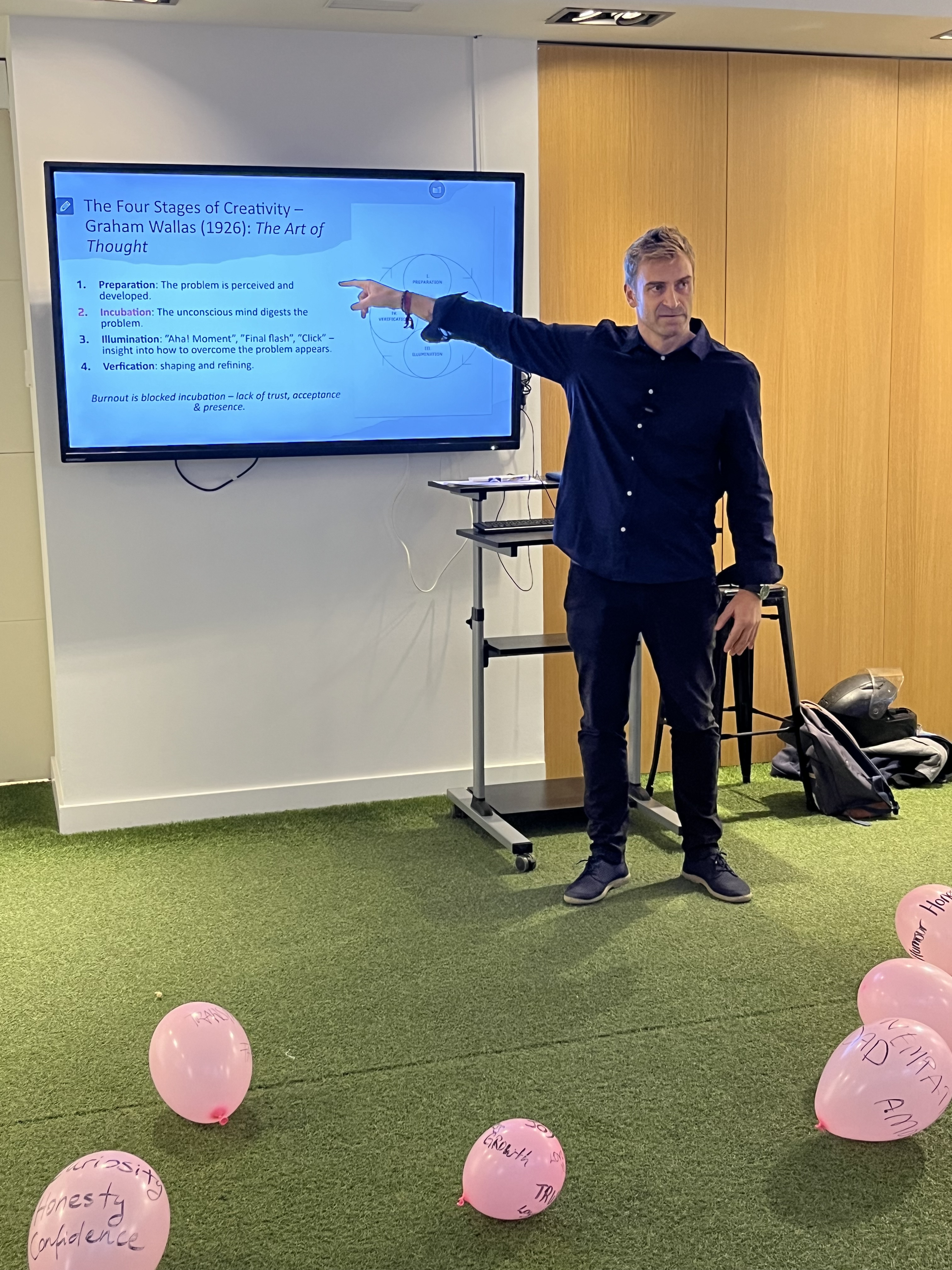
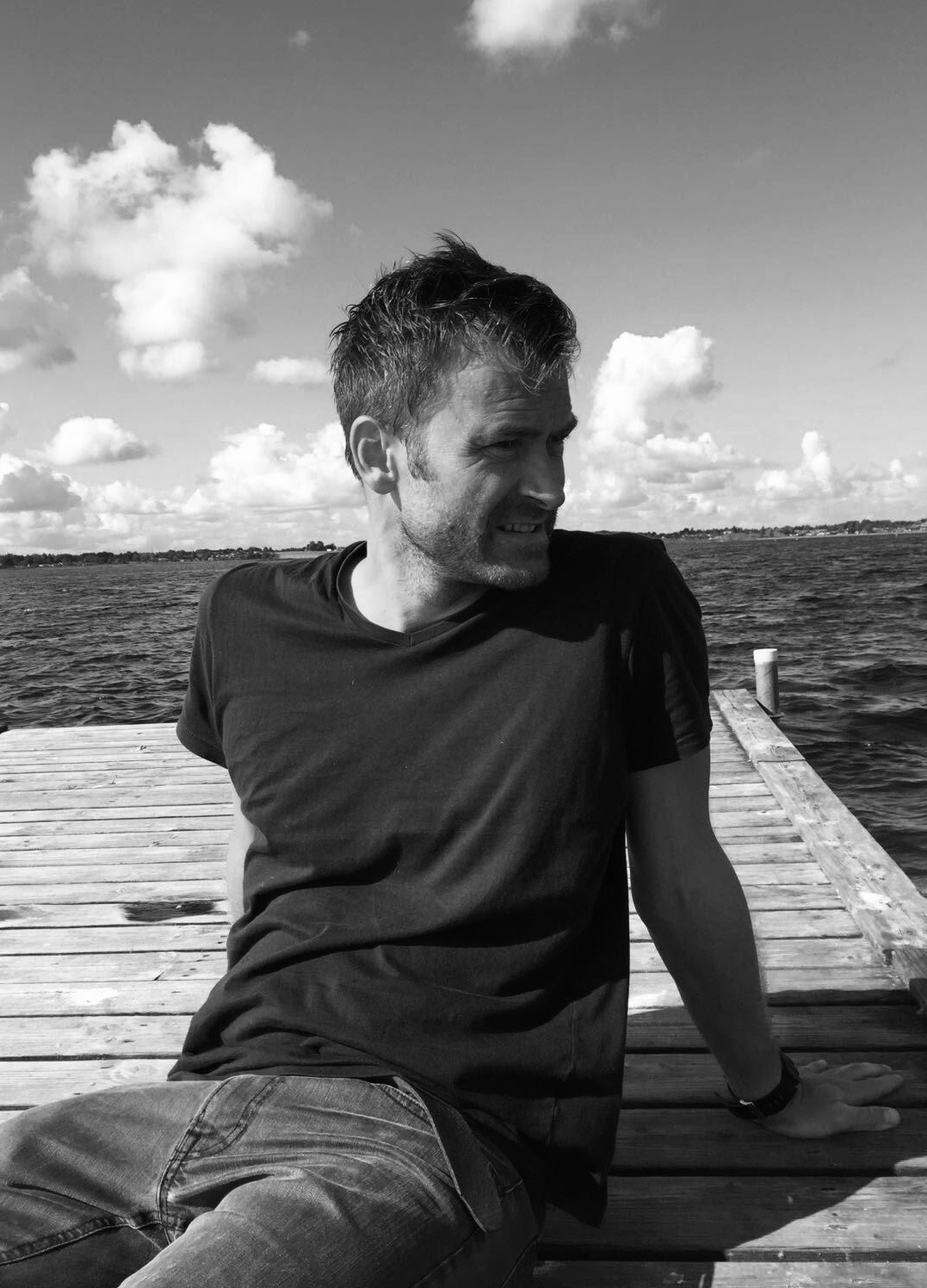
Finn Janning er filosof (PhD) og mindfulnesslærer (Master, Zaragoza Universitet) med mange års erfaring i kontemplativ praksis. Hans arbejde forener vestlig filosofi, buddhistisk meditation og kristen hjertebøn — tre traditioner, der på hver deres måde åbner veje til klarhed, mod og indre frihed.

Hjertets visdom

“Det var begyndelsen. Ikke dramatisk. Ikke mirakuløst, men som når en lås klikker op indefra.” Efter en mislykket hjerteoperation, måneder med depression og en første hvisken af bønnen “Hjælp mig”, begyndte en ny bevægelse at tage form, fortæller forfatter og filosof Finn Janning. Bevægelsen åbnede døren til en glemt tradition, hvor heling begynder med at give slip frem for at præstere.

I marts 2023 skulle jeg have repareret en utæt hjerteklap. En rutineoperation, sagde hjertelægen. Rutine eller ej, noget gik galt. Mit hjerte i stå. Tre-fire timer blev til ti. Da Vinci, navnet på robotten, der foretog operationen, måtte ind igen.

Da jeg vågnede, vågnede jeg et andet sted: i noget, der bedst kan beskrives som paradisets have. Jeg hørte sang. Lys. En dans, der ikke var min, men som jeg på mærkelig vis deltog i. Den dans varede dog ikke længe.

læs resten af essayet i POV International

Overcome Stress: Workshop for Creative Minds

This workshop reveals strategies to overcome stress and burnout, with a focus on overcoming creative blocks. 

Through brief playful, reflective and meditative exercises, participants gain simple yet effective tools to restore openness, focus, creativity, and overall well-being. 

The session is ideal for creative individuals, such as artists, designers, architects, writers, and entrepreneurs, who seek to reconnect with passion and joy in a supportive environment. Everyone is welcome.

When: Friday, October 24, from 4:00 – 5:00 pm
Where: Geneva Business School, Barcelona Campus, Carrer de Rivadeneyra 4, Ciutat Vella, 08002 Barcelona

I’m delighted to contribute to Healing Arts Barcelona 2025 with this workshop, generously hosted by Geneva Business School.

All are welcome.

Byung-Chul Han

The French philosopher Gilles Deleuze once said: “There is no need to fear or hope, but only to look for new weapons.”

‘Weapons’ may give us the wrong associations, but what he refers to are concepts that, like a brick, can be used to destroy what is hindering the growth of our lives, and at the same time, help us build or create something sustainable.

The Burnout Society

The Korean philosopher Byung-Chul Han’s work can be seen a toolbox aimed at helping us understand our contemporary society, while also presenting us with concrete ideas, thoughts or ‘weapons’ that might help us overcome or resist our own weak desires and vanities.

Han was born in Seoul, South Korea in 1959. He studied metallurgy in Korea before moving to Germany in his early twenties to study philosophy, German and theology. Today, Han is a professor at the University der Künste in Berlin. His initial fame sprang up with the publication of his book Müdigkeitsgesellschaft (2010), which, directly translated, means ‘the fatigue society.’ In English, this was cleverly translated to The Burnout Society (2015).

Han’s thesis is that today’s neoliberalism has made politics psychological or mental. The logic of neoliberalism has invaded our minds. It’s our ability to be present in our lives, to think and to love that is threatened by this invasion. Neoliberalism—for many, at least—has become an uninvited guest that refuses to leave our minds.

Han declares, in all of his work, that we have become narcissistic. For this reason, it’s time for citizens to care more about society’s welfare than their own egos. “Responsibility for the community defines citizens. Consumers lack responsibility, above all,” Han writes in his 2018 book, In the Swarm: Digital Prospects. The result of this narcissistic development is well-known: stress, burnout and depression. “Depression is a narcissistic malady,” Han states in The Agony of Eros (2017).

Eros or love is the only thing that may conquer our contemporary depression. As Han writes, “Depression represents the impossibility of love.”

Experiencing sublime beauty hurts

Still, it’s difficult to love, because we are not really free. It’s not just that society pressures us to fit in, perform faster and achieve more, but rather that we ourselves want this. We try to appear as positive, smooth and shiny in public as possible, as if our lives are all made up of ‘good vibes.’

In 2017’s Saving beauty, Han writes: “The smooth is the signature of the present time.” This kind of smoothness, he continues, “connects the sculptures of Jeff Koons, iPhones and Brazilian waxing.”

Today, smoothness and waxed bodies, quite sadly, are seen as the same thing as beauty. The morale behind this is clear: Smooth, smoother, smoothest = good, better, best. All that is strange, secret, or negative—in other words, all that passes through our thoughts—disappears, due to the ongoing repetition of sameness.

We lack a critical yet creative and life-affirming approach to overcoming this confinement. When we avoid the negative, the difficult and the painful, we amputate life. Our lives tend to circle around ourselves, making the circle smaller and smaller as we Google ourselves into unconsciousness.

To contrast this shallow development, Han turns to the writings of Plato, Kant, Hegel and Heidegger, in which there is no distinction between beauty and the sublime. Experiencing sublime beauty is not supposed to be pleasurable; rather, it hurts. It makes you fall and stumble. It is similar to falling in love, because you can lose yourself and act rather stupid.

“The sight of beauty does not cause pleasure, but shocks,” Han stresses in Saving beauty. It’s the matter of experiencing our own fragility that contemporary society minimizes. Art can shake us, make us see the world differently and help us perceive our own limitedness and flaws. “The longing for beauty,” Han says, “is ultimately the longing for a different mode of being, for another, altogether non-violent form of life.”

The strength of Han’s analysis lies in how he uses two guiding concepts in all his books: freedom and power. They both encapsulate the problem with contemporary society and can also open us up to alternative ways of living our lives.

Truth is freedom

Freedom is both a problem and a possibility. It is becoming, emphasizing that we become by combining courage to stand up against dominating ideals and norms with the belief that things could be different. Freedom is found in becoming whatever disobeying those ideals enables us to become. Real freedom is socially anchored, and as Han says in Psychopolitics: Neoliberalism and New Technologies of Power (2017): “Freedom is a synonym for the community that succeeds.”

By making freedom social, he tries to relate it with truth. Perhaps this is where Han shows how courageous he is, by reintroducing the problematic concept of truth in philosophy. In Saving beauty, he speaks about the need to save beauty. Why? Because, as he writes: “Beauty promises freedom and reconciliation,” and “truth is freedom.”

In other words, a world of smoothness is false. It’s a world of ‘post-truth.’ For Han, the beautiful is both true and good; it’s almost as though the Korean philosopher is turning Platonic. And he is—at least in the way that the French philosopher Alain Badiou is Platonic.

In both Saving beauty and The Agony of Eros, Han ends up advocating for Badiou’s idea that the task of philosophy is to be loyal or faithful towards whatever binds us together (what is true, in other words). Han distinguishes himself from Badiou when he more practically shows why or how we can show fidelity to what really takes place in our lives.

Fidelity is unconditional in that it presupposes commitment and awareness. That means we should try to become capable of matching all parts of life, instead of just doing so when life is pleasurable and smooth.

“The saving of beauty is the saving of that which commits us.” This loyal commitment or involvement is related to the kind of awareness that mindfulness cultivates, as a non-judgmental and kind approach to what is happening now and here.

Without humour, no freedom. Without freedom, no love.

Han also uses his Eastern roots in his philosophical thinking. Back in 2002, when he was still an unknown, he published a book called The Philosophy of Zen-Buddhism.

In this book, he illustrates that the Buddhist concept of ‘nothingness’—as the absence of an exclusive subjectivity—is what makes Buddhism pacifistic and non-violent, because there is no essence where power can be concentrated. Also, the concept of ‘emptiness’ is the reason why narcissism is something very un-Buddhist. There is no unchangeable ‘me’ in the mirror; rather, I am being formed by life.

The Korean thinker also illustrates that humour is something that links Western and Eastern philosophy. Nietzsche, for example, claimed that laughing was an expression of freedom. The Danish philosopher Søren Kierkegaard once said that “freedom is the element of love,” so it follows that without humour, there’s no freedom, and without freedom, there’s no love. Or to put it differently, it’s difficult to love people who never laugh, or take themselves too seriously.

In Buddhism, Han writes, there is no miracle, only hard daily work: Letting go of the past and not transcending or dreaming of a world beyond this one. He compares Buddhism with walking. Walking has no future, as you’re always in the midst of walking. To die means to walk, he says, emphasizing that we are always dying. Similarly, Michel de Montaigne said that to philosophize is to die.

‘Dying’ means always walking, philosophizing, exploring and experimenting with life, not as a way of meeting a specific objective, but as a way of being grounded in the here and now. Western and Eastern philosophy, I believe, share this humble approach to life. We never philosophize or meditate to conquer the world, but to praise its beauty.

Listening as an art of breathing

Many Eastern ideas are reflected in Han’s suggestions for how to overcome today’s stress, burnout, exhaustion and ever-growing narcissism. For instance, in The Burnout Society, he encourages us to stop, sit down and take a break. Philosophy is here defined as ‘an intervening time,’ ‘a time of ‘non-doing,’ ‘a peace time,’ as he calls it.

The concept of ‘non-doing’ resembles elements of Buddhism and mindfulness in that it stresses that we don’t need to be doing things constantly, Rather, non-doing allows things to unfold at their own pace.

Similarly, in The Transparency Society (2015), Han proposes that although we are forced or coerced into participating in an ongoing style of positive communication—declaring, “I like,” over and over, again and again—we don’t have to like everything. It’s not more communication that is needed, but creative or alternative approaches to living a richer life. To be creative, a person needs to stop and allow themselves to be formed or touched by what is happening as it happens, in the here and now, without judging it according to some predefined ideal.

A last example is provided in Psychopolitics, in which Han he reawakens the ‘philosophical idiot’ as a way out of today’s malady. The idiot doesn’t belong to a specific network or alliances, so he or she is free to choose. The idiot doesn’t communicate; instead, he or she facilitates a space of silence and loneliness, where they only say what deserves to be said. The idiot listens, as a generous way of stepping aside to give room to the others.

“The art of listening takes place as an art of breathing,” Han writes in The Expulsion of the Other: Society, Perception and Communication Today (2018).

For non-philosophers alike

Han’s work is accessible for non-philosophers, and is a good guide to understanding and navigating oneself through today’s demanding, achievement-based society. He encourages us to Relax. Do nothing. Become no one. See time as something peaceful.

Time passes, whether we want it or not. Then it returns and changes everything. Let go. Listen. Embrace moments of non-communication. And breathe.

Rethinking Ethics in Psychology

Ethics is always about values. In psychology, as in most professions, students are often taught to approach ethics through three frameworks: 

  1. Virtue ethics (What kind of person should I be?)
  2. Deontology (What duties must I follow?)
  3. Utilitarianism (What outcome will maximize the good?)

Each offers a way of defining “the good.” These approaches remain useful, helping psychologists clarify responsibilities, make difficult decisions, and justify their reasoning. Yet each framework risks being used as a strategic, rhetorical tool to back a predetermined position. The same action can be rationalized as duty, optimal outcome, or virtue, shifting the focus from genuine ethics to self-justification. 

What if we made attention—the genuine act of perceiving and staying present in situations—the starting point of ethics, rather than rules or outcomes?

Ethics as Attention

The philosopher Simone Weil wrote, “Attention is the rarest and purest form of generosity.” For Weil, paying attention is already an ethical act. It means suspending assumptions long enough to notice what is truly happening. This matters as much in the consulting room as in the classroom. 

A psychologist who pays close attention can tell when silence means something, when irritation masks fear, or when something important goes unsaid. No code of ethics tells you how to respond in these moments. Paying attention is the ethical act. In contrast, when we rely too heavily on abstract frameworks, we risk skipping over this important stage of perception. We rush to categorize, justify, or resolve. Ethics then becomes about defending an action rather than sensing what a situation is calling for. 

To clarify the distinction: morality is about judgment—applying universal principles consistently. Ethics, as I am proposing, focuses on responsiveness—actively perceiving a specific situation and considering how best to respond. Morality asks, “What should I do in general?” Ethics asks, “What is happening here, and how can I respond now?” This shift seems small, but it is significant. Morality gives answers and often shuts down possibilities. Ethics, as attention, keeps things open and starts with not knowing. Psychologists need this, because much of their work happens in situations without easy answers.

The Problem of Comparison

Professional psychology education often focuses on outcomes and comparisons: Who has the most clients? Whose intervention is “evidence-based”? Who secures the most funding? Accountability matters, but this culture of comparison can narrow our focus. We start to value what is visible, measurable, and ranked. This comes at the expense of the subtler textures of human life. In therapy, this pressure can lead clinicians to measure “progress” only by symptom checklists. They may miss the more fragile forms of growth—such as trust, presence, and shared silence—that defy easy measurement. When ethics becomes only compliance or output, it grows too thin. It cannot handle the complexity of real psychological life.

article continues after advertisement

Small Practices of Ethical Attention

What might it look like to cultivate ethics as attention in psychology? Here are some simple practices:

  • Reflective journaling: After sessions, clinicians can note what was said, what they felt, what they avoided, or what unsettled them. Attention grows by noticing what escapes immediate explanation.
  • Naming subtle ruptures: Instead of ignoring the slight withdrawal of a client or the tension in a supervision meeting, name it gently: “I noticed some silence after I said that—what was it like for you?”
  • Suspending judgment: Rather than deciding too quickly what a behavior “means,” stay with the ambiguity: “Something feels important here, but I’m not sure yet what it is.”

These are not alternatives to ethical codes. They are complements. Codes set the minimum. Attention sustains the depth.

Becoming Present

For psychologists, ethics means more than preventing harm or avoiding misconduct. It means being present with the people and situations you face. It means noticing when something matters, even if no rule was broken. 

Ethics is about more than compliance; it is about who we are becoming. It challenges us to ask not just “What should I do?” but “Who am I becoming through my actions?”

Vulnerability, Calmness, and Nordic Leadership

New Paper: Vulnerability, Calmness, and Nordic Leadership

I am pleased to share my latest paper, which argues that calmnessconcentration, and a touch of coldness, when combined, cultivate a vulnerable leadership style that fosters trust and resilience.

In much of today’s leadership discourse, vulnerability is praised but often vaguely defined—sometimes confused with oversharing or weakness. My paper challenges this, contending that calmness, focus, and emotional coolness—although frequently underestimated—are essential to creating openness and psychological flexibility in leaders. Drawing from Nordic leadership traditions, I clarify how these qualities can empower leaders rather than hinder them.

Using a phenomenological lens, I weave a personal anecdote with leadership theory and psychological research. This offers a new perspective on how these understated qualities allow leaders to be both vulnerable and resilient, attentive and adaptive.

The paper suggests that calmness, concentration, and coldness are not barriers to connection but qualities that help leaders hold space for others, nurture trust, and strengthen teams. They form the backbone of trust-based leadership, which balances vulnerability and steadiness, ultimately benefiting both individuals and organizations.

You can read it here

Opmærksomhedens filosofi

Hvordan vi kan etablere en mere kærlig forbindelse med verden og hinanden

Ved ph.d. Finn Janning

Opmærksomhed er forudsætningen for enhver erkendelse. Men det kan være vanskeligt at give en fremstilling af begrebet opmærksomhed, for uanset om vi vælger et videnskabeligt, et metafysisk, et etisk, et æstetisk eller et spirituelt aspekt, synes de at være forbundet. Vi har derfor brug for en filosofi om opmærksomheden, både den som retter sig indad mod selvet og den som retter sig udad mod verden (f.eks. Opmærksomhedens filosofi)

Forelæsningerne introducerer til og diskuterer elementer af det, der i dag ofte omtales som ’mindfulness’ samt især to vestlige filosoffer, der har beskæftiget sig indgående med begrebet opmærksomhed: Franske Simone Weil og irske Iris Murdoch. De forstår begge opmærksomhed som en handling, der tilsidesætter vores ego og etablerer en ikkedømmende forbindelse med verden – ’unselfing’, som Murdoch kalder det.

Fundamentet for forelæsningerne er filosofisk, men de vil også indeholde eksempler fra sportens og kunstens verden. Og der vil blive foretaget enkelte korte opmærksomhedsøvelser.

Opmærksomhedsfilosofi handler grundlæggende om det simple ønske om at komme i berøring med virkeligheden for bedre at kunne engagere sig i verden. Når dette lykkes, vækkes en umiddelbar livslyst og glæde. Om det så vil lykkes henover disse to mandage, må tiden vise.

1. undervisningsgang
Mandag d. 24. februar 2025 Kl. 16:15 – 18:00

2. undervisningsgang
Mandag d. 3. marts 2025 Kl. 16:15 – 18:00

Tilmelding her

A Philosophy of Attention for Authentic Performance

This study presents a philosophy of attention that promotes authentic performance. As described here, attention is about training outgoing and ingoing attention skills, which can ultimately connect an individual to others and the world. This ability can help the individual remain focused and receptive to what happens while at the same time accepting their thoughts, feelings, and experiences. The ability to pay attention is crucial to performing and living authentically, regardless of the person’s area of expertise. The philosophy of attention presented here is rooted in existential philosophy, flow psychology, mindfulness, and acceptance-based psychology. It aims to help individuals and organizations examine what they can do and how they can actualize their potential more freely and with greater clarity. This results in better performance and increased existential meaningfulness and joy, leading to a more dignified life.

Read the entire paper in Meta: Research in Hermeneutics, Phenomenology, and Practical Philosophy.

World Parkinson’s Congress 2023: Where Science Meets Art, Healing, and Meditation

Attending the World Parkinson’s Congress in Barcelona (2023) has been deeply inspiring.

The congress is not only about science and medicine, but also about the role of art, healing, and meditation in living with Parkinson’s. Creative expression, storytelling, and mindful practices are being highlighted as powerful ways to nurture resilience and build community.

Being surrounded by so many courageous people, openly sharing their journeys, reminds me that healing is not only an individual process but also something we create together.

Photo by Matt Eagles

Blog at WordPress.com.

Up ↑