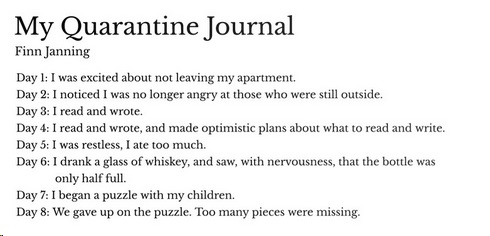
Hvad kan vi egentlig lære af corona-epidemien? Det er der mange bud på i disse tider. Forfatteren og filosoffen Finn Janning er overbevist om, at den tænkepause, som corona giver os, vil få mange til at gøre op med den måde, de hidtil har levet på.
I de her dage, hvor corona-epidemien vender op og ned på mange menneskers hverdag, kan situationen så give noget positivt til vores liv. Hvis man spørger forfatter og filosof Finn Janning, så kan situationen give os en fornyet klarhed om vores eget liv. Daniel Cesar taler med forfatter og filosof Finn Janning.
Jeg forudser, at de fleste i løbet af de næste 14 dage vil opleve udgangsforbuddet medføre en frigørende klarhed om eget liv. Coronaen kan fortælle os, at frihed er at være bundet af nogle meningsfulde bånd. Og at disse bånd aldrig er kapitalismens, men kærlighedens, skriver forfatter og filosof Finn Janning i dette debatindlæg.
Here we’re questioning whether transparency help or hinder true ethical conduct.
As we write:
Transparency is generally seen as a corporate priority and a central attribute for promoting business growth and social morality. From a philosophical perspective, society has experienced a gradual paradigm shift which intensified after the Second World War with the advent of the information era. As a fundamental part of an inescapable, hegemonic capitalist system and given the insistent emphasis on it as a moral imperative, transparency, this book avers, needs to be examined and challenged as to its true governance value in building a sustainable twenty-first century society. Rather than clinging to the fantasy of complete transparency as the only form of accountability, corporate governance is strengthened in this way by practicing true social responsibility, which emerges not from outward-looking compliance but from a deeper place in the corporate psyche through inward-looking contemplation and the development of moral maturity.
“Quiero saber qué es el amor”, cantó la banda de rock británico-estadounidense Foreigner en los años ochenta. Estaban lejos de ser originales. Por el contrario, el amor ha sido elevado, cuestionado, estereotipado, usado y mal utilizado desde el comienzo de la existencia humana. En la cultura popular, el concepto de amor se ha trivializado hasta el punto de que podríamos sorprendernos cuando, a veces, nos enamoramos de todos los clichés y el sentimentalismo. Aunque la banda de rock puede no ser original, todavía plantea una pregunta universal.
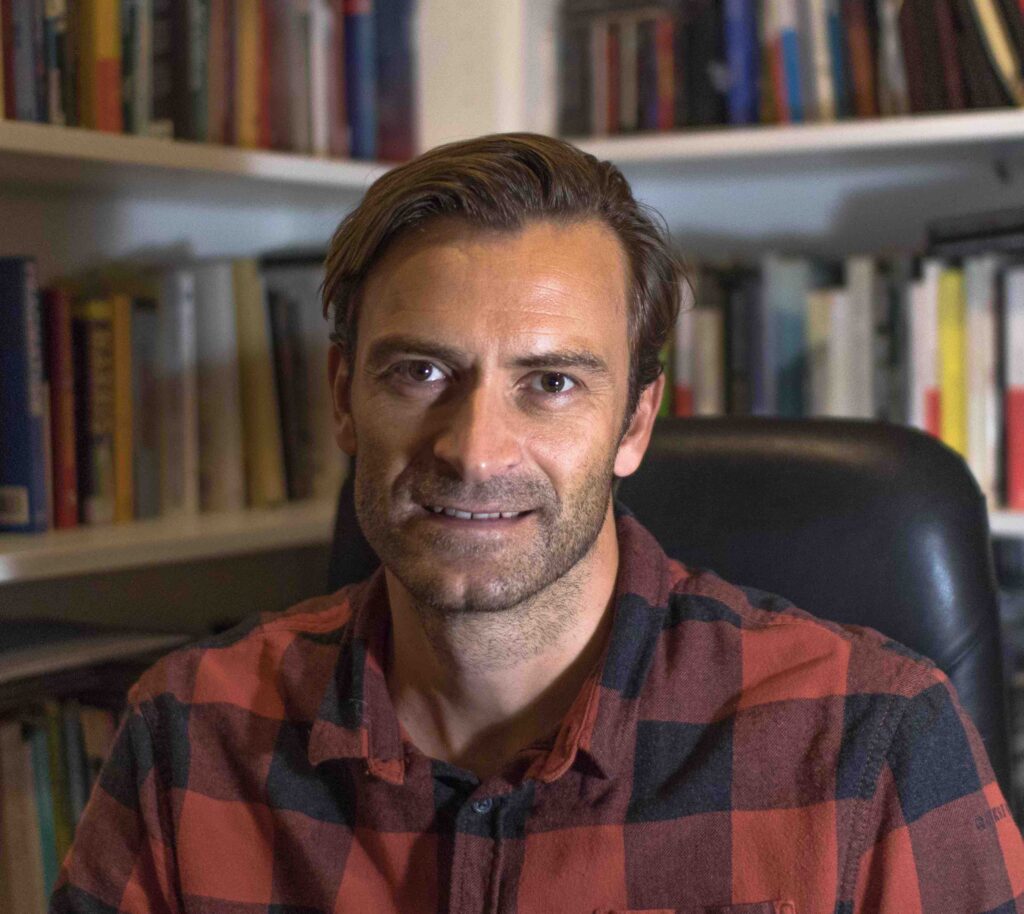
Finn Janning er forfatter og filosof. Han har studeret filosofi og erhvervsøkonomi på Copenhagen Business School, samt litteratur og filosofi på Duke University i USA. I 2005 forsvarede han sin Ph.d.-afhandling A DIFFERENT STORY – Seduction, Conquest and Discovery.Senere har han studeret mindfulness på Universidad de Zaragoza i Spanien.
I 2010 udkom romanen Du er (ikke) min?– en kærlighedshistorie om et besættende begær, om utroskab, der sætter ægteskabet og til sidst kærligheden på spil “for børnenes skyld”.
I 2016 udkom Jannings anden roman Hvem myrdede Gilles Deleuze? – der følger en mands selvudslettende forsøg på at opklare, hvem den skyldige er, når et selv begår selvmord.
Romanen Stakkels Jim udkommer på Brændpunkt i foråret 2020, og tager os med på en episk rejse gennem døden, venskaber, kunsten, og hvad det overhovedet vil sige at være (eller ikke være) et menneske. Efter sin storebrors død går Jørgen til grunde. Ulykkelig af sorg flår han sig løs af sin fortid, og forvandler sig til kunstneren Jim. Undervejs i sin forvandling møder han den jævnaldrende Iggy, der bliver et holdepunkt i Jims turbulente liv. På en druktur lover Iggy – mest i sjov – at fortælle historien om Jims kunstnerliv. Men da Jim en dag forsvinder, føler Iggy sig forpligtet til at dele sin vens historie; en historie, der viser sig at gemme på en skræmmende hemmelighed. For hvad sker der, når vi kan se et andet menneskes liv? Skal Iggy fortælle hele historien?
“Danish artist Jeppe Hein doesn’t have a biographer, he has Finn Janning. The philosopher’s two books When Life Blooms and The Happiness of Burnoutserve as manifestos for understanding Hein’s work. The following essay gives a first glimpse into this artist’s mind.”
The first 10 to 15 years of Jeppe Hein’s artistic career are reminiscent of a mountaineer’s struggle on Mount Everest. The climb to the top of the world’s highest mountain is shrouded in awe, daring and faltering resolve.
When the British mountain climber George Mallory was asked in the 1920s why he wanted to climb Mount Everest, he responded brusquely: “Because it’s there.” In that answer lies an all-too-human impulse, namely the impulse to seek the difficult and overcome the dangerous, apparently without any other ambition than to test your limits.
Naturally, it wasn’t Mount Everest that Jeppe tried—and is still trying—to conquer. It was an artistic career that knocked him out in the first round. He lived without compromise, without any deeper contact with himself.
His sense of direction wasn’t yet well-developed. His anchoring in the now hadn’t been established …
From the book When life blooms: Breathe with Jeppe Hein, in which Finn Janning describes the philosophical and spiritual development of the artist and social entrepreneur Jeppe Hein.
“Danish artist Jeppe Hein soared to the top of the international art scene before the age of 35. His works were showcased at the world’s finest exhibitions and sold for sky-high prices. Then suddenly his body said stop. In 2009 Hein went down with stress.
In this book philosopher Finn Janning follows Jeppe Hein’s development from the tome immediately after his diagnosis with burn out and onward – a period where Hein underwent psychoanalysis and developed and interest in yoga, breathing exercises and spirituality.
Janning shows how spirituality has become more present in Hein’s works, and in the book, he develops an existential philosophy in continuation of the artists spirituality and art.”
I may add:
Although I was commissioned to write this book, I aimed at turning it into a philosophical biography that describes the life of the artist Jeppe Hein. In doing so, I’ve tried to exemplify Gilles Deleuze’s idea that “life is not personal,” that is to say, each life is a case study.
I choose this approach as a way of addressing the narcissism of the artist without making the narrative confronting, or in anyway judgmental.
Instead, I illustrate how Jeppe is formed by the major cultural trends during the last 40 years, such as the growing accelerating and spirituality and social entrepreneurship. He is an artist of his time.
It’s a book that tests and nuances the popularity of today’s spirituality through a philosophical, primarily existential lens.