About Byung-Chul Han

Today, we live in a society organized mainly around capitalism. Not only are making money and, to some extents, having a career objectives that guide many people’s lives, but prestige, status, and social identity also are typically measured within a capitalistic mindset. Even when corporations claim that “people come first,” they refer to their employees’ skills and experiences as “human capital” or “cultural capital.” Everything we do has monetary value attached to it.

According to the philosopher Byung-Chul Han, this tendency is part of today’s achievement society, which can be seen starkly in digital communication, including social media, changing us from citizens to consumers. Han’s latest book, In The Swarm, is a wakeup call to action, declaring that it’s time for citizens to care more about society’s welfare than their own egos. “Responsibility for the community defines citizens. Consumers lack responsibility, above all,” he writes.

Han was born in Seoul in 1959. He studied metallurgy in Korea before moving to Germany in his early 20s to study philosophy, German, and theology. Today, Han is a professor at the University der Künste in Berlin. His initial fame sprang up mainly after publication of his book Mudigkeitsgesellschaft, which, directly translated, means “the fatigue society.” However, in English, this was cleverly translated to The Burnout Society. He is the author of more than 20 books, which have been translated into many languages and are well-read among socially and philosophically aware readers.

Han’s philosophy dovetails with French philosopher Gilles Deleuze’s idea about seeing our current achievement society as a “control society.” Unlike Michel Foucault’s disciplinary society, in which people know that their freedom is limited, people in a control society actually–and very falsely–believe that they are free. It’s a shift from disciplining the body to controlling the mind in a seductive way. The consequence is that people tend to exploit themselves aggressively until they burn out, collapse, or suffer from depression. Usually “exploitation” entails someone being exploited by someone else, Han claims that we actually do it to ourselves. “The crisis we are now experiencing follows from our blindness and stupefaction,” Han writes in In The Swarm. By “crisis,” he refers to at least two things: First our democratic crisis caused by the shallowness of digital communication, social media, information overload, etc., which he says undermines critical thinking, respect, trust, etc. Second the consequences it has on a personal level cf. stress, depression, burnout, suicides, etc.

Han is part of a growing number of sociologists and philosophers who conduct social analyses. Similar ideas can be found elsewhere among theorist related to the Frankfurter school, but also among other critical psychologist, spiritual teachers and so forth. Some of these ideas are how a too-rigid positivity is destructive, especially when it comes to self-development; how technology makes everything accelerate; and how we are always at work. Still, Han contributes to this debate not so much by adding new idea, but by presenting clearer, almost poetic descriptions of what’s going on. His books advance the idea that philosophy is for everyone. His postulating and concrete style always forces the reader to reflect, to wit: “Digital devices have mobilized work itself. The workplace is turning into a portable labor camp from (which) there is no escape.” Do we live in a labor camp?

He also asserts that freedom has become a constraint. “Exhausted achievement-subject(s) can rest only in the same way that a leg falls asleep.”

Han’s main claim is that today’s neoliberal psycho-political power appears to be invisible and imperceptible unless we pay very careful attention. But–and this is the problem–we rarely pay attention because that which works as an invisible or imperceptible power is also what prevents us frompaying attention, e.g., Twitter and Facebook. Therefore, a traditional critique of capitalism is not sufficient. The point really is that we must understand that our daily lives and our ideas about freedom have become nothing but cogs in the machinery of capitalism.

One of the reasons for this is that a digital culture is based on counting. “In contrast, history means recounting.” On Twitter or Facebook, one counts followers, likes, retweets, or friends, whereas real friendship, Han says, “is an account, a narrative.” Digital culture is also tied to the mantra of transparency found in modern political and corporate-governance literature, which only diminishes trust while monitoring and controlling every click we make online.

“Transparency is ruled by presence and the present tense,” Han claims. However, to think, we need distance — physical and mental — that is what constitutes the public sphere. It is from distance that we learn to respect, reflect, and analyze. “A society without respect, without the pathos of distance, paves the way for the society of scandal.” Still, some may ask, couldn’t we use these same media outlets — YouTube, Twitter, Facebook, etc., — to activate a critical awareness, bringing academia out of the ivory tower and into the broader society?

Two guiding concepts work as analytical tools for Han in all his books: freedom and power.

Freedom, according to Han, is both a problem and a possibility. It is becoming, as Deleuze would say, emphasizing that we become by combining courage to stand up against dominating ideals and norms with the belief that things could be different. Freedom is becoming whatever, i.e., in some way disobeying power. Real freedom is socially anchored, as he says in Psychopolitics. “Freedom is a synonym for the community that succeeds.”

But today, we are not free, Han claims in In The Swarm: “Information fatigue includes symptoms that characterize depression. Above all, depression is a narcissistic malady,” he writes. We, or many of us, only hear the echoes of ourselves, for example, when we cry with joy when strangers follow us on Twitter, or when our tweets are retweeted. At the same time, this freedom to constantly polish and refine social profiles–and gain more “cultural capital” while others comment, like, or retweet–creates more pressure. “As such, it marks the end of freedom…The achievement subject exploits itself until it collapses.”

Although there is a tendency toward redundancy in Han’s many books, his critiques of concepts such as freedom, power, control, and transparency are highly relevant.

In In The Swarm, however, one might detect something old-fashioned in Han’s philosophy–or perhaps even wrong–in some of his claims. For example, he writes “the mass is power” because it shares an ideology, whereas the digital swarm is narcissistic and is not unified. “They do not march.” This, of course, is wrong. After the election of U.S. President Donald Trump, one of the most encouraging things has been how people marched in the streets. First, there was the women’s march in January, then marches this month against recent white-supremacist activity in Charlottesville. Furthermore, do we really need a new ideology against the online swarm to overcome another (i.e., capitalism)?

Han operates with a romantic ideal about authenticity and truth, yet perhaps we just need to push the underlying idea of the Internet further. Allow it to have no roots, no control, no editing. Instead, view it as a rhizome that grows horizontally without a beginning or end. Pure becoming. When nothing is given, one is free to harmonize his or her life with reality, to change according to the rhythms of existence–no longer caring whether what he or she is doing would fit into a neoliberal mindset.

Critical voices might say that the downsides of neoliberalism—and especially of the Internet–that Han discusses have been explored before. However, Han focuses on something else. Basically, he not only raises questions regarding the condition of our current society, but also asserts that the real problem is that we don’t raise such questions. He is part of a growing choir claiming that many of us are becoming the kind of easily malleable citizens that totalitarian dictators dream about.

Han’s philosophical encourages us to think, and I view that as a good enough reason to read his books.

Published in Metapsychology, Volume 21, Issue 35.

For more on Byung-Chul Han, please see my portrait The Philosophy of Byung-Chul Han,

Or my essay, Which dish of noodles are your life worth?

Or my review of, Saving beauty.

In Danish: anmeldelse af Transparenssamfundet , I Sværmen & Træthedssamfundet

41V0r2rKbWL._SX319_BO1,204,203,200_

One World Now

In One World Now: The Ethics of Globalization, Peter Singer, an Australian moral philosopher, discusses humanity’s shared ethical responsibility and sovereignty. We live in a global world that—unlike the older term “internationalization” conveys—emphasizes that we are moving; that is, “moving beyond the era of growing ties between states,” he says.

Within his text, Singer addresses a central question: is the nation state loosing sovereignty? Perhaps. Should it? Yes, according to Singer. And he makes a strong case for overcoming it. Whether or not the nation state is losing its sovereignty is a difficult question to answer.

On the one side, there is a growing nationalism, not only in the United States where president Trump claims that “America is for Americans only” (regardless of who the term “Americans” refers to), but in other countries as well. In Europe, for example, the Catalan fight for independence in Spain is fueled by nationalism combined with a strong desire to have an influence on the monetary resources of the region. Countries such as France, Austria, and the Netherlands are also flirting with nationalistic principles—perhaps it’s a universal trend, other countries could be added to the list.

On the other side, in spite of this expanding sentiment, there is also a growing countermovement, perhaps the most imminent in the U.S. This countermovement would probably have a lot of sympathy for Singer’s project.

In One World, Singer looks closely at the relationship between states and the world through different lenses, including atmospheric, economic, legal, and communal perspectives. For instance, he observes that an organization such as the World Trade Organization could minimize a state’s power and sovereign control. In other words, state sovereignty can be reduced (and accepted by most) through reasonable global organs. In addition, Singer advocates for a universal law when it comes to crime and terror. Most importantly, however, Singer speaks about how people and nations will have to abdicate their sovereignty when it comes to environmental concerns.

Singer’s thesis is based on the fact that we live in one world. The phrase “one world” stands “as a description of the increasing interconnectedness of life on this planet and as a prescription of what the basic unit for our ethical thinking should be.” His logic, therefore, is that one world needs one world government that can overcome each nation’s self-interest and that “we need a sound global system of criminal justice.”

I agree completely with the fact that everything is interconnected, whereas I am not completely convinced that a world government is the solution to overcome our current problems.

For those who are familiar with Singer’s philosophy, it becomes clear that his ethical advice is based on the principles of utilitarianism. This theory requires that we all act in a way that maximizes the happiness of all human beings (who are all sentient creatures). He stresses the importance of this by referring to an UN report that says, “In the global village, someone else’s poverty very soon becomes one’s own problem: of lack of markets for one’s products, illegal immigration, pollution, contagious disease, insecurity, fanaticism, terrorism.” This quote illustrates the strength of Singer. He refers to many different—I am tempted to say “universal”—sources in order to make his argument stronger.

Singer’s utilitarian approach in One World is founded on both political and economic theories (though perhaps more so on the former). He aims for democratic solutions, emphasizing that, once we realize we are in this together, the more we will willingly share and uphold common values. This assumption is true. Still, it seems like the author of One World believes that many people do not understand our fundamental interconnectedness. I agree with him again. This lack of understanding our interconnectedness is one of the hurdles that Singer tries to overcome, for example, with the aforementioned UN report quote. However, if the UN report quote is read critical, it may teeters on the delicate balance between altruism and egoism. Utilizing the motivation of the latter may seem cruel, but the bottom-line of utilitarianism is that “I” should care for the happiness of all, because their unhappiness affects “me.” Hereby a classical dilemma is touched upon—one that also exists in corporate social responsibility; for example, if a company acts morally due to monetary self-interest, is it then truly good?

A utilitarian would regard such a situation based on the consequences, not the motive of the decision-makers.

Thus, despite my appreciation of the good intentions of Singer’s humanistic philosophy, I long for a deeper, existential understanding of the human being who, not only is morally responsible for the well-being of others, but is also responsible to pursue personal freedom and happiness. For example, Simone de Beauvoir argued that ethical freedom comes from resisting what represses one’s freedom. In theory it could be global institutions. Similar to Beauvoir, Simone Weil addressed the problems with universal right and laws that are—at times—contrary to one’s personal obligations. For example, when universal norms and ideals carry the inherent risk that each one of us may lose contact with one another. Or, we might forget or ignore that what is happening is also our own responsibility, not just the decision-makers.

Let me reframe my concern in another way. Twenty years ago, Michael Jackson wrote a beautiful song to benefit the starving people of Africa, titled We Are the World. Today we can still sing along. Not much has changed. This paradox is perfectly illustrated in the life of Bill Gates, who generously donates many of his millions, yet, at the same time, grows wealthier and wealthier. Living morally by donating money becomes another kind of investment; the show goes on and on and on. We need to change the way we think. Singer is probably right to spend so much time in One World convincing his readers that everything is interconnected. However, even after reading Singer’s book, we are left with ethical dilemmas.

Let me be even clearer. According to Gilles Deleuze, our style of thinking is related to our ethic—how we affirm certain things as we encounter them. But since no ethical issue can have privilege over another (for example, human starvation in Africa versus human suffering caused by an earthquake in Afghanistan), we have to cultivate our awareness of what takes place, how and why it takes places. What we affirm—according to Deleuze—are the differences between ethical issues, we explore and test; rather than counting “heads” to see which intervention will make the most people happy. Relying on a principle minimizes our capacity to think and to be affected by an ethical issue. For example, does our intervention depend on whether the problem is humanly manufactured, a natural disaster, or caused by political or financial factors, etc.? Utilitarianism may help us make decisions, but predicting an outcome is often difficult. For example, who would had known that the car today is not just a mean of transportation, but also a place where individuals can be alone and listen to music or an audio book? In other words, the car is for many a stress free zone, and, as most of us know, stress cost the society a lot of money. Furthermore, car users may pollute the environment (bad for all of us), but they may also be able to get home faster to their children (good for the family, but also good for the caring investment in future citizens, that is, the society).

In continuation, a person who donates 2 euros out of every 10 he or she earns is not morally better than another individual who donates only 1 euro or none at all. The issue is not related to redistribution, but to the idea of ownership, the economy, and economical freedom, which actually touch on Singer’s foundational belief that everything is interconnected, but from a different angle. The reason why some people have much give financially is because there is an imbalance to begin with. In other words, the ethical problem sticks deeper. This principle can also be viewed through the lens of Aristotle’s distinction between moral excellence and strength of will. I believe that monetary donation may display strength of will, but moral excellence can be seen in the one who never asks for more than what is necessary.

I am skeptical, yet positive towards Singer. I do recommend his book for decision-makers, but also for students of philosophy, political science, and business administration. One World is a wonderful resource to instigate constructive debates, and it is full of ideas of how to enact social change. Despite my reservations, the book’s mantra, that we—all of us—are in this together, is a message that I believe is worth sharing.

First published in Metapsychology, Volume 21, Issue 8

See also the review of Peter Singer’s The Most Good You Can Do.

To Love Slowly

In Either/Or: A Fragment of life, the Danish philosopher Søren Kierkegaard wrote, “Of all ridiculous things the most ridiculous seems to me, to be busy.” In this talk, I will argue why I agree with Kierkegaard but will also—perhaps more importantly—illustrate why it is so difficult to not live ridiculously. Lastly, I will show a way out by (slowly) cultivating a will to love.

This is a recording of my talk entitled “To Love Slowly“, which I presented at the Doing Deceleration Symposium at Notthingham Contemporary, July 2017.

Catalonien – mellem frihed og kontrol

Den chilenske forfatter Roberto Bolaño har sagt, at det er umuligt ikke at blive påvirket af det, som sker udenfor ens vindue. Udenfor mit vindue i Barcelona udspiller der sig et politisk spil om frihed, magt, kontrol og økonomi; et spil, som reelt ikke kun vedkommer Spanien, men også resten af Europa. Er der grænser for friheden?

”Det er en lidelseshistorie, ” fortæller den spanske filosof Victoria Camps mig en solrig sommerdag i Sant Cugat. Vi mødes for at tale om ”det catalanske problem”, eller det, som andre kalder ”det spanske problem.”

Det drejer sig om den spanske region Cataloniens uafhængighedsprojekt. Et ønske om at blive en selvstændig nation.

Det er et problem, som ikke kun adskiller cataloniere og spaniere, men også cataloniere internt. Ikke alle i Catalonien drømmer om at blive en selvstændig nation. Mange cataloniere ser sig selv som spaniere.

Det catalanske uafhængighedsprojekt er primært knyttet op på ikke at være Spanien. Det er en negativ identitet, som kan mønstre knap halvdelen af Cataloniens befolkningen. Regionen er tvedelt. Alligevel ynder den nuværende præsident Charles Puigdemont (ligesom den forrige Artur Mas), at lade som om, at de taler på alle cataloniernes vegne, når de siger ”vi” vil være selvstændige.

”Det er ikke sandt,” siger Camps. ”Politiken i Catalonien har de seneste år været præget af et monotema,” uddyber hun, ”som forsømmer mange af de andre politiske gøremål i regionen.”

Ifølge Camps begyndte hele uafhængighedsbevægelsen primært under Jordi Pujols præsidentembede, der løb fra 80 til 2003. Han ville opbygge en nationalitetsfølelse, som samtidig skulle udslette enhver forbindelse med Spanien. Dette projekt indførte han blandt andet i skolerne, hvor båndene til Spanien blev udvisket. Undervisningen blev ændret. Både med hensyn til undervisningssprog – fra spansk og catalansk til udelukkende at foregå på catalansk – og indhold. I de seneste år har Pujols eftermæle været præget af flere korruptionsskandaler, fx bankkonti i udlandet, hvidvaskning af penge, nepotisme, etc.

Camps understreger, at selvstændighedskampen er motiveret af penge. Regionen er Spaniens rigeste. Et industrielt og turistmæssigt lokomotiv. Dog overser flere cataloniere, at infrastruktur, uddannelse, politisk og forretningsmæssig good will også er forbundet med Spanien. Dette fokus på penge gjorde, at uafhængighedsprojektet først for alvor fik tilslutning i 2008, da Spanien blev ramt af finanskrisen. Denne krise var for mange i Catalonien ene og alene Spaniens skyld.

Når pengene spiller så en stor rolle hænger det blandt andet sammen med at regionen betaler flere penge end andre regioner i Spanien til Madrid, som derefter distribuerer dette beløb til de mindre rige regioner. ”En mere fair fordelingspolitik, ville uden tvivl tilfredsstille flere uafhængighedstilhængere,” udtaler Camps. En sådan fordelingspolitik har det dog svært, fordi både de catalanske og spanske politikere simpelthen er for smålige til at agere på folkets, og ikke egne interesser. Der mangler storsind i begge lejre.

Uafhængighedsprojektet er national romantisme. Måske sågar kapitalistisk. Marx og Engells sagde i Det kommunistiske manifest, at enhver kritik af kapitalen kræver, at man frasiger sig privat ejendomsret og ideen om en national stats. Dette kan end ikke de såkaldte mere socialistiske tilhængere, da de tror på national kontrol er lig med social velfærd. Det er protektionisme, der minder om Brexit og Trump.

Nationer er per definition egoistiske, påpeger Camp, og understreger: ”Den form for nationalisme, som prægede Franco er nu overtaget af de cataloniere, der vil uafhængigheden.”

Denne hårde kritik er hun ikke alene med. Den catalanske forfatter Nuria Amat har i avisen El Pais sagt undskyld til George Orwell. Orwell beskrev i bogen Homage to Catalonia situationen i Barcelona under borgerkrigen. Han hyldede frihedskampen og arbejderklassens sammenhold. Tingene har ændret sig. Markant. Amats konklusion er, at det catalanske selvstændighedsprojekt har nået nationalistiske, ja, nærmest fascistiske højder. Det er ikke et arbejderklasse projekt.

De nationalistiske separatister har forsømt at læse Orwell, skriver hun.

Det er fristende at spørge, hvorvidt Catalonien er blevet et eksempel på hvad Orwell i et senere værk kaldte »dobbelttænkning«? Taler tilhængerne om facisme og manglende frihed, mens man selv er ekskluderende?

Artiklen blev bragt i Netudgaven (der nu er lukket), august 2017.

Philosophy in dark times

Martin Luther King Jr. once said: “Only when it’s dark enough can you see the stars.”

I like this quote; it consists of several interesting elements. Most obvious is the ambiguity of stars: they can both guide us and blind us. I’ll get back to that.

We live in dark times, where terrorism, fascism, racism, sexism, and rigid nationalism seem to flourish everywhere. In addition, I am not even mentioning the environment, that is, how we treat this lovely earth that we are lucky enough to inhabit for a time. We live in a time where egoism has hindered us—that is, all sentient beings—from seeing how we are all interrelated.

Just a few days ago, the city where I live, Barcelona in Spain, suffered an awful terror attack, like so many cities before it. It happened in La Rambla, a commercial and touristic area characterized by its openness.

LaRambla

People come and go; even the locals that tend to avoid it have to pass through or by it, stroll along for a while when they go to the theater, the market, the museums, bookstores, cinemas, etc. It’s an intersection where all paths in Barcelona are fated to pass, once in a while. What happened in Barcelona was, of course, just one of far too many murderous attacks on innocent people, which has happened, and continues to happen, all around the world.

But let me step away from the street and over to an important and relevant book in these dark times. Hannah Arendt’s The Origins of Totalitarianism opens with a German quote from Karl Jaspers. In my English translation, it says something like: “Don’t give in to the past or the future. Be entirely present is all that matters.” Or, “What matters is to be entirely present.”

The moral is clear: to pay attention to the present moment, that is, to what happens right now. Totalitarianism emerges because of our ignorance, our lack of awareness of what is taking place right here and now.

This Jasper quote makes me recall the story of Oedipus, who, after realizing that he had killed his father and made love to his mother, tears out his own eyes. He couldn’t take or carry the pain. For me, philosophy is about trying to become capable of carrying, that is, live on with pain. In Barcelona, like so many other places, people screamed, “We are not afraid!” I share this but yet, I am afraid … afraid that we don’t learn to see better, that this act of terror will not sharpen our senses, afraid that we will still neglect to deepen our questions about ourselves, involve ourselves. I’m also afraid that this tragic event might be used strategically by Catalan nationalists …

If Oedipus were a philosopher, he would not have blinded himself but looked the fear and pain right in the eyes.

LaRambla02

Let’s return to Dr. King’s quote emphasizing how we ought to look into the dark, perhaps to reflect why we didn’t notice the stars before it became so dark. Apparently, terrorism, racism, fascism, hatred, stupidity, etc. were already there; yet, how come we didn’t see them, just ignored them? Yes, many of the elements on my list have been very overt in many places in recent times, and still, how come so many didn’t notice the hate? Here, of course, the stars don’t refer to anything heroic—quite the contrary: they blind some, they seduce some with their too naïve logic. No one is born hating another person because of the color of her skin, as Barack Obama once said. It is easy to stigmatize. They appeal – those hateful ideologies – because they don’t require the hard work related to thinking, analyzing, etc.

A simple example is how changes in society happen gradually. Some people use diminishing and hateful words to describe other forms of life; some make jokes about minorities. And people let these pass. “It’s nothing,” they say. And yet, gradually what began with us not paying attention to how people use language strangles us.

On a more positive note, when it is dark we can see the stars, referring to those who are already fighting back, resisting stupidity. Those stars guide, inspire, or challenge us to think. It can be through demonstration (recall the women’s march soon after the election of Trump), humor, as well as serious and thorough in-depth journalism that allow readers to sharpen their vision. Those who meet hate with hate are not the stars. Hate is too easy. Instead, the stars are those who are capable of creating alternative ways of living, who are open to more compassionate and loving paths, who establish sustainable futures where we all can live together without being reduced to the same. We must take direct action. Question the dominant worldview in our culture such as neoliberalism, white supremacy, sexism, rigid religious interpretations, etc.

So, in dark times, like in all times, we need philosophy. Luckily, philosophy is for all. No discrimination here (see more here). Furthermore, love and thinking have always walked hand in hand in philosophy; if you’re not capable of loving, you’re not capable of thinking. That is why you find no convincing philosophy among political and religious terrorists, fascists, sexists, or racists. Socrates, one of the first philosophers, interacted with people out of love, and he cared for their reasoning, as if he knew that depression, unhappiness, or feelings of inferiority were symptoms of mental illness.

It is as if people who can’t think are responsible for what we call “evil.”

To ride is to meditate

This year, I left Barcelona looking for alternative ways of getting closer to experiencing life as a cowboy. Or perhaps it was just to experience truly being alive, more connected with life. By this, I mean being consciously aware of what takes place while it takes place—here and now, without constant ramifications about this or that, hither and thither.

Read the rest of the essay here.

Becoming a Seer: Thoughts on Deleuze, Mindfulness, and Feminism

My essay “Becoming a Seer: Thoughts of Deleuze, Mindfulness, and Feminism” is out now in Journal of Philosophy of Life, Vol. 7, No. 2, 2017.

Abstract: This essay circles around two ideas. First, I try to answer the ethical question “What is the right thing to do?” through the application of the French philosopher Gilles Deleuze’s affirmative philosophy. Second, I relate Deleuze’s philosophy to mindfulness. I do not wish to suggest that they are identical. They are not. Yet, mixing mindfulness with Deleuze leads to a philosophy of mindfulness. That is a philosophy that makes us less blind to our experiences, but also ethically responsible for what actually happens. Hereby, I move mindfulness from the sphere of psychology into philosophy, or from being primarily a practice of turning inward to one of turning outward, but also make Deleuze’s ethic more operational. The latter I will – briefly – illustrate by touching on elements of feminism.

Read it all here.

Panpsychism

“Panpsychism is as old as philosophy itself,” write editors Godehard Brüntrup and Ludwig Jaskolla in their introduction to the anthology Panpsychism: Contemporary Perspectives. The editors present panpsychism as an alternative to analytic philosophy of the mind. Perhaps for this reason, all the essays in this anthology tend to be rather analytical.

The word “panpsychicism” is—like many words describing Western philosophical concepts—Greek in origin. “Pan” means “throughout” or “everywhere,” whereas “psyche” means soul, consciousness, or mind. Therefore, the term “panpsychism” refers to the idea that consciousness is everywhere, or that “mental being is a fundamental and ubiquitous feature of the universe.”

Panpsychism includes commentary by 17 authors within 16 essays placed within four subjects: the logical place of panpsychism, the varieties of panpsychic ontologies, panpsychicism and the combination problem (i.e., “How can microphenomenal properties combine to yield macrophenomenal properties?”), and panpsychism and its alternatives. All these essays elaborate on and argue for the thesis that mind, or consciousness, is part of the world; that is, that it exists throughout the universe.

The anthology can be read as a reflection on the current state of this discipline. It’s not an introduction for newcomers; rather, it is aimed at readers with a good knowledge of philosophy and its terminology—from graduate students to philosophy researchers. Or, more precisely, it is a collection of essays that often debate with one another, which can make it a dense reading experience. The tones of the essays swing between humility (most of them) and pretention. For example, David J. Chalmers, who has two excellent essays in this volume, writes, “…I will present an argument for panpsychicism. Like most philosophical arguments, this argument is not entirely conclusive, but I think it gives reason to take the view seriously. Speaking for myself, I am by no means confident that panpsychicism is true, but I am also not confident that it is not true.” Brüntrup simply states, “I am not claiming that a version of panpsychism is true. But I am claiming that it might be.” On the other hand, Strawson writes, “I’ll state the four propositions first in German because I like the way they sound in German … I’m not going to argue for them, but I’ll provide a few glosses.”

In addition to providing an overview of panpsychism, this book provides excellent examples of how to argue logically. It is an interesting field; just imagine this thesis being debated by serious philosophers half a century ago. For anyone remotely interested in consciousness, experience, and subjectivity, this book is required reading.

I will give the reader a few summarizing examples without introducing too much of the complex conceptual framework. Many essays touch upon the concept of “radical emergence,” which states that consciousness emerges out of nothing. Here, proponents of panpsychism make a strong case against this assumption, basically saying that it is scientifically weak to propose that something emerges from nothing. Nihil fit ex nihilo, nothing comes from nothing; this is a thesis that was apparently first presented by Parmenides. The French philosopher Michel Serres has also written about the Roman poet Lucretius, who in De Rerum Natura wrote, “Nothing can be made from nothing – once we see that’s so / Already we are on the way to what we want to know.”

However, the problem with radical emergence is that it does not integrate consciousness in nature. “Many say that experience (consciousness) is a mystery. But what is mysterious?,” asks Strawson. He then clarifies that for him, it is mysterious to suggest that consciousness appears by adding unconscious particles together. Therefore, the logical conclusion is that these particles must have consciousness to begin with. Still, there are disagreements surrounding the idea that everything—from rocks to the Eiffel tower to goats—is conscious.

Another example comes from examining the development of consciousness in a way similar to the examination of the evolutionary development of the human body. Just think of the classic image depicting the evolution from ape to man/woman. The point is that over many years, evolution has worked with the material of the body, gradually developing features such as specialized fingers, including the human thumb, which allows modern humans to text each other. Did something similar happen with consciousness? Was it always there, only to be further and further developed?

A third example is a classical problem that the panpsychists debate: the dualism between the mental and the physical, or to put it even more simply, the mind-body problem. What is the relationship between our bodies and our minds, experiences, and thoughts? If panpsychicism is the best alternative to Cartesian dualism, then this metaphysical approach—that mind is everywhere—eliminates all hierarchies, including the hierarchies between humans and animals and the hierarchies in between humans, whether we speak of gender or race. If even rocks have minds, then perhaps we should show greater care for nature. For far too long, hierarchies—often based on nothing more than ignorance—have justified oppression. Again, think of how women, African-Americans, and homosexuals have suffered.

Panpsychicism has gained a lot of momentum in the last decade, mainly because neuroscience, psychology, biology, philosophy, and physics have failed to solve the riddle of consciousness. I also assume that it has gained popularity due to growing interest in Eastern philosophy, including mindfulness and Buddhism, in which everything is thought to be connected, and consciousness is seen as a sixth sense that allows us to experience this interconnectivity. Thus, to simply restate the argument, panpsychists do not believe that consciousness is created in the brain; instead, as the definition says, they argue that consciousness is everywhere. By “everywhere,” many of the theorists mean that consciousness is present in everything, from the tinniest particle (i.e., micro-consciousness) to human beings and animals (macro-consciousness).

As the editors correctly say, this anthology “focuses on the philosophical—strictly speaking metaphysical—arguments that have evolved from panpsychicism.” It is the foundations of panpsychism that are debated within this anthology.

Let me end with a quote from The Problems of Philosophy by Bertrand Russell, who writes, “Philosophy, though unable to tell us with certainty what is the true answer to the doubts which it raises, is able to suggest many possibilities which enlarge our thoughts and free them from the tyranny of custom. Thus, while diminishing our feeling or certainty as to what things are, it greatly increases our knowledge as to what they may be; it removes the somewhat arrogant dogmatism of those who never traveled into the region of liberating doubt, and it keeps alive our sense of wonder by showing familiar things in an unfamiliar aspect.”

While reading this anthology, I came to think of Russell’s comment about enlarging our thoughts and keeping our senses alive. I think this anthology succeeds in doing exactly that.

Review published in Metapsychology, Jun 29th 2017 (Volume 21, Issue 26).

Jørgen Leth

Sommeren virkede næsten uendelig. Dengang, hvor jeg spillede fodbold ude i haven, mens Jørgen Leth talte sig varm i en skurvogn et sted i Frankrig. Indimellem løb jeg ind i stuen og så på alle cykelrytterne, der svedte. Ofte blev jeg hængende sammen med min far i sofaen, mens jeg lyttede til Leth.

I dag fylder han 80 år. Tillykke.

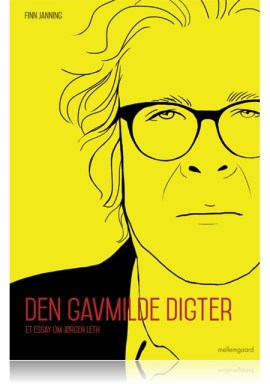
I 2014 udgav jeg bogen Den gavmilde digter – Et essay om Jørgen Leth (se mere her). Kort tid efter var der en venlig læser, som formidlede en kontakt til Leth, hvorefter Leth sendte mig en mail, senere en bog, og så videre. Det er nu ikke dette, jeg vil fortælle om.

Forrige sommer mødte jeg Leth i lufthavnen i Barcelona. På det tidspunkt havde jeg netop fået tilsendt min roman Hvem myrdede Gilles Deleuze?, som jeg derfor havde med mig i bagagen. Efter lidt overvejelse – og et kærligt pres fra min kone – præsenterede jeg mig for Leth og gav ham bogen. Udover en kort korrespondance, havde jeg aldrig set ham i øjnene.

Da vi landede i København, havde han læst det meste af bogen. (Den er kun 80-90 sider lang). ”Den er godt skrevet. Jeg læser kun hvis jeg er fanget, og den fangede mig.”

Jeg fulgte ham hen til bagagebåndet, hvor jeg nævnte Tour de France. Og her skete det! Forløsningen. Ordet alene – “Tour de France” – fik hans øjne til at lyse op. Fuld af kærlighed og livsvarme. Det var – og er – denne begejstring, som er så unik for ham. Han dømmer ikke, men tillader sig at blive tiltalt af livet, hvorefter han så gavmildt rækker lidt videre. Jeg tror, at det smil, de øjne som lyste, var grunden til at jeg skrev bogen. Livsglæden.

Inden vi skiltes, sagde han: ”Jeg er glad for din bog. Den viser en anden side af mig, som de andre (i.e. Lars Movin og Dan Ringgaard) ikke havde blik for. Den eksistentielle. Tak for det.”

Leth er indbegrebet af de uendelig somre. Der, hvor du ser andre hænge ind over deres cykelstyr, som du også hænger indover dit; der, hvor du rejser rundt i Frankrig, ser cykelløb, læser romaner og digte, skriver noter; der, hvor du indimellem er i tvivl om det, som skete, virkelig skete. Der, hvor hele den literære verden åbnede sig for dig.

Det er mig, der siger tak Jørgen.

9788793204201

Blog at WordPress.com.

Up ↑