Philosophical Counseling

Some years ago, I was teaching a course in Philosophical Counseling. To my surprise, all that the students wanted to know was “What is the right thing to do?” Having that knowledge, they assumed, would make life easier. “Perhaps,” I said, “but not better or more interesting.”

Their request is part of the obsessive achievement eagerness of today’s society to perform well according to fixed ideals. It creates dullness when it comes to mental exercises. The unfortunate norm is the faster the better. I told them that philosophy is about developing problems, not delivering solutions. It’s a slow practice. It’s for life. My answer made them fidget with impatience. To philosophize, I emphasized, is to dwell on the fundamental questions, and these questions are developed in problems, just as the problems are enveloped in fundamental questions.

Yet, my students insisted: “So, what is the right question?”

I told them that this particular question was related to the problem embedded in the question. For example, how do you draw a clear distinction between right and wrong?

The ones who weren’t paying attention looked up from their screens.

In sports, where the rules are given, I said, it is rather obvious to tell whether a player is “doing it wrong.” Similarly, in business, where profit seems to guide every decision, knowing what is right and wrong may be easier. Life, however, is neither a game nor a business, although there is a tendency to classify people into winners and loser as if life were that simple. Such labeling is part of today’s achievement society. Everyone’s performance is measured according to an ideal–and ideal that is often related to the staus, prestige, power, and, of course, money that is associated with being a winner.

They went silent, so I went on. Of course, there are things in life that are rather obvious. For instance, no one needs philosophy to tell you that it is wrong to kill, discriminate against, or repress other people. Instead, philosophy begins when we start to questioning the obvious. Could I live another life? What is also possible? How may I also live?

A part of philosophy is to accept that some problems remain without solution; some questions can’t be answered once and for all.

Such a question is Which life is worth living?

Of course, one of my students then asked me: “Which life is worth living?”

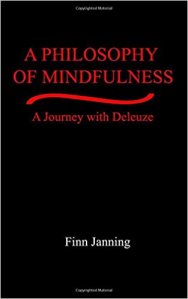
This is how A Philosophy of Mindfulness – A Journey with Deleuze begins.

31DYvhXpQ0L._SX311_BO1,204,203,200_

Gratitude

I’m somewhere high among white clouds between Copenhagen and Barcelona, on my way back home to the latter. Suspended at this altitude, I’m struck by a sentimental notion.

A short time ago, I said goodbye to my parents in front of the airport. They stood quietly, waving, while I disappeared into the building. I recall this picture. It’s a picture filled with affection. Gratitude. I’m grateful. They know this. My actions speak volumes, to be sure, even though I do nothing.

Perhaps this is why I discern, no, actually, I recognize and feel a stifling doubt: How can I be sure that they know? Have I thanked them? Then, I think: thanked them for what? At this point, I rise to my feet and retrieve my computer from my rucksack in the luggage compartment overhead.

My parents are older than me. That’s the usual way of things, but they’re older in a way revealing that there are bigger divides between some generations than others. They were among the Baby Boomers born in the ’40s.

I probably belong in the mathematically unknown generation known as X, which is also linked to Y. Somewhere in between. I’m too young for Douglas Coupland and far too old for Miley Cyrus. Somewhere between ‘just too late’ and ‘a little too early’ is how I’ve always perceived myself.

Read the rest of the essay here

Mod det falske

Løgn, manipulation og strategisk forførelse er, og har altid været, en del af den politiske dagligdag. Nogle vil mene: en del af alles dagligdag.

Jeg vil forsøge at tydeliggøre, at et for ensidigt fokus på ”post-truth” reelt overser noget mere essentielt, nemlig en tiltagende skødesløs omgang med livet. Internettet og især de sociale medier har fremmet en nonchalant tilgang til livet, der har forvandlet os til forbrugere uden reel indsigt i, hvad vi vil. Vi er blevet forført til afhængighed. Det indebærer også, at information opfattes som gyldig, i det omfang den stemmer overens med vores egne interesser – i det omfang den er brugbar for mig.

Læs resten af essayet i Eftertryk

Et demokrati kræver myndige mennesker

“Journalisten er den, som kan tilføre information en etisk såvel som æstetisk ramme. En ramme, der ikke kun handler om at behage læseren, men også om at oplyse, støde, problematisere og fabulere. Gode journalister er gode observatører; de er gode til at tolke det, som sker, hvorved de formår at give informationerne et skær af saglighed, som læseren derefter kan vurdere fornuften af ved hjælp af forstand.”

Fra min kronik Et demokrati kræver myndige mennesker. Det skal journalistikken hjælpe med bragt i Information. Den påpeger vigtigheden af den gode journalistik i en ’postfaktuel æra’, fordi den kan træne, pleje og skærpe den kollektive forstand. Modsat skaber den mindre gode journalister umyndige læsere, der ikke længere evner at skelne mellem sandt og falsk.

Meningens logik

Den franske filosof Gilles Deleuze er en original og kreativ tænker. Det er derfor glædeligt, at forlaget Klim har valg at oversætte Meningens logik til dansk. Bogen, der udkom på fransk i 1969 og engelsk i 1990, er – ifølge forfatteren selv –  ”et forsøg udi den logiske og psykoanalytiske roman.”

I dag er romanen heldigvis så fleksibel en betegnelse, at alt kan høre ind under denne genre, så lad os bare kalde Deleuze filosofiske bog for en roman. Det giver mening, når nu romanens hovedperson er Meningen. Og det er Meningens logik, altså dennes biografi, som forfatteren beskriver for læseren. Faktisk er det en roman, der viser psykoanalysens mangler, når det kommer til at forstå meningens kompleksitet.

”Det hører med til tilværelsens væsen at gå og pege i begge retninger på engang,” skriver Deleuze med reference til, hvordan meningen er udspændt mellem fortiden og fremtiden. Det er et sted her imellem, at den finder sted.

Den franske filosof går genealogisk og strukturelt til værks. Han fortæller, at antagelsen om at sandheden er en del af meningen, ikke er tilstrækkelig til at forstå meningens logik. Af samme grund spørger han, ganske pædagogisk: Hvordan bliver noget sandt?

Rent strukturelt (og traditionelt) hænger sandheden og meningen sammen. Logiske sætninger eller udsagn giver mening, fordi 1) de refererer til eller peger på noget eksternt, 2) de åbenbarer en overbevisning eller et begær, der passer sammen med sætningen, eller 3) de demonstrerer en sammenhæng mellem en historie og en anden. Det sagte passer ind, hvorfor det giver meningen.

Men hvad nu, hvis ord, handlinger, ting og dét, som sker, ikke hænger sammen? Tag for eksempel sætningen: ”Det regner.” Hvad er ”det” som regner, hvad refererer ”det” til? Eller, som Deleuze viser med hjælp af forfatteren Lewis Carroll, et sted siger Carrolls vidunderlige Alice fra eventyrlandet: ”hvis du kun talte, når du blev talt til, så ville ingen nogensinde sige noget.”

Meningen logik giver plads til vrøvlet, det opfindsomme og skabende.

Meningen, siger Deleuze, er udsagnets fjerde dimension (jf. de tre førnævnte: pegende, åbenbarende og manifesterende). Det er den stoikerne opdagede sammen med begivenheden. ”Meningen er det af udsagnet udtrykte, dette ulegemlige ved tingenes oveflade, irreduktibel kompleks entitet, ren begivenhed.”

Meningen er ikke et spørgsmål om dybde, da det ”der er dybere end enhver bund, er overfladen, huden.” Meningen eksisterer ikke engang, men den vedholder eller består. ”Til Alices kroningsmiddag, spiser man enten det, der bliver stillet frem, eller man bliver fremstillet for det, man spiser.” At spise og blive spist sameksisterer. Meningen er ”Noget, aliquid, på én gang yder-væsen og vedholden, dette mindstemål af væren, som passer til det vedholdende.”

Et sted i værket, der består af 34 serier, fastslår Deleuze: ”Begivenheden er selve meningen.” Hvad er så en begivenhed?

Det er et sæt af singulariteter, af særegne punkter, skriver filosoffen. ”Singulariteten er væsentligt set før-individuel, ikke personlig og a-begrebslig … Den er neutral.”

Begivenheden er et nøglebegreb i hele Deleuzes filosofiske værk. At begivenheden er selve meningen skyldes, at begivenhedens modus er det problematiske. Det betyder nu ikke, at der findes problematiske begivenheder. Snarere at begivenhederne ”angår problemerne, hvis betingelser de definerer.” Begivenheden i sig selv er problematisk og problematiserende. En begivenhed er ikke mere eller mindre meningsfuld, fordi dette ville forudsætte en reference, som begivenheden ville blive tolket i lyset af. Derimod fremsætter begivenheden de elementer, som kan blive meningsfulde.

Et problem bliver bestemt af de singulære punkter, som udtrykker dets betingelser. For eksempel, da Nietzsche sagde, at gud er død, så bestemte han et problem, der var betinget af at mennesket ikke længere kunne læne sig opad en ukrænkelig og hellig instans; en instans, der kunne fortælle mennesket, hvad der var værdifuldt. Hermed bestemte Nietzsche problemet. Og et problem har altid den løsning, ”der tilkommer det, ifølge de betingelser, der bestemmer det som problem.” Så, filosofi handler ikke om at finde en passende løsning, som eksisterede der allerede en løsning til ethvert problem. Tværtimod. Filosofi begynder med opfindelsen af et problem.

Måske kan læseren forestille sig Nietzsche, mens han kigger rundt og observerer mennesket; han ser, at det virker handlingslammet og vakkelvornt, hvorefter han formoder, at det skyldes at dets guide, dets gud, er død.

Inden filosoffen begynder at skabe begreber, hvilket Deleuze ser som filosofiens opgave, så må han eller hun bestemme et problem. Nietzsches begreb ”Vilje til magt” er et begreb, der overkommer problemets betingelser, nemlig den manglende sikkerhed qua guds død, hvorfor mennesket nu selv, ganske modigt, må skabe værdier.

”Meningen er aldrig princip eller oprindelse, den er frembragt,” skriver Deleuze. Den frembringes af nye maskinerier, det vil sige, nye forbindelser som når noget går i noget andet, tredje, fjerde … og pludselig går itu. Den rhizomatiske og horisontale tænkning, som Deleuze introducerer sammen med Félix Guattari i Tusind plateauer understreger, at meningen ikke er hierarkisk eller vertikal. Deleuze er stærkt uenig med Platons forestilling om, at filosoffen er en der render rundt med hovedet oppe i skyerne. Der er intet dybere end overfladen, intet dybere end sminken, tatoveringen; intet dybere end dét, som sker. Meningen er aldrig ”oprindelig, men altid forårsaget, afledt.”

Meningens logik er en fantastisk bog. En filosofisk roman for alle – inklusiv alle os som måske aldrig bliver andet end ikke-filosoffer. Bogen er lærd, men ikke tung; den er svær, men luftig, sjov og ganske klar. Den er fuld af smukke sætninger. Faktisk rummer bogen noget af det smukkeste, der nogensinde er blevet skrevet om etik. ”Enten har moral ingen mening eller også er det dette, den vil sige, og som er det eneste, den har at sige: Ikke at være uværdig til det, der indtræffer for os.”

Etik = at gøre sig værdig til at bære det, som sker.

”At blive værdig til det, der indtræffer os, altså at ville det og frisætte begivenheden deraf, at blive søn af sine egne begivenheder, og at blive genfødt derigennem, at få sig en ny fødsel, at bryde med sin kødelige fødsel. Søn af sine begivenheder og ikke af sine værker, for værket bliver selv kun frembragt af begivenhedens søn.”

Der er tale om en generøs og ydmyg filosofi, der ikke forfængeligt klamrer sig til sine værker, men erkender, og udlever, det faktum: at livet former os.

At filosofere kræver en opmærksom omgang med det, som sker, for at kunne give plads til det. Meningen er noget som bliver til i mødet med verden. At forstå meningens logik er at forstå, at ingen ejer hans eller hendes tanker. Dermed er det nu ikke alle forundt, at kunne frisætte begivenheden, problematisere og tænke med den.

Afsluttende er det måske passende at forsøge, at tænke med Deleuze. Hvordan finder man ind i #MeToo-bevægelsens kraftcenter? Følger vi Deleuze skal vi ikke lede efter en dybere og mere oprindelig mening. Hele bevægelsen er en maskine af forskellige forståelsesudsagn, der handler om køn, sex, magt, overgreb, kapitalisme, etc. Deleuze ville ikke fortolke bevægelsen, men følge den; give plads til dens forskellige eksperimenter, der nedbryder rigide og ofte diskriminerende strukturer. #MeToo handler om at en minoritet skaber et større sprog. Et sprog, som på sigt ikke kun vil omhandle bedrestillede kvinder fra den vestlige verden, men også kvinder der er stærkt undertrykt i religiøse samfund eller på grund af økonomisk ustabilitet. Det er en potentielt set altfavnende bevægelse, der kan fremme respekt, omsorg og lighed.

Meningen handler ikke om identitet, rødder eller hellige ydre reference. Meningens logik er derimod noget blivende, noget som befinder sig i mellemrummet, som når ”sundheden bekræfter sygdommen, når den gør sin afstand til sygdommen til en genstand for bekræftelse.” Meningen er ikke en dualistisk dans mellem det sunde og det syge, som noget fasttømret. Snarere fremkommer den, når vi kan begribe det, der relaterer sundheden og sygdommen til hinanden. Når vi tør placere os i mellemrummet, dér, hvor det hele finder sted.

Det sunde handler om at kunne bære ens egne sår, skavanker, mangler og middelmådighed. At ville begivenheden er, at ville livet – i al dets perversitet.

Det er meningens logik. Læs den.


Meningens logik, Gilles Deleuze. Oversættelse og efterskrift ved Christian Rud Skovgaard, Klim.


You can only change yourself

“If you can’t change the world. Change yourself,” sings the English post-punk band The The in their song “Lonely Planet.”

On the surface, it is both liberating and sad to hear that perhaps we cannot change the world. However, that does not mean that we should be resigned. On the contrary. The challenge is rather to change ourselves, that is, change our approach or relationship to the world. And that too can be difficult.

The moral is the following: It is people who change the world. A change occurs by which certain people have another approach or relationship to the world. By that I am saying nothing about what is good or bad, only that if you want a different world, a slightly better and more loving world, it is not going to happen by itself. Nothing comes of nothing. Everything starts here and now with you and with me.

Another important element in this line of thinking is that there is no reason to preach or moralize. No one has lucrative access to the truth or goodness. But you can inspire others through your actions. You can lead by example. Meet the world with kindness.

Everyone is a mutable process without reference to a given essence but to something permanent. To something that I can help influence or cultivate. This type of cultivation requires that we look inward and outward. It is important to realize that you can always be influenced by or influence the surroundings of which you are a part.
Why would you like to change the world?

One possible answer could be that you want a world without hierarchies, whether they are patriarchal, racial, social or economic. It could also be that you want to create a more harmonic balance with the nature of which we are a part.

Behavioural economics, motivational theories, compulsion and threats can change people’s behaviour, but only in the short-term. Fear is a repressive solution model. Lasting changes come about through shifts in mentality, another way of thinking, feeling and living. No one can bear to live in constant fear. If I begin living differently, for example, am more friendly and loving, that approach will also affect my thoughts and feelings. It can be expressed simply: I want to save the Earth, not because I fear its demise, but because I love it.

To the extent that I want to change myself in order to – perhaps – change the world, I must first liberate myself from the ideals and norms that keep me trapped in a regressive approach to life.

I will stop allowing myself to be seduced and controlled by things that give status and prestige in today’s performance society. Instead I will interact with life attentively, kindly and lovingly. I will surrender to life. I will joyfully allow life to take me where it flourishes.

*

In connection with the launch of a new Danish ecological clothing label, I was invited to write three semi-philosophical reflections: You can only change yourself is the third.

Life is a shockingly hairy crotch

“The smooth is the signature of the present time,” writes philosopher Byung-Chul Han in Saving beauty. This kind of smoothness, he continues, “connects the sculptures of Jeff Koons, iPhones and Brazilian waxing.”

Han claims that today smoothness is the same as beauty, and this concept embodies today’s society of positivity. We live in a society that offers no resistance; we simply look for others to like us or like what we have posted. Smooth, smoother, smoothest = good, better, best.

Another way of saying this is that a lot of contemporary art works in concert with neoliberal capitalism, instead of resisting or working against it. For instance, Han contends that Koons is, “arguably the most successful living artist at the present is a master of smooth surfaces.” In other words, Koons is playing the capitalistic game. What determines success is the ability to sell your art. Success is here being defined as being known and admired.  Koons’ version of art does not require the artist to open an “echo chamber, in which I assure myself of my own existence,” as Han writes. “The alterity or negativity of the other and the alien is eliminated altogether.”

Koons is about as progressive as a Brazilian waxing.

For readers, who are familiar with Han’s work, Saving Beauty unfolds the same arguments against today’s achievement society. Han discusses the transparent, porno, and burnt-out society we have become. What is sad, of course, is that art, apparently, has also been reduced to something kitsch: shiny tulips, balloons, and smoothness.

This book is full of startling, precise statements. For example, he says, “A selfie is precisely such, an empty, expressionless face.” The addiction that our current society seems to have with taking selfies only illustrates an actual emptiness of the ego. It lacks character, and instead, it is smooth and easily likeable.

The core argument in Savage beauty is that today, beautiful equals smooth, clean, and transparent. In contrast, in earlier times, like during the era of Plato, Kant, and Hegel, there was no distinction between beauty and the sublime. Experiencing sublime beauty is not supposed to be pleasurable; rather, it hurts. It makes you fall and stumble. It is similar to falling in love because you can lose yourself and act rather stupid.

“The sight of beauty does not cause pleasure, but shocks,” Han stresses. I must admit that although I attend exhibitions monthly, I rarely am affected. Visiting the Guggenheim in Bilbao earlier this year, I had a chance to experience Koons’ tulips, which was a pleasurable experience. However, they did not affect me like Richard Serra’s The Matter of Time did. With Serra’s work, I found that his huge iron sculptures opened for me an encounter where I interrelated with the work in a way that affected my equilibrium. The viewing his work made me become someone else. That is the beauty of experiencing your own fragility.

“Instead of opposing the sublime to the beautiful, one should return to beauty a sublimity that cannot be subjected to inwardness,” writes Han. Art can shake us, make us see the world differently, and make us perceive our own limitedness and flaws. “The longing for beauty,” Han says, “is ultimately the longing for a different mode of being, for another, altogether non-violent form of life.” Unfortunately, the digital nature of beauty in our current age has removed all negativity or otherness that might have existed. All there is left is something likeable. Yet, following Heidegger, Han suggests that concealment is essential to beauty since “transparency and beauty do not go together.”

This reflects how information cannot be veiled, whereas knowledge can retreat into secrecy. Art is related to the secret story as Roberto Bolaño once said. It conceals something for us, but it often does so in a way that it painful and not pleasurable. Art  requires hard work. “Without injury, there is not truth,” Han claims. The smiles and likes of today, “lacks any intensity, any quality of a shock.”

Beauty is located, somewhere “between disaster and depression,” according to Han, “… inherent to beauty is a weakness, a fragility, and a brokenness.” I have experienced that feeling with the artwork created by Serra, not with Koons’ work.

In today’s transparent consumeristic society, art is rarely contemplative. The ideal consumer, Han argues, is a person without character. The ideal worker or citizen in today’s neoliberal and capitalistic society tolerates everything as long as it sells. Nothing is avoided because there might exist a market somewhere for it. “Facebook is a characterless market,” Han writes. Art, when it is made smoother, is characterless as well.

Still, why all the fuss about saving beauty? Why must we fight to save it?

“Beauty promises freedom and reconciliation,” and “truth is freedom,” as Han writes. In other words, a world of smoothness is false; it’s a world of “post-truth.”

For Han, the beautiful is both true and good, it’s almost like the Korean-German philosopher is turning Platonic.

Han is a strong critic of contemporary society. He elegantly hides his own moralism (most of the time). When “beauty frees me from myself,” Han points out, then saving beauty is also a way to rescue the other. It represents an opportunity to save the negative and that which constitutes me as another.

Han ultimately ends up embracing the philosophy of Alain Badiou, especially, his idea that the task of philosophy is to be loyal or faithful towards whatever binds us together. (Han also ended up with Badiou in his essay, The Agony of Eros).

If there is a morale, it is that we have to show fidelity to what takes place. Fidelity is unconditional in that it presupposes commitment. That means, that we once again should try to become capable of matching all parts of life, not just when life is pleasurable and smooth. We must do so even when life is a shockingly hairy crotch or chest. To do so is to save democracy. Or as Han finishes his essay: “The saving of beauty is the saving of that which commits us.”

I recommend the book.

See also my review of Buyng-Chul Han’s In The Swarm.

Algo sobre Byung-Chul Han

“Ya no vivimos en una sociedad disciplinaria controlada por las prohibiciones o mandatos, sino más bien en una sociedad orientada al logro del que es supuestamente libre,” según el filósofo Byung-Chul Han.

Y continua, “Sí, presumimos que somos libres, pero en realidad somos nosotros mismos quienes, de manera voluntaria y casi pasional, nos empujamos hasta llegar al colapso.”

La video artista alemana Isabella Greeser dirigió este poético documental sobre Han. Este documental tuvo su premier mundial el 9 de febrero (2015) en el Centre de Cultura Contemporánea de Barcelona (CCCB). Unos cuantos cientos de personas acudieron al show.

Byung-Chul Han es popular no solo en Alemania, sino también en España, donde cinco de sus libros han sido traducidos al español. La tesis de Han es que el neoliberalismo de hoy ha transformado la política, en una –Psicopolítica– como titula otro de sus libros. La lógica del neoliberalismo ha invadido nuestras mentes. Esto es triste porque nuestra mente es todo lo que tenemos. Es nuestra habilidad de estar presente en nuestra vida, nos permite pensar, y amar y ahora está amenazada por esta invasión.

Nos encogemos mentalmente. Cada vez más se dice y hace de la misma forma, casi de manera hipnótica y acrítica, siguiendo la corriente. Todo esto es extraño, secreto o negativo, en otras palabras, todo lo que pasa por nuestra mente desaparece, debido a la repetición continua de la mismidad. Parece que todos los aspectos de la vida sufren de la idea de “mejores prácticas”, tan popular en las organizaciones empresariales. Nos falta un enfoque crítico con tono creativo para superar este confinamiento.

En la película documental, seguimos a Byung-Chul Han mientras pasea por las calles de Berlín. Habla de su pasión por las tiendas de antigüedades, que al parecer allí soportan el paso del tiempo. Al pasar por la tumba del filósofo Georg W. F. Hegel, comenta que para él ha sido su filósofo más influyente.

Con rapidez te das cuenta de que Byung-Chul Han no tiene prisa, aunque publique con la rapidez de Usain Bolt. Aun así, no parece motivado con la actuación como tal. Al contrario, él se detiene. Se sienta. Lee. Cierra sus ojos. ¡Para! Todo esto son formas de Resistencia hacia la positividad de hoy. Afortunadamente, él no es parte de lo que en algún lugar se llama “el terror de positividad.”

La filosofía es un tiempo intermedio, señala en La sociedad del cansancio. La filosofía puede ser entendida como el tiempo de “no-hacer”, “tiempo de paz”, como él lo llama, refiriéndose a Peter Handke. El concepto de “no-hacer” También se asemeja a los elementos de la atención plena en la que subraya que no necesitamos estar haciendo cosas constantemente. “No-hacer” permite que las cosas se desarrollen a su propio ritmo.

A mitad de la película, Byung-Chul Han vuela a Seúl donde nació en 1959. En esta parte del mundo, la relevancia de la tesis y el análisis del filósofo se hace aún más evidente. La gente está agotada. Duermen en el metro, en los autobuses, detrás de la caja registradora. Parece una tragicomedia. Los que no están durmiendo viven a través de la luz resplandeciente de los omnipresentes teléfonos móviles, ¿Funcionan los teléfonos móviles como los marcapasos?

La filosofía de Han, como la mayoría de las formas de meditación budista, trata de liberarnos de la ilusión convencional de tener un yo. Por otra parte, a diferencia de sus estudiantes universitarios alemanes de la Escuela de Frankfurt, Han no es normativo en su crítica, sino inmanente. Esto hace que su enfoque sea más creativo. La mayor parte de su crítica se realiza como práctica. Se trata de cambiar nuestra relación con el mundo, por ejemplo, dice que está bien no hacer nada.

Byung-Chul Han afirma en La agonía del Eros que muchos de nosotros nos hemos convertido en narcisistas, y me resulta difícil no estar de acuerdo con él. Como Narciso, más y más personas caen en el agua y se ahogan. O su vida se desvanece, mientras que la gente está buscando en Google su propio nombre. O saltan de un puente. Corea del Sur se encuentra en la parte superior de la lista de países con la tasa más alta de suicidio. En la película, Han pasa por un puente en Seúl, un sitio muy popular para los suicidios. Al parecer, nadie intenta comprender la depresión que lleva a muchos a cometer suicidio. Más bien, la tristeza se encubrió con citas de poemas junto con imágenes coloridas de deliciosos platos de fideos. Pero  ¿que vale más, un plato de fideos o tu vida?

El capitalismo neoliberal se ha vuelto loco. El capitalismo es como un tren sin frenos. Estamos agotados; tenemos que abrazar una sociedad cansada donde está bien no hacer nada por un tiempo. En lugar de amor y compasión, tenemos estrés, agotamiento y depresión.

Es el momento de tomar un descanso. Pausa. Cierra tus ojos. Respira.

***

For more on Byung-Chul Han (in English), please see my review of In the Swarm, or my review of Saving beauty.

In Danish: anmeldelse af Transparenssamfundet , I Sværmen & Træthedsamfundet

What is happening in Catalonia?

The Spanish novelist Eduardo Mendoza has won many literary prices, including the Franz Kafka Prize, in 2015, and the Premio Cervantes, in 2016. Recently, he published a short essay entitled Que está pasando en Catalunya (What is happening in Catalonia).

Like many others, he wants to understand what is happening in the Spanish region of Catalonia, especially, as he notes, because of the “ignorance” and “prejudices” that affect many people’s images of Catalonia and Spain.

It is a mistake to reduce the Catalan nationalist and separatist movement solely to origins in the Spanish Civil War, Mendoza says. Franco’s dictatorial regime is gone. Since the late 1970s, Spain has undergone a difficult, but also impressive, democratic transition. Many of those today who refer to “Franco’s ghost” never lived under his regime; if they had, they would probably be more cautious when using terms such as “Francoism,” “fascism,” and “dictatorships” so carelessly. At the very least, they would be cautious out of respect for all those who suffered and died during that time.

It is true, however, that Catalonia, like the rest of Spain, suffered during the Franco years. Furthermore, the Catalans suffered with respect to their language, and many Catalans wanted to separate themselves from Franco (as did many other Spaniards). “No one doubts the antipathy of the Franco regime towards the Catalan language,” Mendoza writes. And yet, not all Catalans were against Franco. He continues, “we should forget that a good part of the young (and not so young) Catalans volunteered for the Falangist movement.”

The idea of Catalonia revolting against Spain is wrong, because this assumption is based on the naïve generalization of claiming that all Spanish or Catalan people are identical. Spain, as a country, suffered under Franco, just as some Catalans followed Franco freely.

Luckily – and I say this ironically – for the contemporary Catalan separatist, “the habit of adapting history to fit contemporary conviction is a distinctive Catalan identity,” Mendoza says.

Anyone with a little knowledge of what has happened in Catalonia will know that facts are treated with creative elegance that places the separatist within the post-truth, alternative facts, or fake news era. Illustratively, Mendoza draws a comparison between France and Catalonia. While France had a glorious past, one to which we can look for compassion, the Catalans never had one. Thus, “to hide what they considered shameful, the imagination and artistic talent of Catalans has been dedicated to inventing a past that the society would have loved to have.”

Perhaps the best way to illustrate the complexity of the separatist lie is by referring to Sartre’s concept of “bad faith,” a way of using freedom to deny ourselves the freedom we actually have. This is a strategic way in which some Catalans take away their own responsibility to choose by saying that they have no choice. As a consequence, the independence movement has created a culture of victimization where it is easier to blame Spain than to take responsibility for themselves. For example, blaming the centralization of power in Madrid. Interestingly, Mendoza writes, “if there is place where you can speak about savagely centralism it’s in Catalonia. Barcelona has always scorned the second ranked cities …”

Mendoza describes the Catalans as shy and a group whose thinking is not used to getting very far. “They are practical thinkers, but theory and abstraction bores them.” Perhaps, for this reason, some seem to speak of democracy and freedom that, at most, resembles Orwell’s Newspeak. As Mendoza has written elsewhere, if you can freely demonstrate in the street and participate in the Spanish government, then there is, indeed, democracy. However, if you do not wish to accept that democracy is a long and tiring process, then you simply need to organize an illegal election insisting that it is legal.

To begin with, “the participation of Catalans in the Spanish government was encouraged … during the years after the transition.” Unfortunately, with Jordi Pujol, who served as President of the Catalan Generalitat (i.e. the Catalan government) from 1980 to 2003, a systematic plan towards independence was in place: it was found in schools, the media (Mendoza mentions how the Catalan media outlets TV3 and Catalunya Radio moved from being neutral to “separatist organs”), the local government, and via less involvement in the Spanish government. All activities were aimed at creating a Spanish enemy by altering facts. Then came the financial crisis in 2008, which – as is many other places such as in Madrid, Athens, Lisbon – hit the younger generations, and created a healthy and global anticapitalistic movement that, unfortunately, quickly turned into a nationalistic protectionism.

Using his trademark easy-going style, Mendoza writes that, regardless of the mythical stories that Spain and Madrid is stealing, ”you live better in Barcelona than in Madrid.” The morale is: Life is hard, for all, not just the Catalans.

Towards the end of Mendoza’s pedagogical essay, he concludes that there is “no practice which can justify the desire for independence from Spain,” before adding, “Spain is not a bad country. It could be better.” This is true, but so can Denmark, where I am from, and all other countries. Democracy is, after all, a dynamic process.

Mendoza succeeds in killing a few myths, but whether these efforts are enough to make people less ignorant, only time will tell. Nevertheless, it is good to see that more and more Spanish and Catalan intellectuals are participating in uncovering the political theater, where politicians (most notably Puigdemont & co) play with the Catalan people’s emotions by selling certain beliefs, irrespectively whether these beliefs are true or false.

So, when Mendoza writes that there is “no practice which can justify the desire for independence from Spain,” then he emphasizes that the emotions and beliefs behind the separatist are unreasonable and unjustified, despite how some Catalans feel. Therefore, it is healthy, as Mendoza says, to question our ideas, to explain things to each other, and to eliminate prejudice, ignorance, and incomprehension.

Mendoza shows that sometimes thinking is painful. For example, Puigdemont & co use “freedom” and “democracy” as tranquilizing slogans, yet if we pay attention, it’s obvious that their use refer to a superficial understanding (if not simply a nationalistic misunderstanding). At most these slogans are sleeping pills that hinders an open and honest examination of a challenging conflict, an examination that requires empathy and compassion. Elsewhere, I ‘ve argued that compassion is needed in Catalonia, not as something artificial, but as something that arises naturally in complex and tense situations.

A difficult road lies ahead – for all parties.


Blog at WordPress.com.

Up ↑