One World

In One World Now: The Ethics of Globalization, Peter Singer, an Australian moral philosopher, discusses humanity’s shared ethical responsibility and sovereignty. We live in a global world that—unlike the older term “internationalization” conveys—emphasizes that we are moving; that is, “moving beyond the era of growing ties between states,” he says.

Within his text, Singer addresses a central question: is the nation state loosing sovereignty? Perhaps. Should it? Yes, according to Singer. And he makes a strong case for overcoming it. Whether or not the nation state is losing its sovereignty is a difficult question to answer.

Read the rest of the review at Metapsychology.

All about love

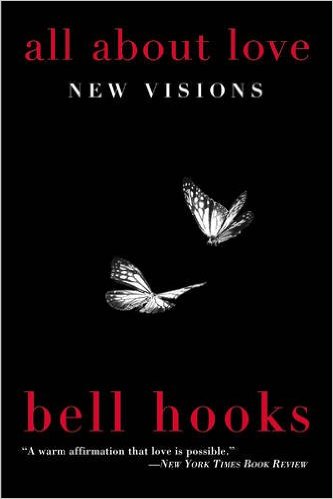
Many years ago, I ended my first book with a reference to the lyrics of Massive Attack’s song “Teardrop”: “Love is a verb, a doing word.” I make a habit of never re-reading my own work, but I was again reminded of that song while I was reading Bell Hook’s lovely treatise on the transformative power of love.

In All About Love: New Visions, Bell Hooks or—as in all her books, her name isn’t capitalized—bell hooks argues that love is what liberates us and others. She says it’s about time that we defined and understood love. For example, love is not something mystical, an excuse for losing all control, or—even worse—those times when we hurt someone out of love. Just imagine the parent who abuses his or her children yelling, “I hit you because I love you!”

“Love and abuse cannot coexist,” bell hooks says. I love her from saying so, with such argumentative strength that this is clearly non-negotiable.

In this way, hooks also lifts love from an individual to a social issue. We are formed by the society we live in. Therefore, unless we become conscious of our blind spots and fight to get rid of them, we might reproduce a misunderstanding of what love is and how to live and practice love.

“To maintain and satisfy greed, one must support domination. And the world of domination is always a world without love,” hooks writes. Just think of Trump. Is he alone the real problem, or is it the mentality or ideology that put him in power?

Hooks emphasizes that our current culture is full of greed and exploitation—not only sexual or gender exploitation but also racial and economic. She mentions how former president Bill Clinton’s sexual relationship with an intern exposed a fundamental flaw in his self-esteem and how easily such behavior was accepted or objections to it silenced.

Hooks offers us a useful definition of love that she takes from M. Scott Peck’s The Road Less Traveled. “Love is the will to extend one’s self for the purpose of nurturing one’s own or another’s spiritual growth.” In other words, love is not something that we simply activate by pushing a button. Rather, love is something we must learn. Important ingredients are care, trust, respect, affection, and honesty. Hook adds, “When we are loving, we openly and honestly express care, affection, responsibility, respect, commitment, and trust.”

As a parent, teacher, or adult, we are responsible to teach and cultivate love. This also means addressing situations in which we see love being violated, for instance, if some parents—or partners—use violence to express love. It’s not love. It’s violence and abuse.

“There can be no love without justice,” hooks writes. This means that parents and teachers should treat children with respect. My children are not my property. They are individuals that I have a responsibility towards, ensuring that each of them—with “them” being the operative word—is capable of giving and receiving love. This also illustrates the need to find the balance between setting limits and nurturing free expression. So, without justice, love can’t exist. It resembles Plato’s idea of the Good, which is right, just, and beautiful. Hooks is an idealist about love.

Hooks’s narrative is a mixture of a personal memoir, in which she refers to her own friends or relationships, and an ongoing dialogue with psychologists and spiritual thinkers. She has an especially critical outlook on sexist stereotypes that extend back to Eve and Adam, in which women, just by being females, were—or are!—less likely to tell the truth. After all, as the story goes, Eve did lie to God. However, who cares about this since God now is dead? I find that many care because, although we may not believe in any transcendent being, the idea still colors our culture and many people’s behavior.

Although I don’t mind setting love and freedom up as ideals—basically, because I can’t come up with any two virtues of more importance—I still think that hooks tends to moralize. Since I agree with her basic arguments, the challenge is to know when, or if, she takes her points too far. For example, she is apt to describe men as one homogenic mass, perhaps because of her stated agenda. She writes, “most men tend to be more concerned about sexual performance and sexual satisfaction than whether they are capable of giving and receiving love.” Here she falls for what is a stereotypical cliché, regardless of if this appears to fit scores of American men. Even in the United States, I believe that there are as many ways to be a man as there are to be a woman.

Basically, hooks describes men as rather primitive animals that hardly know how to show emotion, sounding like a popular journalist writing about Mars and Venus rather than grounding her discussion in facts. I have much sympathy for those wanting to get back at men, but this undermines her project since she doesn’t live up to her own philosophy. Love can only liberate us if we think beyond individual identity and experience. Even as I say this, I can’t help adoring bell hooks’ work. She also has written one of the best books on feminism, in which she stresses that men are not the problem but sexism and exploitation are.

For me, capitalism is the main evil and the cause of racial and gender inequalities. We all know that disparities and discrimination still exist. We know that a white patriarchal president at this moment reigns in the United States. We all know that he’s a racist and sexist who, I think, actually fears losing the fictional privileges he sees as due to him because of his gender and skin color. However, fortunately, far from every man is like him. I know I say this from a privileged position of being a Scandinavian brought up with a high level of equality (unfortunately, even Scandinavian countries now have a rising number in intolerant politicians and citizens), yet I also only need to look out my window here in Barcelona, Spain, to see that sexism, exploitation, and domestic violence are part of daily business.

I stand by hooks regardless of her stereotypical descriptions of men, and I am inspired by her overall idea that love should be first defined and then understood so that we can finally learn how to practice it. We can actively decide whether we really want to love this or that person. Believing this is impossible reduces humans to beings purely made up of lust and desire, whereas—as Spinoza said—we are a mixture of reason and emotions.

Thus, hooks advises us to stop saying, “I am in love,” and, instead, to say, “I am loving” or “I will love.” Emphasizing love as a verb and not as a noun requires courage. She writes, “as long as we are afraid to risk, we cannot know love.”

To love is to accept that no promises can be kept in life. All we can do is to live life to the fullest so that we, one day, can die without regrets. This echoes Plato’s idea that knowing how to live is also knowing how to die. As hooks might say, knowing how to love is also knowing how to die. I hereby warmly recommend All About Love.

all-about-love

Riverbed

In 2014, artist Olafur Eliasson exhibited Riverbed at the Louisiana Museum of Modern Art. Riverbed is a rocky landscape placed inside the museum. This work has nature and culture folding around one another to an extent that illustrates that everything is culture. The work challenges the participators both physically and mentally, as it facilitates intimate contact with the sounds of the water running through the riverbed, the smell of the wet rocks and the gleam of light reflected on the wet rocks, and challenges your bodily balance as you walk up the hill or try to balance on the slippery or rolling rocks—all of it becomes significant.

In an interview, Eliasson mentions how the landscape appears dead, except for the little stream of water that passes through it. The movement of the water makes the work dynamic. The movement brings life. Yet the water doesn’t come or leave; it just moves and thereby touches the participants. It comes from nowhere, going anywhere. The work is a meditative contemplation addressing time as movement and as duration, not linear sequences that can be split up. It doesn’t lead to a result; it can’t be passed toward something better; on the contrary, time passes. As an internal process, “The walking time is unfolded,” says the artist.

riverbed-by-olafur-eliasson

Riverbed takes place in-between the coming and going. How aware are you of what is happening right here and now? What comes into being? What passes? How do you relate to what is happening? Is your perception already affected by strong beliefs or ideas? Can you only relate in a certain way because of past memories, external pressure or fantasies? Can you meet the world unarmed?

These questions circle around establishing a belief in this world, where our belief is connected with the actual moment, not a projection. The work Riverbed may help us from solely thinking about art as an object of our thinking to having a territory, that is, it makes us think.

A river, like a piece of art, has a past form, a present form and, perhaps, a form to come. It depends on our involvement. This involvement is ethical, I propose.

For example, Gilles Deleuze’s ethic is one of the events; not the present understood as an object, but the present living moment stretched in-between, “What is going to happen? What has just happened … never something which is happening.”

What is happening, therefore, is always a mixture of no longer and not yet. This is why Deleuze says that philosophy is mixture of crime and science fiction, dealing with what has just happened as well actualizing.

Art can teach us a lot about ethical involvement.

A Life Less Painful

My brother died the third of October, 1993. Or maybe he died the day after, on the fourth of October. Does the date really matter?

Death is death. It awaits us all.

My brother, whose name was Jesper, died at the age of twenty-six, someday in October, somewhere in Denmark.

Read the rest of the essay in the Foliate Oak Literary Magazine

Teaching Mindfulness

“For mindfulness is not just one more method or technique, akin to other familiar techniques and strategies we may find instrumental and effective in one field or another. It is a way of being, of seeing, of tapping into the full dimension of our humanity, and this way has a critical non-instrumental essence inherent in it.” —Jon Kabat-Zinn in the Foreword to Teaching Mindfulness.

Teaching Mindfulness is authored by Marc S. Micozzi, Donald McCown, and Diane C. Reibel. It is both a theoretical and a practical book, but what does that mean?

Back in 1972, the French philosopher Gilles Deleuze had a conversation with Michel Foucault, in which they discussed the importance of theory and practice (see Foucault’s Language, Counter-Memory, Practice: Selected Essays and Interviews). Deleuze said, “From the moment a theory moves into its proper domain, it begins to encounter obstacles, walls, and blockages which require its relay by another type of discourse (it is through this other discourse that it eventually passes to a different domain). Practice is a set of relays from one theoretical point to another, and theory is a relay from one practice to another. No theory can develop without eventually encountering a wall, and practice is necessary for piercing this wall.”

What is the proper domain of mindfulness?

The authors don’t mention this explicitly, but the proper domain is life. Mindfulness can help you bring your attention to life, that is, your relationship with life. If we step back, then mindfulness is a fundamental practice of Buddhism. Buddhism presents us with a theory of how to overcome pain and, perhaps, reach enlightenment (e.g., the Four Noble Truths and the Eight-fold Path). However, this theory may encounter an obstacle in its Western context because of its religious undertones. However, mindfulness is also—in its Western practice—a set of relays from psychology, cognitive science, neuroscience, and philosophy. The beauty of mindfulness is that it is more flexible than Buddhism, although it acknowledges the lineage and teachers within this very diverse tradition. Still, I refer to Deleuze because he can help us see that practice— mindfulness—makes the constitution of being alive possible.

When Kabat-Zinn says that mindfulness is a way of being, in my opinion he is saying that it’s a philosophy, a way of life. This also illustrates how the theory of practice (how to practice and teach mindfulness) progresses to the level of ontology. “Mindfulness in everyday life is the ultimate challenge,” writes Kabat-Zinn.

I read Teaching Mindfulness with gusto and not just because I recently taught my first session about mindfulness to children. Rather, it takes mindfulness as a practice between Eastern and Western philosophy seriously. Most teachers practice mindfulness out of love; they have been introduced to it because of personal angst or because of their travels in the East, where they met extraordinary teachers. Today, the story is a little different. People are teaching not only out of love but consider their teaching as a profession, which, of course, can be motivated by love. This addresses several problems or challenges. Like those in many other professions (e.g., teaching, nursing, and medicine) it is often assumed that these individuals are directed by some sort of “calling.” This calling often functions as a moral motivator since one could also feel “called” to become an assassin.

So, although I see philosophy as a way of being—and not a discipline where you need to assimilate a specific curriculum to pass—I am also aware that certain background knowledge from reading and practice is needed.

Philosophy is an approach to life that can be qualified through experience, including reading and discussion. As Socrates once said, “The unexamined life is not worth living.” Most philosophers and mindfulness practitioners would agree, even though they may disagree on how to investigate life.

The authors of Teaching Mindfulness address pertinent questions, such as: Who becomes a teacher? What do I know? Do I know it well enough? In answering these questions, the authors offer their own experiences, which give the book a personal radiance. They also place mindfulness in a Buddhist context and explain how it gradually came to the West. “If the 1960s and 1970s were a period of foundation and growth, the 1980s and 1990s could be seen as the painful passage to maturity,” the authors write.

Being mature means being accountable for your actions. Especially when the teacher becomes something like a healer.

The authors identify four interrelated skill sets that are common among mindfulness teachers:

  1. Stewardship of the group
  2. Homiletics, or the delivery of didactic material
  3. Guidance of formal and informal group experiences
  4. Inquiry into participants’ direct experience

By using these skill sets, the authors present many interesting ideas about balancing the interdependence of the group’s freedom and resonance, the teacher’s responsibility, how to deal with aggression, and other topics. They present concrete exercises and meditation topics for each of the potential challenges: development and care for your “teacher’s voice,” connecting and maintaining curiosity with your students, etc. In this way, the book is useful for the individual teacher, for a group of teachers who can debate and develop their own style of teaching, and even for schools.

One of the book’s greatest advantages is that it illustrateteaching-mindfulnesss the full range of practices: awareness, being present, yoga, and loving-kindness. In that sense the three authors establish the beauty of mindfulness. I would like to stress this point.

Mindfulness is part of an industry that attracts many good teachers, but it also draws those who are in it only for the money. If you are interested in mindfulness (or anything else) because of the money, it negates the so-called goodness, loving-kindness, and true altruism intrinsic to these individuals and makes them hypocritical. When profit or payment enters, the world is again for only those who can afford it. The rest? Let them scramble in the dirt. What I mean when the authors show the beauty of mindfulness is that they pass on their experiences instead of capitalizing on them. Even though these textbooks are ridiculously expensive, we are grateful to the authors for explaining their practice.

Mindfulness can teach people to pay attention, and to become aware of themselves and what happens around them. This can help them see that they need to do something. For instance, I imagine living in a world where people can become who they are. Unfortunately, the persecution of gender, race, and sexuality still hinders the individual’s freedom to become. Before this can be changed, we need to pay attention to how we think and act to make equality and respect possible in the future.In other words, mindfulness can’t change the world alone but together with critical thinking, I believe, children (and others) will have a good foundation for engaging in this world.

In conclusion, I recommend this book to all who work with mindfulness, but it is also a valuable resource for teachers in general.

Finn Janning, PhD in philosophy, is a writer.

Some years ago

Some years ago, I began contacting book publishers for review copies. At that time, I didn’t have any money but a great hunger for reading books on philosophy. All I offered was a review or a mention on this blog. Many publishers were kind enough to send me copies.

While reading these books, I have gradually tried (and I am still trying) to formulate and practice an affirmative philosophy. A philosophy for everyone! This us a journey that began with my PhD-studies that I finished in 2005.

A few years ago, I decided to see if mindfulness could add anything to this philosophical approach. Loosely said, all ethics requires that we “see”—that is, that we are aware or paying attention as a way of being. Yet most philosophies don’t really nurture this skill.

Therefore, as a way to get acquitted with mindfulness (I was interested in its nonreligious approach to meditation), I participated in courses and retreats, and I am now in the last stage of finishing a master’s degree in mindfulness.

Philosophy is serious, as Kierkegaard said (for which reason he elegantly added humor and irony to pass on his thoughts). During this process, I have contacted publishers for books on mindfulness as well. And that is why I am writing this post.

One of the books I received in 2016 was Malcolm Huxter’s Healing the Heart and Mind with Mindfulness. I lost the book several months ago, probably in a park somewhere in Barcelona, since I read it during the summer. Now I feel obliged to keep my word: keeping your word is important even if no one else cares about your words. That is, I have to mention the book!

As I recall the book, it was slim and an easy read, almost an introduction to mindfulness. Yet it was not one of those that are centered on the author’s own suffering; rather, it was based on research and deep knowledge about both Buddhism and psychology. It doesn’t debate whether mindfulness lacks a real Buddhist touch but unfolds the fruitful interactions among mindfulness, psychology, and Buddhism. Most of the chapters ended with meditations, and I did some of them, mainly because they seemed honest and not something that the author felt was needed.

Healing the heart and the mind can be seen as “self-care”, not self-love (an absurd term). Self-care is a healthy investment of my participation in both the present moment as well as in the future.

Mindfulness, as many probably know, is not just about paying attention; it is also about not forgetting. The mind is not the brain; rather the mind is anchoring somewhere in the body like wrinkles and scars that are signs of a lived life.

That I recall this book, on the verge of 2017, is a sign that it is worth sharing and therefore reading.

A Companion to Buddhist Philosophy

I just reviewed A Companion to Buddhist Philosophy.

“I believe it is fair to say that both Eastern philosophy and Western philosophy begin with an experience of being lost or alienated in life. To philosophize, not just think, is a healing activity. It’s a way of getting acquainted and challenged. According to Wittgenstein’s Philosophical Investigations, “A philosophical problem has the form: ‘I don’t know my way about.” Perhaps this feeling of being lost is why philosophy including Buddhism begins with a dialogue. It’s like asking a good friend for directions, a way of befriending the wise.”

Read the entire review here.

Blog at WordPress.com.

Up ↑