Hvis du savner dengang, hvor Italien kunne forsvare, og Danmark kunne vinde, så læs Guldkampen.
En roman, hvor fodbolden spiller hovedrollen.
Det er ikke nostalgi—det er en påmindelse om, at spillet engang var noget andet.
Dengang FCK hed KB—og vandt.
Philosophy begins with care
Are you living a life worth living? How do you know? What would it mean to be free from the expectations, illusions, and desires that quietly shape your sense of self?
Philosophy rarely begins with answers. It starts with a disturbance—a sense that something in life does not quite fit. Through reflection, attention, and ethical practice, philosophy helps us learn to live more authentically. It teaches us to notice life—and, in that noticing, to allow it to change—so the questions themselves light the path forward.
Philosophy begins with care. In the Symposium, Plato presents the philosopher as a “friend of wisdom.” To be a friend—or a lover—is to recognize that thinking is inseparable from caring; we rarely think deeply about what we do not cherish. When thinking and caring intertwine, philosophy ceases to be a cold academic exercise and becomes a way of being in the world—a love affair with life.
The ancient Greeks understood this. The word therapeia means healing or attending and suggests a radical idea: Philosophy heals because it cares.
Read the rest in Psychology Today
Blandt gryderne
“Når lydigheden fører jer til at beskæftige jer med ydre gøremål, så forstå, at Herren – også i køkkenet, blandt gryderne – går iblandt jer og hjælper jer både indvendigt og udvendigt.”
Disse ord skrev den spanske mystiker Santa Teresa de Avila for mere end 500 år siden i El libro de las Fundaciones. Hendes budskab er klart. Gud – eller det, jeg i dette essay vil kalde det spirituelle eller det virkelige – er alle steder. På den måde er det spirituelle ikke et produkt af menneskets historie, men en af historiens betingelser. Sagt anderledes: Livet og det spirituelle hænger sammen.
Formålet med dette essay er at udfolde denne enkle påstand – og vise, hvordan den kan forandre både vores selvforståelse og vores måde at leve på. Når jeg hævder, at livet og det spirituelle er forbundet, handler det ikke kun om, at mennesket altid har skabt spirituelle horisonter. Det handler om, at det er selve mødet med det spirituelle, der forandrer mennesket – dets måde at være til på og dets blik på verden. Samtidens eksistentielle kriser, den voksende mistrivsel blandt unge, frygten for kunstig intelligens og jordens fortsatte ødelæggelse hænger sammen med en forsømmelse af det spirituelle. Det spirituelle er en upersonlig og anonym kraft, som udfordrer forestillingen om et fast og uforanderligt selv og ønsket om en stabil grund under fødderne. Paradoksalt nok forstærker disse forestillinger afkoblingen fra hinanden og verden – og minimerer vores frihed og livsglæde.
Videnskab og teknologi kan føre os langt, men det spirituelle giver livet betydning. Ikke nødvendigvis som noget transcendent, men som en immanent livskraft – en erfaring af, at livet er større end os selv. Det spirituelle findes ikke kun i religion, filosofi, kunst og naturen, men overalt hvor vi er nærværende, opmærksomme og hengivende. Spiritualitet forstås her ikke som institution eller ubetvivlelig doktrin, men som praksisser og træningsveje, der kan forankre os mere intenst i livet. Alle større religiøse traditioner rummer udviklingsveje, der peger mod opvågning, enhedsbevidsthed eller en dybere form for kærlighed og frihed. Fælles for disse veje er, at de beskriver en indre bevægelse: fra en ordinær og fragmenteret opmærksomhed mod en mere vågen, hel og medfølende væren. Som mange andre filosoffer betragter jeg disse traditioner som erfaringsbaserede træningssystemer snarere end som trosdogmer. Derfor kan man læse Kierkegaard uden at være kristen, meditere uden at være buddhist og praktisere Teresa af Ávilas bønner uden at være katolik. Det afgørende er evnen til at skelne mellem det dogmatiske og det spirituelle – og ikke at forkaste det spirituelle, blot fordi religioner ofte bærer på en problematisk historie.
To ideer leder dette essay. For det første, at al spiritualitet i bund og grund handler om spørgsmålet: hvilket liv er værd at leve? Spiritualitet vækker fantasien og erfaringen af at være levende. For det andet, at spiritualitet handler om frihed. Heraf følger essayets to hovedteser: Kun frie mennesker kan elske, og kun kærligheden kan nedbryde de modsætninger og dualismer, der dominerer samtiden – os og dem, rigtig og forkert, hvid og sort, mand og kvinde. Det liv, der er værd at leve, er et liv præget af kærlighed. Og vi bliver først værdige til kærlighedens glæder gennem frihed – frihed fra den dominerende binære tænkning.
I essayet undersøger jeg, hvordan vores måde at forstå os selv på har fjernet os fra hinanden og fra verden. Når selvet opfattes som noget fast, afgrænset og isoleret, opstår der en form for indre forarmelse: opmærksomheden trækker sig sammen, ansvaret forskydes, og livet reduceres til selvforvaltning. Men netop her begynder bevægelsen. For i sprækkerne af denne erfaring viser der sig en anden mulighed: at opmærksomhed ikke blot er et redskab, men en måde at leve på. En praksis, hvor selvet langsomt blødgøres, og hvor relation, ansvar og åbenhed igen får plads. Det spirituelle handler om at bryde med vanetænkning og fastlåste forestillinger. Antagelsen om, at naturen er “derude” og jeg er “her”, er en forenkling. Naturen er i os – og vi i den. Denne forbindelse overses ofte, når virkeligheden reduceres, så beslutninger kan træffes hurtigt, som om tid virkelig er penge.
Mit ærinde med nærværende skrift er ikke at vende tilbage til en gammel verdensorden, en kristen moral eller en forestilling om noget uforanderligt at holde fast i. Nostalgi og konservatisme er ikke vejen frem. Heller ikke kapitalismens hastværk og reduktionisme. Jeg skriver ud fra en overbevisning om, at jo mere kompleks vores forbindelse til verden er, desto mere meningsfuld bliver vores erfaring af livet. Og omvendt: Jo mere vi begrænser os til det målbare, desto mindre forstår vi. Det er livets paradoks: Det hele skal med. Det er naturligvis en ambition, vi sjældent fuldt ud kan leve op til. Men horisonten – forestillingen om noget større og bedre – kan inspirere. Ikke som en fjern utopi, men som en aktiv bestræbelse her og nu, blandt gryderne: at livet, alt levende, er umagen værd. En sådan bestræbelse kræver, at vi lever opmærksomt.
Hvis du ønsker at læse videre, kan bogen findes her: Hjertets visdom eller som e-bog her
Among the Pots and Pans: On Spiritual Attention
“When obedience leads you to engage in external tasks, understand that the Lord walks among you—even in the kitchen, among the pots and pans—and helps you both inwardly and outwardly.” — Teresa of Ávila, The Book of the Foundations
More than five hundred years ago, the Spanish saint Teresa of Ávila reminded her fellow sisters that the divine is not confined to cloisters, silence, or sacred rituals. God, she insisted, is present everywhere—also in the kitchen, also in the midst of ordinary labor. Her message is simple yet radical: the spiritual is not separate from life. Life itself is spiritual.
Read the rest of the essay in the Sufi Journal
The Power of Compassion in Therapy
The other evening, I went for a walk through Barcelona. I passed the crowded tourist areas, crossed the football fields, and was heading back home when I came by the Church of St. Francis of Assisi. On impulse, I went in. A mass was taking place. The priest was distributing the body of Christ. For a moment, I considered joining the line, but I felt like I would be intruding — like entering something intimate that was not mine. Instead, I sat down. As I settled, I began to notice the atmosphere in the room. There were perhaps 30 people — mostly elderly, along with a few young families and some teenagers. What struck me was not devotion, but density: a quiet, shared weight of lived suffering. Not dramatic or loud — just present. Many faces seemed marked by difficulty. I had entered seeking calm. Instead, I encountered vulnerability.
Then I looked up at the crucifix — Christ suffering on the cross — not as doctrine, but as an image. As presence. A figure that did not turn away from pain. I closed my eyes and unexpectedly felt warmth, light, and compassion. It felt regulating in a precise way: suffering could be held, not denied; accompanied, not solved; carried without being erased. There was room enough for all of it — wounds from what should never have happened, and wounds from what never happened but should have. The feeling was simple and powerful: suffering does not cancel love — it invites it. This experience reminded me of an essential aspect of psychotherapy. One of the therapist’s most fundamental skills is the capacity to create safety — not merely as the absence of threat, but as the presence of a relational space where vulnerability, shame, and trauma can be expressed without fear of judgment or rejection. Without safety, therapy may proceed in form — questions asked, interpretations offered — but the deeper layers of lived experience remain guarded behind narrative, distance, or intellectual explanation.
From a Compassionate Inquiry perspective, as developed by Gabor Maté, compassion is not an optional quality in therapy — it is the condition that allows truth to emerge. Only when a person feels met without judgment does the nervous system relax enough to reveal what is actually there.
Read the rest in Psychology Today
Hjertets visdom – bidrag til en opmærksomhedens filosofi
Hjertets visdom – Om at give slip på forestillingen om et fast selv – er udkommet.
Bogen undersøger opmærksomhed, frihed og kærlighed i spændingsfeltet mellem filosofi og kontemplativ praksis — med inspiration fra nietzscheansk eksistentialisme, meditation og centering prayer (hjertebøn). Derudover viser den, hvordan vi kan give slip på forestillingen om et fast kerneselv.
Den kan købes her eller bestilles på dit lokale bibliotek.
When Others Must Confirm My Ego
In the book The Years, the French writer Annie Ernaux describes a subtle but decisive shift that took shape in the 1990s. Political struggle, once centered on collective responsibility and shared well-being, gradually gave way to a culture of individual rights—rights increasingly framed in terms of consumption and personal recognition. What mattered less was how we lived together, and more how we were seen. As Ernaux puts it, life became oriented toward the demand that “others must confirm this ego”—an ego easily offended.
This shift did not happen overnight. Like most cultural transformations, it emerged through accumulation rather than rupture. But its consequences are profound. A culture that prioritizes recognition over relation slowly redirects attention from the world to the self. Attention no longer flows outward—toward others, toward shared reality—but loops back inward, seeking affirmation.
Read the rest in Psychology Today.
Halleluja
“Det var begyndelsen. Ikke dramatisk. Ikke mirakuløst, men som når en lås klikker op indefra.” Efter en mislykket hjerteoperation, måneder med depression og en første hvisken af bønnen “Hjælp mig”, begyndte en ny bevægelse at tage form, fortæller forfatter og filosof Finn Janning. Bevægelsen åbnede døren til en glemt tradition, hvor heling begynder med at give slip frem for at præstere.
I marts 2023 skulle jeg have repareret en utæt hjerteklap. En rutineoperation, sagde hjertelægen. Rutine eller ej, noget gik galt. Mit hjerte i stå. Tre-fire timer blev til ti. Da Vinci, navnet på robotten, der foretog operationen, måtte ind igen.
Da jeg vågnede, vågnede jeg et andet sted: i noget, der bedst kan beskrives som paradisets have. Jeg hørte sang. Lys. En dans, der ikke var min, men som jeg på mærkelig vis deltog i. Den dans varede dog ikke længe.
læs resten af essayet i POV International
Finding Purpose: Hvordan passion former succes

“Wisdom is knowing I am nothing.
Love is knowing I am everything.
Between the two my life moves.”
— Nisargadatta Maharaj
Finding Purpose – hvordan passion og mentale færdigheder former succes
Sidste udkald for denne workshop, der finder sted lørdag den 22. december!
Finding Purpose – Hvordan passion og mentale færdigheder former performance og velvære
En to-timers workshop, der undersøger, hvad der sker, når præstation ikke kun handler om resultater, men om mening, nærvær og indre motivation. Med afsæt i sportspsykologi, opmærksomhed og erfaring fra eliteidræt arbejder vi med mentale færdigheder, der styrker både performance og menneskelig velvære.
I workshoppen arbejder vi med:
• Hvordan passion og formål stabiliserer performance
• Hvorfor stress ofte er fravær af nærvær
• Hvordan mentale færdigheder kan trænes uden hårdhed
• Hvordan vi præsterer bedst, når vi handler i overensstemmelse med det, der betyder noget
Workshoppen kombinerer:
– filosofi
– psykologi (ACT og mindfulness)
– korte refleksionsøvelser
– guidet meditation og bøn
Alt præsenteret i et sprog, der kan mærkes og bruges i hverdagen.
Praktisk
🗓 Lørdag d. 20. december
⏰ 10.00–12.00
💰 Pris: 195 kr.
Tilmelding & betaling
Tilmelding sker ved betaling af det fulde beløb til:
La Caixa – Finn Janning
IBAN: ES45 2100 0887 5701 0062 1746
BIC/SWIFT: CAIXESBBXXX
Du modtager bekræftelse og praktisk information efter betaling.
Hvem kan deltage?
Workshoppen er åbent for alle.
Underviser
Finn Janning er filosof (PhD) og mindfulnesslærer (Master, Zaragoza Universitet) med mange års erfaring i kontemplativ praksis. Hans arbejde forener vestlig filosofi, buddhistisk meditation og kristen hjertebøn — tre traditioner, der på hver deres måde åbner veje til klarhed, mod og indre frihed.
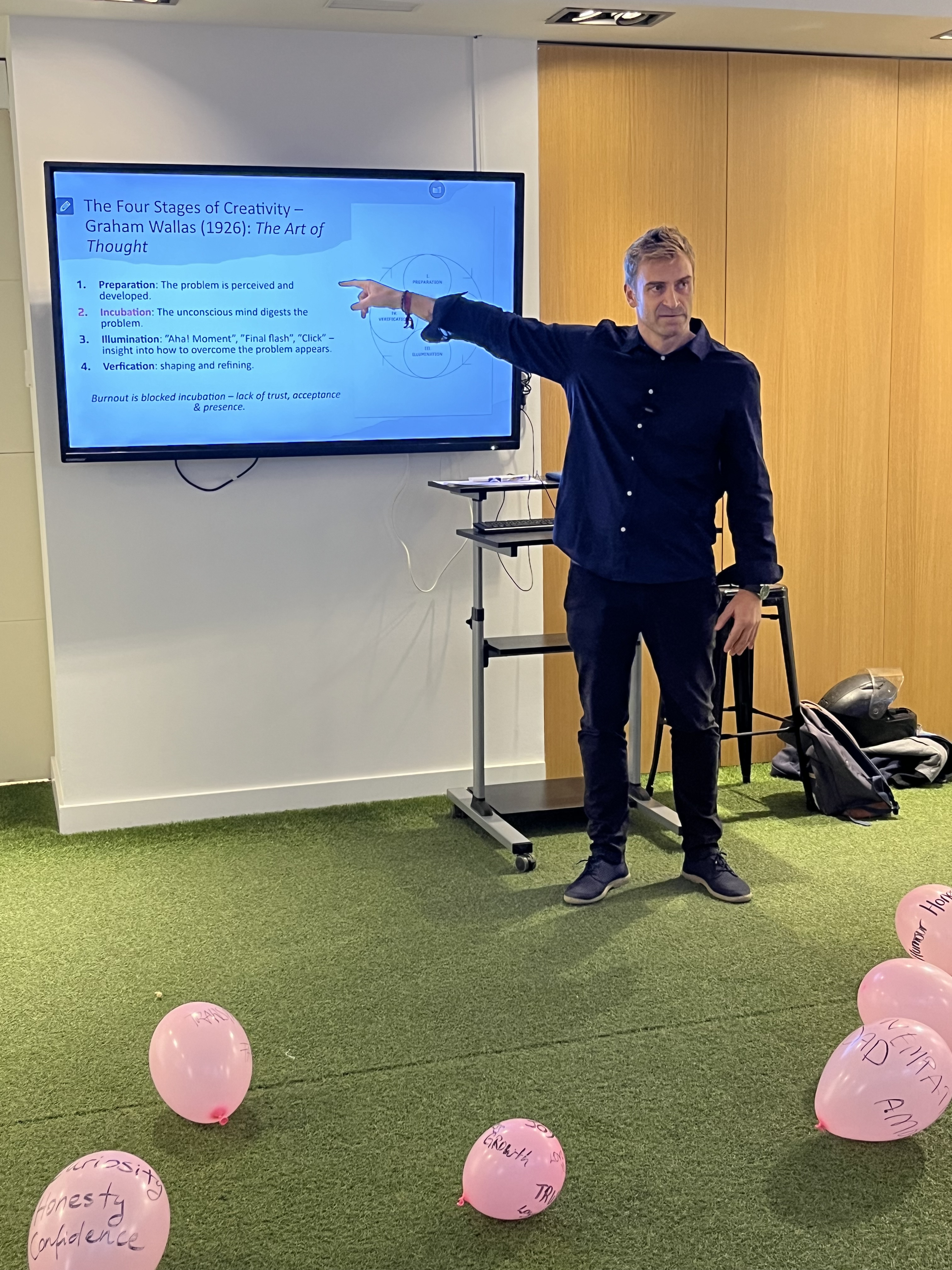
The Wisdom of Leadership and the Courage to Be Vulnerable

We live in a culture of performance: business, sports, and education all expect leaders to be strong, certain, strategic, and always in control. Yet the paradox of high performance is this: striving to be invulnerable can make us fragile.
Neuroscience and sports psychology (for example, acceptance and commitment therapy) show that anxiety, perfectionism, and fear of mistakes shrink cognitive flexibility and creativity. The more we obsess over results, the more our attention collapses into the future. This focus makes us less present with what is happening now. As mental performance coach Graham Betchart puts it: “Stress is the absence of presence.”
This is not a new idea. Long before modern psychology, philosopher Simone Weil described attention as the most radical form of presence. She argued that attention is not controlling the world, but consenting to it. True attention, she wrote, requires self-emptying: standing unprotected in front of reality, without illusion or defense. Vulnerability is the precondition for wisdom.
Read the rest in Psychology Today.

 FINN JANNING